Theys Catherine, Wouters Jan, Ghesquière Pol
ExpORL, KU Leuven, Leuven, Belgium; New Zealand Institute of Language, Brain and Behaviour, University of Canterbury, Christchurch, New Zealand.
ExpORL, KU Leuven, Leuven, Belgium.
PLoS One. 2014 Apr 9;9(4):e94019. doi: 10.1371/journal.pone.0094019. eCollection 2014.
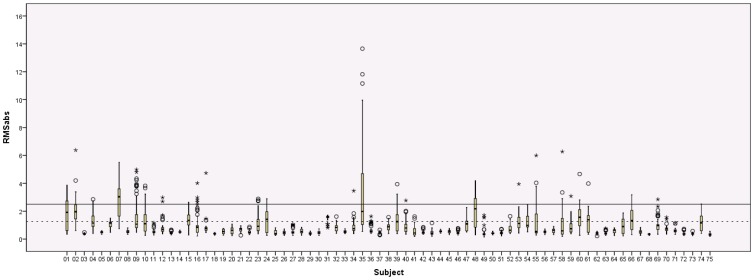
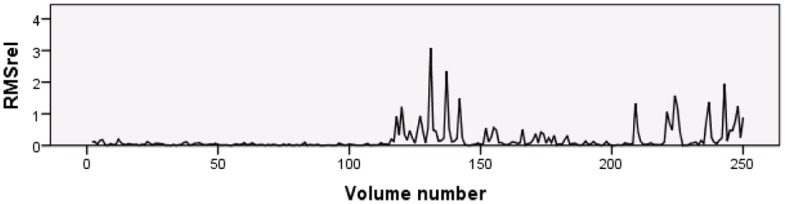
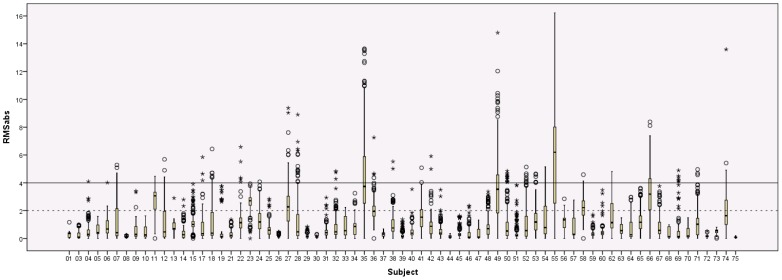
Advanced Magnetic Resonance Imaging (MRI) techniques such as Diffusion Tensor Imaging (DTI) and resting-state functional MRI (rfMRI) are widely used to study structural and functional neural connectivity. However, as these techniques are highly sensitive to motion artifacts and require a considerable amount of time for image acquisition, successful acquisition of these images can be challenging to complete with certain populations. This is especially true for young children. This paper describes a new approach termed the 'submarine protocol', designed to prepare 5- and 6-year-old children for advanced MRI scanning. The submarine protocol aims to ensure that successful scans can be acquired in a time- and resource-efficient manner, without the need for sedation. This manuscript outlines the protocol and details its outcomes, as measured through the number of children who completed the scanning procedure and analysis of the degree of motion present in the acquired images. Seventy-six children aged between 5.8 and 6.9 years were trained using the submarine protocol and subsequently underwent DTI and rfMRI scanning. After completing the submarine protocol, 75 of the 76 children (99%) completed their DTI-scan and 72 children (95%) completed the full 35-minute scan session. Results of diffusion data, acquired in 75 children, showed that the motion in 60 of the scans (80%) did not exceed the threshold for excessive motion. In the rfMRI scans, this was the case for 62 of the 71 scans (87%). When placed in the context of previous studies, the motion data of the 5- and 6-year-old children reported here were as good as, or better than those previously reported for groups of older children (i.e., 8-year-olds). Overall, this study shows that the submarine protocol can be used successfully to acquire DTI and rfMRI scans in 5 and 6-year-old children, without the need for sedation or lengthy training procedures.
诸如扩散张量成像(DTI)和静息态功能磁共振成像(rfMRI)等先进的磁共振成像(MRI)技术被广泛用于研究结构和功能神经连接。然而,由于这些技术对运动伪影高度敏感,且图像采集需要相当长的时间,对于某些人群来说,成功采集这些图像可能具有挑战性。对于幼儿来说尤其如此。本文描述了一种名为“潜艇方案”的新方法,旨在让5岁和6岁的儿童为先进的MRI扫描做好准备。潜艇方案旨在确保能够以高效的时间和资源方式成功完成扫描,而无需镇静。本手稿概述了该方案,并详细介绍了其结果,这些结果通过完成扫描程序的儿童数量以及对采集图像中运动程度的分析来衡量。76名年龄在5.8至6.9岁之间的儿童使用潜艇方案进行了训练,随后接受了DTI和rfMRI扫描。完成潜艇方案后,76名儿童中的75名(99%)完成了DTI扫描,72名儿童(95%)完成了长达35分钟的完整扫描过程。对75名儿童采集的扩散数据结果显示,60次扫描(80%)中的运动未超过过度运动的阈值。在rfMRI扫描中,71次扫描中的62次(87%)也是如此。与之前的研究相比,这里报告的5岁和6岁儿童的运动数据与之前报告的较大儿童组(即8岁儿童)的数据一样好,甚至更好。总体而言,这项研究表明,潜艇方案可以成功用于在5岁和6岁儿童中采集DTI和rfMRI扫描,而无需镇静或冗长的训练程序。