King Isabelle N, Yartseva Valeria, Salas Donaldo, Kumar Abhishek, Heidersbach Amy, Ando D Michael, Stallings Nancy R, Elliott Jeffrey L, Srivastava Deepak, Ivey Kathryn N
From the Gladstone Institute of Cardiovascular Disease and the Departments of Pediatrics.
From the Gladstone Institute of Cardiovascular Disease and.
J Biol Chem. 2014 May 16;289(20):14263-71. doi: 10.1074/jbc.M114.561902. Epub 2014 Apr 9.
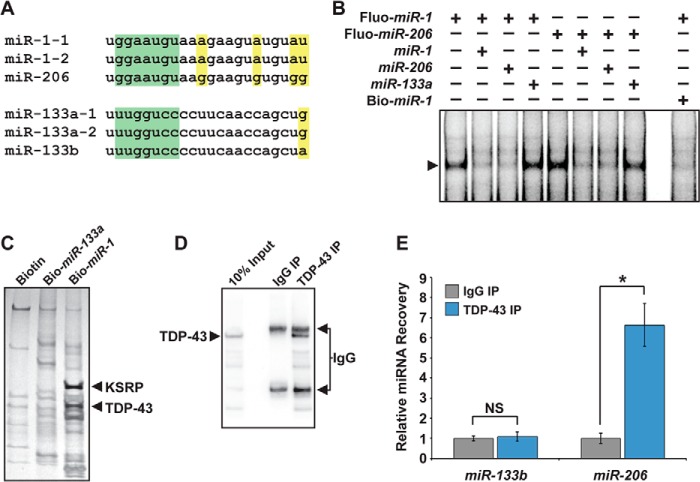
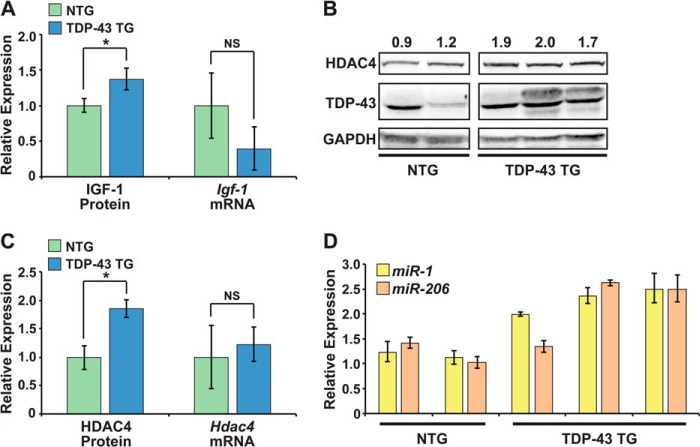
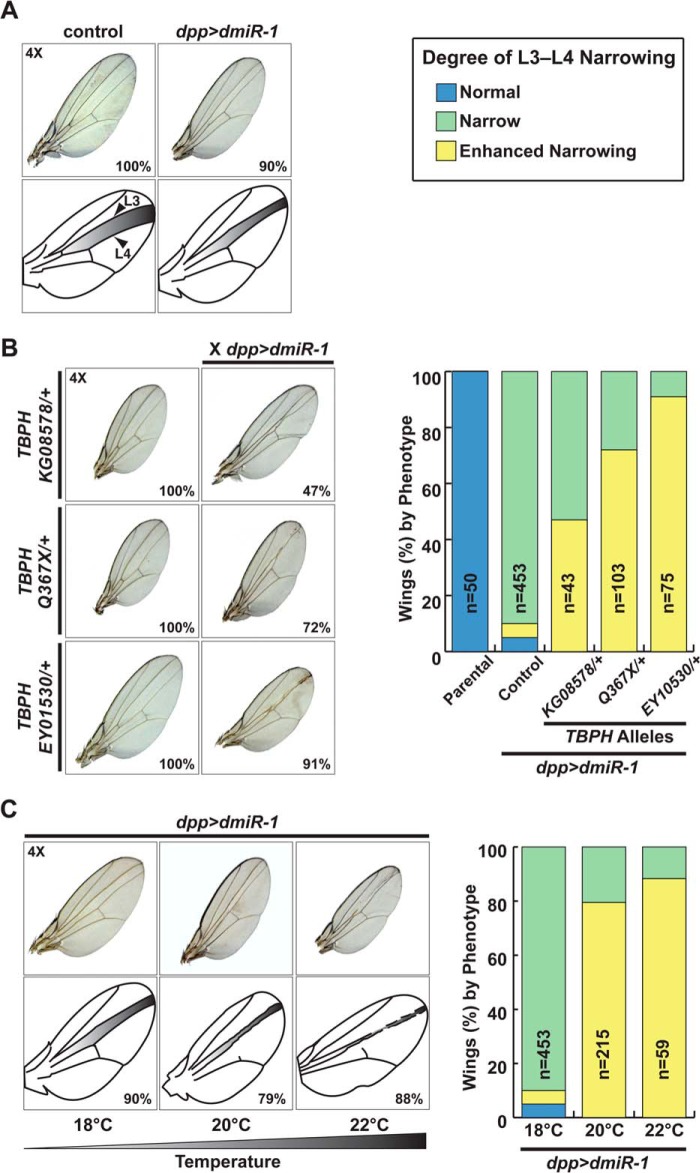
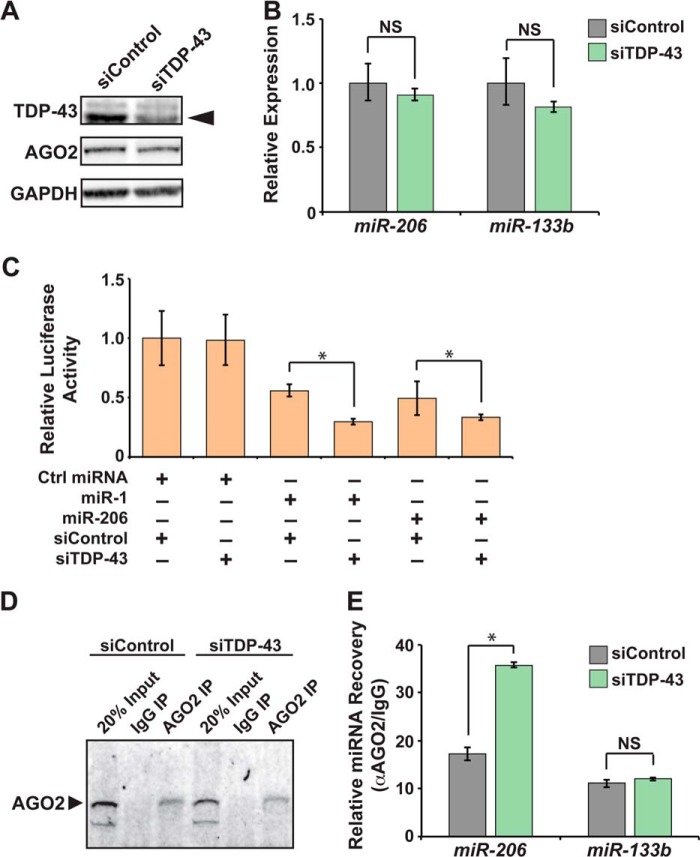
MicroRNA (miRNA) maturation is regulated by interaction of particular miRNA precursors with specific RNA-binding proteins. Following their biogenesis, mature miRNAs are incorporated into the RNA-induced silencing complex (RISC) where they interact with mRNAs to negatively regulate protein production. However, little is known about how mature miRNAs are regulated at the level of their activity. To address this, we screened for proteins differentially bound to the mature form of the miR-1 or miR-133 miRNA families. These muscle-enriched, co-transcribed miRNA pairs cooperate to suppress smooth muscle gene expression in the heart. However, they also have opposing roles, with the miR-1 family, composed of miR-1 and miR-206, promoting myogenic differentiation, whereas miR-133 maintains the progenitor state. Here, we describe a physical interaction between TDP-43, an RNA-binding protein that forms aggregates in the neuromuscular disease, amyotrophic lateral sclerosis, and the miR-1, but not miR-133, family. Deficiency of the TDP-43 Drosophila ortholog enhanced dmiR-1 activity in vivo. In mammalian cells, TDP-43 limited the activity of both miR-1 and miR-206, but not the miR-133 family, by disrupting their RISC association. Consistent with TDP-43 dampening miR-1/206 activity, protein levels of the miR-1/206 targets, IGF-1 and HDAC4, were elevated in TDP-43 transgenic mouse muscle. This occurred without corresponding Igf-1 or Hdac4 mRNA increases and despite higher miR-1 and miR-206 expression. Our findings reveal that TDP-43 negatively regulates the activity of the miR-1 family of miRNAs by limiting their bioavailability for RISC loading and suggest a processing-independent mechanism for differential regulation of miRNA activity.
微小RNA(miRNA)的成熟受特定miRNA前体与特定RNA结合蛋白相互作用的调控。成熟的miRNA在生物合成后,会被整合到RNA诱导沉默复合体(RISC)中,在那里它们与mRNA相互作用以负向调节蛋白质的产生。然而,关于成熟miRNA在其活性水平上是如何被调控的,我们所知甚少。为了解决这个问题,我们筛选了与miR-1或miR-133 miRNA家族成熟形式差异结合的蛋白质。这些在肌肉中富集、共同转录的miRNA对协同抑制心脏中的平滑肌基因表达。然而,它们也具有相反的作用,由miR-1和miR-206组成的miR-1家族促进肌源性分化,而miR-133维持祖细胞状态。在这里,我们描述了一种RNA结合蛋白TDP-43与miR-1家族(而非miR-133家族)之间的物理相互作用,TDP-43在神经肌肉疾病肌萎缩侧索硬化中会形成聚集体。果蝇中TDP-43直系同源物的缺失在体内增强了dmiR-1的活性。在哺乳动物细胞中,TDP-43通过破坏miR-1和miR-206与RISC的结合,限制了它们的活性,但对miR-133家族没有影响。与TDP-43抑制miR-1/206活性一致,miR-1/206靶标IGF-1和HDAC4的蛋白质水平在TDP-43转基因小鼠肌肉中升高。尽管miR-1和miR-206表达较高,但这一现象并未伴随相应的Igf-1或Hdac4 mRNA增加而发生。我们的研究结果表明,TDP-43通过限制miR-1家族miRNA用于RISC装载的生物可利用性,对其活性进行负向调控,并提示了一种不依赖加工过程的miRNA活性差异调控机制。