Institute of Cell Biology and Neurobiology, National Research Council-Monterotondo, Rome, Italy.
Molecular Cardiology Laboratory, IRCCS-Policlinico San Donato, San Donato Milanese, Milan, Italy.
Cell Death Dis. 2018 Jun 28;9(7):729. doi: 10.1038/s41419-018-0769-5.
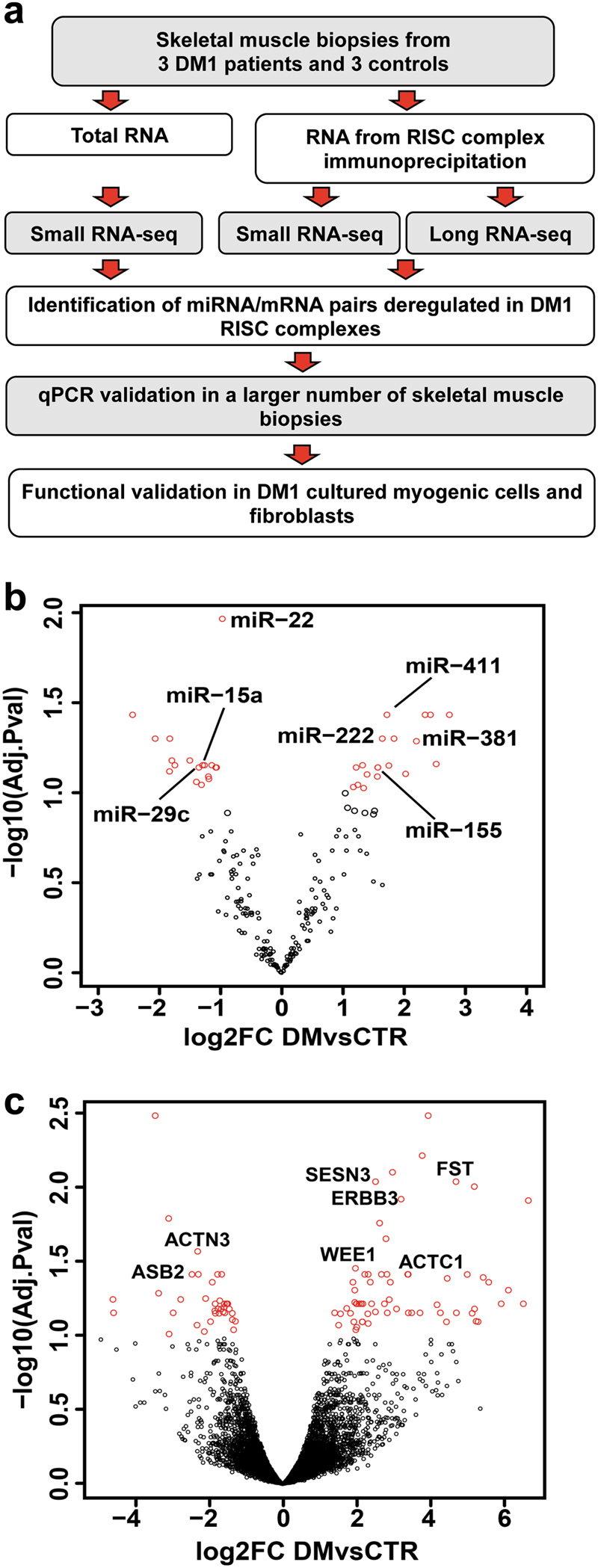
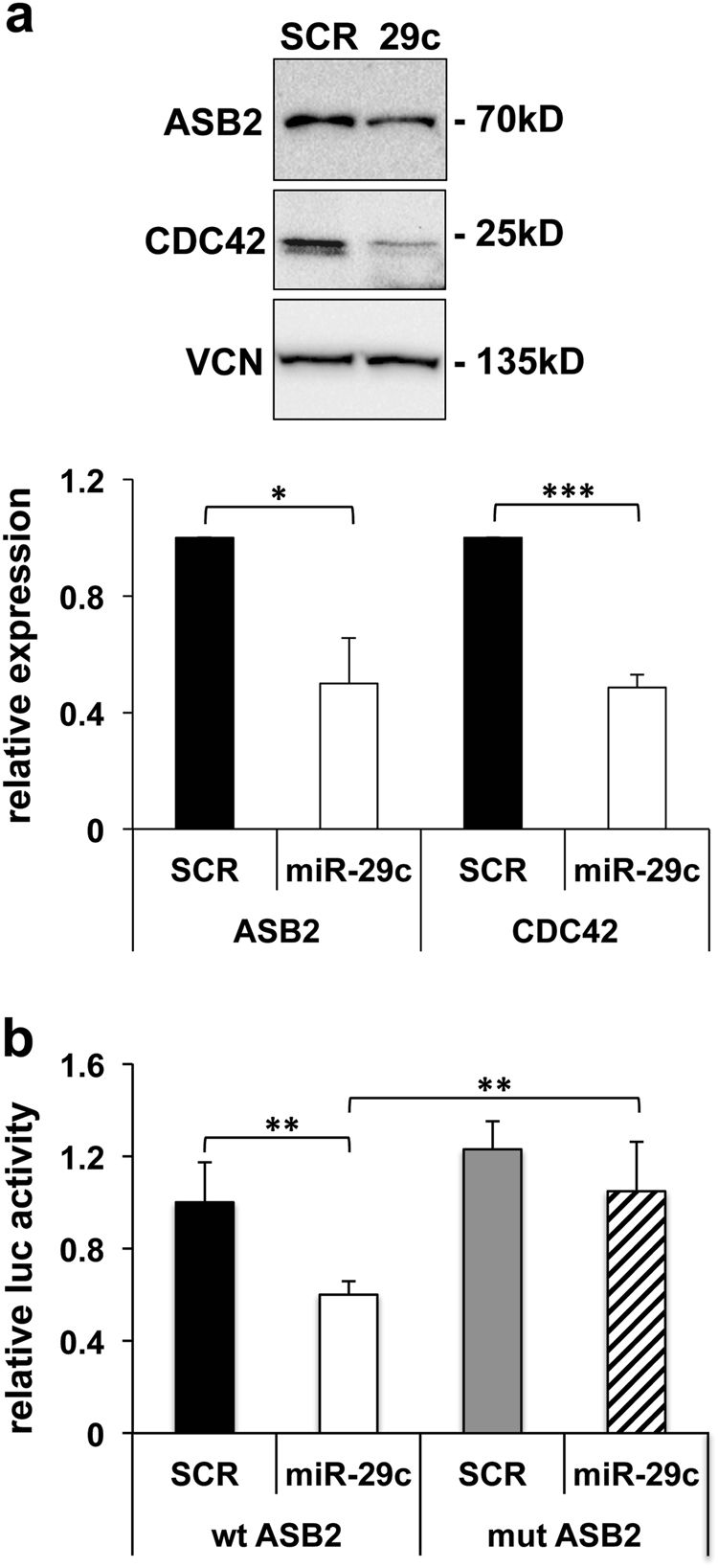
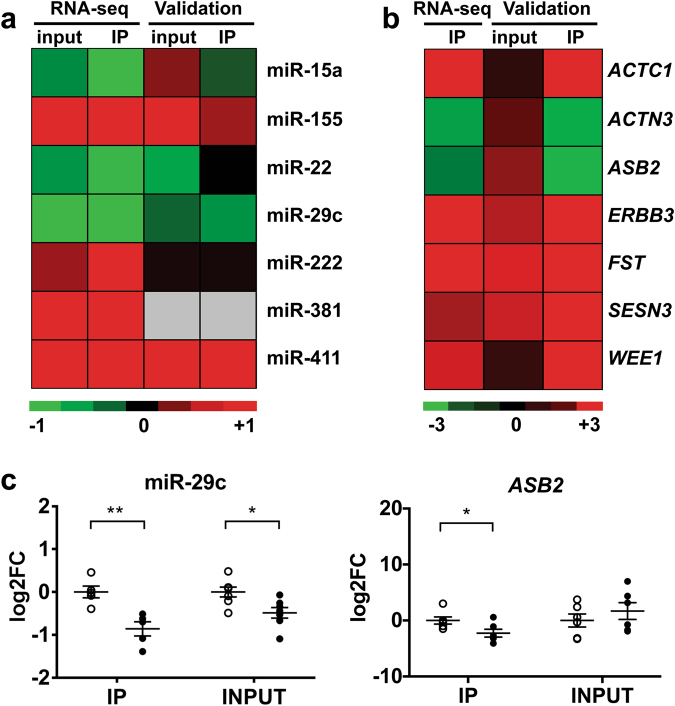
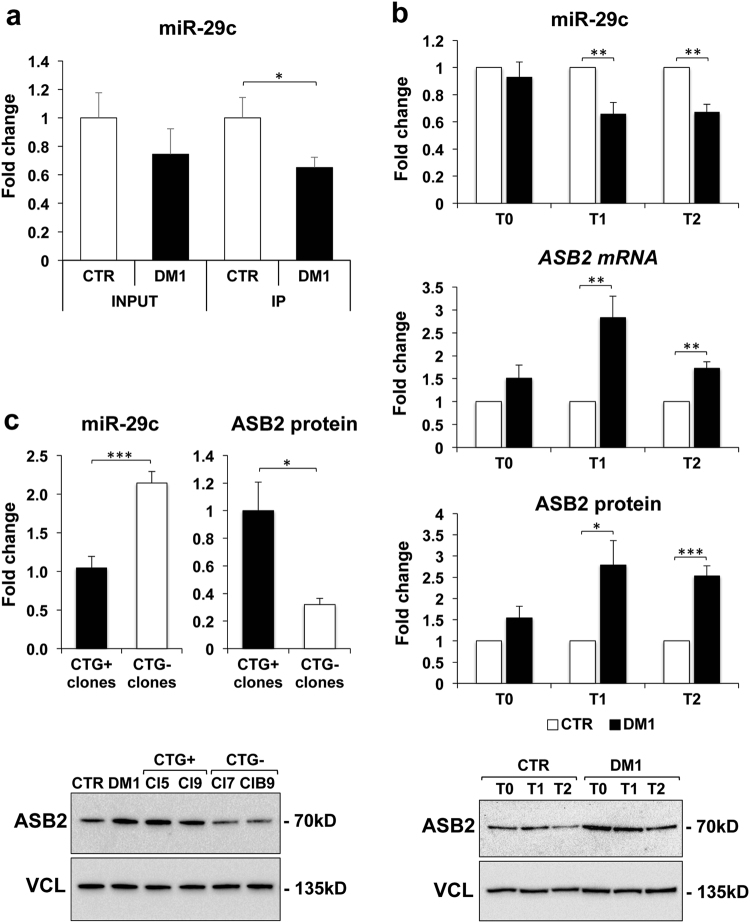
Myotonic dystrophy type 1 (DM1) is a multi-systemic disorder caused by abnormally expanded stretches of CTG DNA triplets in the DMPK gene, leading to mutated-transcript RNA-toxicity. MicroRNAs (miRNAs) are short non-coding RNAs that, after maturation, are loaded onto the RISC effector complex that destabilizes target mRNAs and represses their translation. In DM1 muscle biopsies not only the expression, but also the intracellular localization of specific miRNAs is disrupted, leading to the dysregulation of the relevant mRNA targets. To investigate the functional alterations of the miRNA/target interactions in DM1, we analyzed by RNA-sequencing the RISC-associated RNAs in skeletal muscle biopsies derived from DM1 patients and matched controls. The mRNAs found deregulated in DM1 biopsies were involved in pathways and functions relevant for the disease, such as energetic metabolism, calcium signaling, muscle contraction and p53-dependent apoptosis. Bioinformatic analysis of the miRNA/mRNA interactions based on the RISC enrichment profiles, identified 24 miRNA/mRNA correlations. Following validation in 21 independent samples, we focused on the couple miR-29c/ASB2 because of the role of miR-29c in fibrosis (a feature of late-stage DM1 patients) and of ASB2 in the regulation of muscle mass. Luciferase reporter assay confirmed the direct interaction between miR-29c and ASB2. Moreover, decreased miR-29c and increased ASB2 levels were verified also in immortalized myogenic cells and primary fibroblasts, derived from biopsies of DM1 patients and controls. CRISPR/Cas9-mediated deletion of CTG expansions rescued normal miR-29c and ASB2 levels, indicating a direct link between the mutant repeats and the miRNA/target expression. In conclusion, functionally relevant miRNA/mRNA interactions were identified in skeletal muscles of DM1 patients, highlighting the dysfunction of miR-29c and ASB2.
1 型肌强直性营养不良(DM1)是一种多系统疾病,由 DMPK 基因中异常扩展的 CTG 三核苷酸重复序列引起,导致突变转录 RNA 毒性。微小 RNA(miRNA)是短的非编码 RNA,成熟后被加载到 RISC 效应复合物上,使靶 mRNA 不稳定并抑制其翻译。在 DM1 肌肉活检中,不仅特定 miRNA 的表达,而且其细胞内定位也会受到干扰,导致相关 mRNA 靶标的失调。为了研究 DM1 中 miRNA/靶相互作用的功能改变,我们通过 RNA 测序分析了来自 DM1 患者和匹配对照的骨骼肌活检中与 RISC 相关的 RNA。在 DM1 活检中发现失调的 mRNAs 参与了与疾病相关的途径和功能,如能量代谢、钙信号、肌肉收缩和 p53 依赖性细胞凋亡。基于 RISC 富集谱的 miRNA/mRNA 相互作用的生物信息学分析,确定了 24 个 miRNA/mRNA 相关性。在 21 个独立样本中进行验证后,我们重点关注 miR-29c/ASB2 这一对,因为 miR-29c 在纤维化(DM1 晚期患者的特征)和 ASB2 在调节肌肉质量方面发挥作用。荧光素酶报告基因测定证实了 miR-29c 和 ASB2 之间的直接相互作用。此外,还在源自 DM1 患者和对照的永生化肌细胞和原代成纤维细胞中验证了 miR-29c 水平降低和 ASB2 水平升高。CRISPR/Cas9 介导的 CTG 扩展缺失挽救了正常的 miR-29c 和 ASB2 水平,表明突变重复序列与 miRNA/靶表达之间存在直接联系。总之,在 DM1 患者的骨骼肌中确定了功能相关的 miRNA/mRNA 相互作用,突出了 miR-29c 和 ASB2 的功能障碍。