"Estevita" Specialist Medical Practice, Tychy, Poland.
Department of Dermatology, Venereology and Allergology, Wroclaw Medical University, Wroclaw, Poland.
Mediators Inflamm. 2020 Apr 19;2020:8745863. doi: 10.1155/2020/8745863. eCollection 2020.
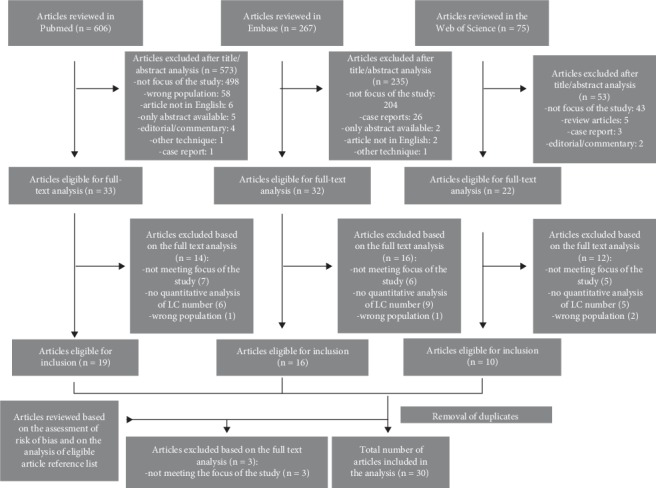
Langerhans cells (LCs) are bone marrow-derived dendritic cells (DCs) that represent 2-3% of the entire cell population of the human skin, known to have an ability to present antigens to T lymphocytes. Moreover, there is evidence that LCs are probably capable of inducing the local cytotoxic type T-cell-mediated response against the tumour-associated antigens. In the past two decades, a dramatic increase has been noted in the incidence of basal cell carcinoma (BCC) and squamous cell carcinoma (SCC). The purpose of this study was to critically assess the results of available studies quantitatively assessing the LCs in nonmelanoma skin cancers and try to establish a conclusion of its possible impact on their future treatment. The PubMed, EMBASE, and the Web of Science databases were searched, which returned 948 citations. After a thorough analysis of full article texts, 30 studies have been chosen, including 11 of the BCC, 12 of the SCC specimens, and 7 analysing both tumour types. There was an overall trend towards slightly higher numbers of LCs in BCC than in SCC; however, these tendencies were discrepant between the studies. We presume that such differences could be caused by various staining techniques with a broad spectrum of specificity, including anti-S100, anti-CD1a, and ATPase activity staining used for LCs identification. We hypothesise that as there is a high inconsistency between the results of the studies, as far as the densities of LCs observed in the specimens are concerned, it seems that the mechanism of the influence of LCs on the antitumoural immune response is complicated. Finally, as at present, there is a paucity of available risk scores for the recurrence or progression of BCC or SCC, the creation of classification stratifying that risk including the density of LCs could bring additional information both for the physician and the patient.
朗格汉斯细胞(LCs)是骨髓来源的树突状细胞(DCs),占人类皮肤全部细胞的 2-3%,已知具有向 T 淋巴细胞呈递抗原的能力。此外,有证据表明 LCs 可能能够诱导针对肿瘤相关抗原的局部细胞毒性 T 细胞介导的反应。在过去的二十年中,基底细胞癌(BCC)和鳞状细胞癌(SCC)的发病率显著增加。本研究的目的是批判性地评估定量评估非黑素瘤皮肤癌中 LCs 的现有研究结果,并试图确定其对未来治疗的可能影响的结论。检索了 PubMed、EMBASE 和 Web of Science 数据库,共返回 948 条引文。经过对全文文本的彻底分析,选择了 30 项研究,包括 11 项 BCC、12 项 SCC 标本和 7 项同时分析两种肿瘤类型的研究。总的来说,BCC 中的 LCs 数量略高于 SCC;然而,这些趋势在研究之间存在差异。我们推测,这些差异可能是由于各种染色技术的特异性不同造成的,包括用于 LCs 鉴定的抗 S100、抗 CD1a 和 ATP 酶活性染色。我们假设,由于迄今为止,就观察到的标本中 LCs 的密度而言,研究结果存在高度不一致性,因此 LCs 对抗肿瘤免疫反应的影响机制似乎很复杂。最后,由于目前缺乏用于 BCC 或 SCC 复发或进展的风险评分,创建包括 LCs 密度在内的分类分层风险评分可以为医生和患者提供额外的信息。