• 文献检索
  • 文档翻译
  • 深度研究
  • 学术资讯
  • Suppr Zotero 插件Zotero 插件
  • 邀请有礼
  • 套餐&价格
  • 历史记录
应用&插件
Suppr Zotero 插件Zotero 插件浏览器插件Mac 客户端Windows 客户端微信小程序
定价
高级版会员购买积分包购买API积分包
服务
文献检索文档翻译深度研究API 文档MCP 服务
关于我们
关于 Suppr公司介绍联系我们用户协议隐私条款
关注我们

Suppr 超能文献

核心技术专利:CN118964589B侵权必究
粤ICP备2023148730 号-1Suppr @ 2026

文献检索

告别复杂PubMed语法,用中文像聊天一样搜索,搜遍4000万医学文献。AI智能推荐,让科研检索更轻松。

立即免费搜索

文件翻译

保留排版,准确专业,支持PDF/Word/PPT等文件格式,支持 12+语言互译。

免费翻译文档

深度研究

AI帮你快速写综述,25分钟生成高质量综述,智能提取关键信息,辅助科研写作。

立即免费体验

SNAP II和SNAPPE II作为儿科重症监护病房新生儿死亡率的预测指标:出生后年龄起作用吗?

SNAP II and SNAPPE II as Predictors of Neonatal Mortality in a Pediatric Intensive Care Unit: Does Postnatal Age Play a Role?

作者信息

Mesquita Ramirez Mirta Noemi, Godoy Laura Evangelina, Alvarez Barrientos Elizabeth

机构信息

Hospital General Pediátrico "Niños de Acosta Ñú", Avenida de la Victoria and Bacigalupo, Reducto, 2160 San Lorenzo, Paraguay.

出版信息

Int J Pediatr. 2014;2014:298198. doi: 10.1155/2014/298198. Epub 2014 Feb 26.

DOI:10.1155/2014/298198
PMID:24719622
原文链接:https://pmc.ncbi.nlm.nih.gov/articles/PMC3955613/
Abstract

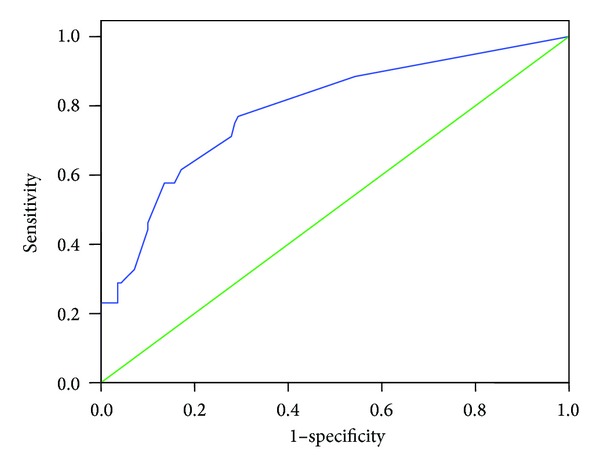
Introduction. In developing countries, a lack of decentralization of perinatal care leads to many high-risk births occurring in facilities that do not have NICU, leading to admission to a PICU. Objective. To assess SNAP II and SNAPPE II as predictors of neonatal death in the PICU. Methodology. A prospective study of newborns divided into 3 groups according to postnatal age: Group 1 (G1), of 0 to 6 days; Group 2 (G2) of 7 to 14 days; and Group 3 (G3), of 15 to 28 days. Variables analyzed were SNAP II, SNAPPE II, perinatal data, and known risk factors for death. The Hosmer-Lemeshow test and the receiver operating characteristics (ROC) curve were used with SPSS 17.0 for statistical analysis. An Alpha error <5% was considered significant. Results. We analyzed 290 newborns, including 192 from G1, 41 from G2, and 57 from G3. Mortality was similar in all 3 groups. Median SNAP II was higher in newborns that died in all 3 groups (P < 0.05). The area under the ROC curve for SNAP II for G1 was 0.78 (CI 95% 0.70-0.86), for G2 0.66 (CI 95% 0.37-0.94), and for G3 0.74 (CI 95% 0.53-0.93). The area under the ROC curve for SNAPPE II for G1 was 0.76 (CI 95% 0.67-0.85), for G2 0.60 (CI 95% 0.30-0.90), and for G3 0.74 (CI 95% 0.52-0.95). Conclusions. SNAP II and SNAPPE II showed moderate discrimination in predicting mortality. The results are not strong enough to establish the correlation between the score and the risk of mortality.

摘要

引言。在发展中国家,围产期护理缺乏分权导致许多高危分娩发生在没有新生儿重症监护病房(NICU)的机构,从而导致新生儿转入儿科重症监护病房(PICU)。目的。评估SNAP II和SNAPPE II作为PICU新生儿死亡预测指标的价值。方法。对新生儿进行前瞻性研究,根据出生后年龄分为3组:第1组(G1),出生0至6天;第2组(G2),出生7至14天;第3组(G3),出生15至28天。分析的变量包括SNAP II、SNAPPE II、围产期数据以及已知的死亡风险因素。使用SPSS 17.0软件进行Hosmer-Lemeshow检验和受试者工作特征(ROC)曲线分析,以进行统计分析。α错误<5%被认为具有统计学意义。结果。我们分析了290例新生儿,其中G1组192例,G2组41例,G3组57例。三组的死亡率相似。在所有三组中,死亡新生儿的SNAP II中位数较高(P<0.05)。G1组SNAP II的ROC曲线下面积为0.78(95%置信区间0.70-0.86),G2组为0.66(95%置信区间0.37-0.94),G3组为0.74(95%置信区间0.53-0.93)。G1组SNAPPE II的ROC曲线下面积为0.76(95%置信区间0.67-0.85),G2组为0.60(95%置信区间0.30-0.90),G3组为0.74(95%置信区间0.52-0.95)。结论。SNAP II和SNAPPE II在预测死亡率方面显示出中等的辨别能力。结果不足以确定评分与死亡风险之间的相关性。
https://cdn.ncbi.nlm.nih.gov/pmc/blobs/decc/3955613/f8113145d6eb/IJPEDI2014-298198.001.jpg

相似文献

1
SNAP II and SNAPPE II as Predictors of Neonatal Mortality in a Pediatric Intensive Care Unit: Does Postnatal Age Play a Role?SNAP II和SNAPPE II作为儿科重症监护病房新生儿死亡率的预测指标:出生后年龄起作用吗?
Int J Pediatr. 2014;2014:298198. doi: 10.1155/2014/298198. Epub 2014 Feb 26.
2
Utilization of SNAP II and SNAPPE II Scores for Predicting the Mortality Rate Among a Cohort of Iranian Newborns.利用 SNAP II 和 SNAPPE II 评分预测伊朗新生儿队列的死亡率。
Arch Iran Med. 2018 Apr 1;21(4):153-157.
3
[Predicting outcome in necrotizing enterocolitis with the score for neonatal acute physiology: a retrospective study of 62 cases].[用新生儿急性生理学评分预测坏死性小肠结肠炎的预后:62例回顾性研究]
Zhonghua Er Ke Za Zhi. 2013 May;51(5):326-30.
4
Neonatal mortality risk assessment using SNAPPE- II score in a neonatal intensive care unit.使用 SNAPPE- II 评分评估新生儿重症监护病房的新生儿死亡率。
BMC Pediatr. 2019 Aug 13;19(1):279. doi: 10.1186/s12887-019-1660-y.
5
SNAP-II and SNAPPE-II: Simplified newborn illness severity and mortality risk scores.SNAP-II和SNAPPE-II:简化的新生儿疾病严重程度及死亡风险评分。
J Pediatr. 2001 Jan;138(1):92-100. doi: 10.1067/mpd.2001.109608.
6
SNAPPE II: ANALYSIS OF ACCURACY AND DETERMINATION OF THE CUTOFF POINT AS A DEATH PREDICTOR IN A BRAZILIAN NEONATAL INTENSIVE CARE UNIT.SNAPPE II:巴西新生儿重症监护病房中死亡率预测的准确性分析和截断点的确定。
Rev Paul Pediatr. 2020 Dec 16;38:e2019029. doi: 10.1590/1984-0462/2020/38/2019029. eCollection 2020.
7
SNAPPE II Score as a Predictor of Neonatal Mortality in NICU at a Tertiary Care Hospital in Pakistan.SNAPPE II评分作为巴基斯坦一家三级护理医院新生儿重症监护病房新生儿死亡率的预测指标
Cureus. 2021 Dec 15;13(12):e20427. doi: 10.7759/cureus.20427. eCollection 2021 Dec.
8
SNAP-II and SNAPPE-II and the risk of structural and functional brain disorders in extremely low gestational age newborns: the ELGAN study.SNAP-II 和 SNAPPE-II 与极低胎龄新生儿结构和功能脑障碍的风险:ELGAN 研究。
Neonatology. 2010;97(2):71-82. doi: 10.1159/000232588. Epub 2009 Aug 11.
9
SNAPPE-II (Score for Neonatal Acute Physiology with Perinatal Extension-II) in Predicting Mortality and Morbidity in NICU.SNAPPE-II(新生儿急性生理学与围产期扩展评分-II)在预测新生儿重症监护病房的死亡率和发病率中的应用
J Clin Diagn Res. 2015 Oct;9(10):SC10-2. doi: 10.7860/JCDR/2015/14848.6677. Epub 2015 Oct 1.
10
Comparison of STOPS and SNAPPE-II in Predicting Neonatal Survival at Hospital Discharge: A Prospective, Multicentric, Observational Study.STOPS 和 SNAPPE-II 预测新生儿出院时生存的比较:一项前瞻性、多中心、观察性研究。
Indian J Pediatr. 2023 Aug;90(8):781-786. doi: 10.1007/s12098-022-04330-w. Epub 2022 Sep 22.

引用本文的文献

1
A Study of the Prediction of Mortality in a Tertiary Care Hospital Using the Modified Sick Neonatal Score (MSNS): An Observational Cross-Sectional Study.一项使用改良新生儿疾病评分(MSNS)预测三级护理医院死亡率的研究:一项观察性横断面研究。
Cureus. 2023 May 3;15(5):e38484. doi: 10.7759/cureus.38484. eCollection 2023 May.
2
Newborns' clinical conditions are correlated with the neonatal assessment manual scorE (NAME).新生儿的临床状况与新生儿评估手册评分(NAME)相关。
Front Pediatr. 2022 Sep 9;10:967301. doi: 10.3389/fped.2022.967301. eCollection 2022.
3
Post-transport TOPS score as a predictive marker of mortality among transported neonates and its comparative analysis with SNAP-II PE.

本文引用的文献

1
Predicting mortality in infants with persistent pulmonary hypertension of the newborn with the Score for Neonatal Acute Physiology-Version II (SNAP-II) in Thai neonates.应用新生儿急性生理学评分-第二版(SNAP-II)预测泰国新生儿持续性肺动脉高压的病死率。
J Perinat Med. 2011 May;39(3):311-5. doi: 10.1515/jpm.2011.011. Epub 2011 Apr 14.
2
Score for neonatal acute physiology II predicts mortality and persistent organ dysfunction in neonates with severe septicemia.新生儿急性生理学 II 评分预测严重败血症新生儿的死亡率和持续性器官功能障碍。
Indian Pediatr. 2009 Sep;46(9):775-80. Epub 2009 Apr 1.
3
Postnatal SNAP-II scores in neonatal intensive care unit patients: relationship to sepsis, necrotizing enterocolitis, and death.
转运后TOPS评分作为转运新生儿死亡率的预测指标及其与SNAP-II PE的比较分析
Heliyon. 2022 Aug 9;8(8):e10165. doi: 10.1016/j.heliyon.2022.e10165. eCollection 2022 Aug.
4
SNAPPE II Score as a Predictor of Neonatal Mortality in NICU at a Tertiary Care Hospital in Pakistan.SNAPPE II评分作为巴基斯坦一家三级护理医院新生儿重症监护病房新生儿死亡率的预测指标
Cureus. 2021 Dec 15;13(12):e20427. doi: 10.7759/cureus.20427. eCollection 2021 Dec.
5
Thromboelastometry in Neonates with Respiratory Distress Syndrome: A Pilot Study.新生儿呼吸窘迫综合征的血栓弹力图:一项初步研究。
Diagnostics (Basel). 2021 Oct 27;11(11):1995. doi: 10.3390/diagnostics11111995.
6
Machine Learning Algorithms to Predict Mortality of Neonates on Mechanical Intubation for Respiratory Failure.用于预测呼吸衰竭机械通气新生儿死亡率的机器学习算法
Biomedicines. 2021 Oct 2;9(10):1377. doi: 10.3390/biomedicines9101377.
7
Machine Learning Approaches to Predict In-Hospital Mortality among Neonates with Clinically Suspected Sepsis in the Neonatal Intensive Care Unit.用于预测新生儿重症监护病房中临床疑似脓毒症新生儿院内死亡率的机器学习方法
J Pers Med. 2021 Jul 22;11(8):695. doi: 10.3390/jpm11080695.
8
Neonatal mortality risk assessment using SNAPPE- II score in a neonatal intensive care unit.使用 SNAPPE- II 评分评估新生儿重症监护病房的新生儿死亡率。
BMC Pediatr. 2019 Aug 13;19(1):279. doi: 10.1186/s12887-019-1660-y.
9
Modified Sick Neonatal Score (MSNS): A Novel Neonatal Disease Severity Scoring System for Resource-Limited Settings.改良新生儿疾病评分(MSNS):一种适用于资源有限环境的新型新生儿疾病严重程度评分系统。
Crit Care Res Pract. 2019 May 9;2019:9059073. doi: 10.1155/2019/9059073. eCollection 2019.
10
"Neo-PIRO": Introducing a Novel Grading System for Surgical Infections of Neonates.“Neo-PIRO”:推出一种用于新生儿外科感染的新型分级系统。
J Indian Assoc Pediatr Surg. 2017 Oct-Dec;22(4):211-216. doi: 10.4103/0971-9261.214455.
新生儿重症监护病房患者的产后SNAP-II评分:与败血症、坏死性小肠结肠炎及死亡的关系。
J Matern Fetal Neonatal Med. 2008 Jun;21(6):415-9. doi: 10.1080/14767050802046481.
4
Predictors of mortality and length of stay for neonates admitted to children's hospital neonatal intensive care units.儿童医院新生儿重症监护病房收治新生儿的死亡率和住院时间的预测因素。
J Perinatol. 2008 Apr;28(4):297-302. doi: 10.1038/sj.jp.7211904. Epub 2007 Nov 29.
5
Profile of neonates admitted in pediatric ICU and validation of Score for Neonatal Acute Physiology (SNAP).入住儿科重症监护病房的新生儿概况及新生儿急性生理学评分(SNAP)的验证
Indian Pediatr. 2006 Apr;43(4):344-8.
6
SNAP-II predicts mortality among infants with congenital diaphragmatic hernia.SNAP-II可预测先天性膈疝患儿的死亡率。
J Perinatol. 2005 May;25(5):315-9. doi: 10.1038/sj.jp.7211257.
7
Neonatal disease severity scoring systems.新生儿疾病严重程度评分系统。
Arch Dis Child Fetal Neonatal Ed. 2005 Jan;90(1):F11-6. doi: 10.1136/adc.2003.048488.
8
SNAP-II and SNAPPE-II: Simplified newborn illness severity and mortality risk scores.SNAP-II和SNAPPE-II:简化的新生儿疾病严重程度及死亡风险评分。
J Pediatr. 2001 Jan;138(1):92-100. doi: 10.1067/mpd.2001.109608.
9
Congenital heart disease: the impact of delivery in a tertiary care center on SNAP scores (scores for neonatal acute physiology).先天性心脏病:三级医疗中心分娩对SNAP评分(新生儿急性生理学评分)的影响。
Am J Obstet Gynecol. 2000 Jan;182(1 Pt 1):184-91. doi: 10.1016/s0002-9378(00)70511-4.
10
Birth weight and illness severity: independent predictors of neonatal mortality.出生体重与疾病严重程度:新生儿死亡率的独立预测因素。
Pediatrics. 1993 May;91(5):969-75.