Dormanesh Banafshe, Safarpoor Dehkordi Farhad, Hosseini Sahar, Momtaz Hassan, Mirnejad Reza, Hoseini Mohammad Javad, Yahaghi Emad, Tarhriz Vahideh, Khodaverdi Darian Ebrahim
Department of Pediatric Nephrology, AJA University of Medical Sciences, Tehran, IR Iran.
Young Researchers and Elites Club, Islamic Azad University, Shahrekord Branch, Shahrekord, IR Iran.
Iran Red Crescent Med J. 2014 Feb;16(2):e14627. doi: 10.5812/ircmj.14627. Epub 2014 Feb 3.
Uropathogenic Escherichia coli O- Serogroups with their virulence factors are the most prevalent causes of UTIs.
The present investigation was performed to study the virulence factors and O-Serogroups profiles of UPEC isolated from Iranian pediatric patients.
This cross sectional investigation was performed on 100 urine samples collected from hospitalized pediatrics of Baqiyatallah Hospital, Tehran, Iran. Midstream urine was collected to decrease potential bacterial, cellular and artifactual contamination. All samples were cultured and those with positive results were subjected to polymerase chain reactions to detect pap, cnf1, afa, sfa and hlyA genes and various O- Serogroups.
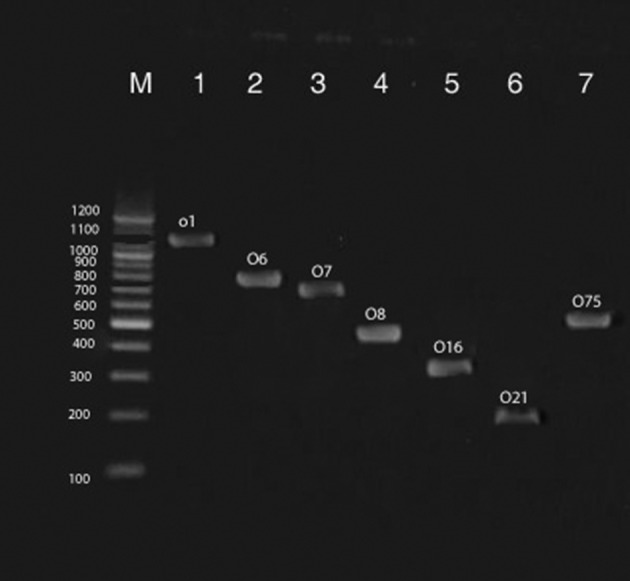
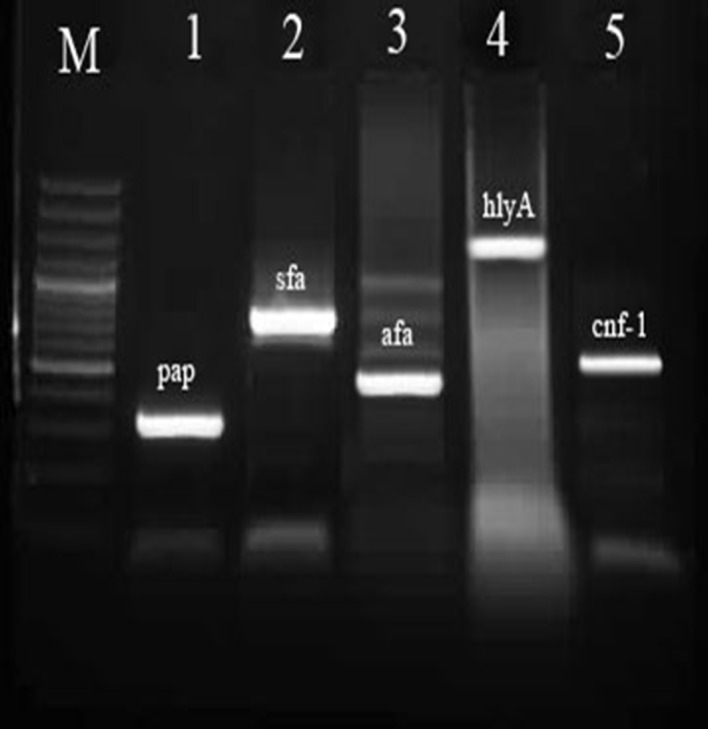
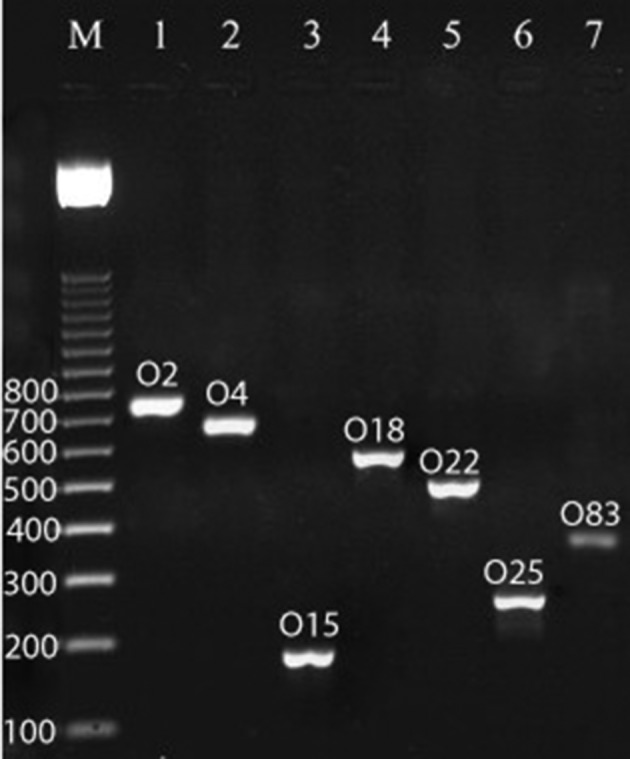
We found that 37.5% of boys and 75% of girls had positive results for Escherichia coli. We also found that O1 (19.33%), O2 (13.33%), O6 (13.33%), O4 (11.66%), and O18 (11.66 %) were the most commonly detected Serogroups. Totally, the serogroup of 5% of all strains were not detected. In addition, all of these O- Serogroups were pap+, cnf1+, hlyA+, and afa+. Totally, pap (70 %), cnf1 (56.66 %), and hlyA (43.33 %) were the most commonly detected virulence genes in the both studied groups of children. The sfa (30 %) and afa (26.66 %) genes had the lowest incidence rates.
Special health care should be performed on UTIs management in Iranian pediatric patients. Extended researches should be performed to evaluate relation between other O-Serogroups and virulent genes.
具有毒力因子的尿路致病性大肠杆菌O血清群是尿路感染最常见的病因。
本研究旨在探讨从伊朗儿科患者中分离出的尿路致病性大肠杆菌的毒力因子和O血清群特征。
本横断面研究对从伊朗德黑兰巴奇亚塔拉医院住院儿科患者收集的100份尿液样本进行。收集中段尿以减少潜在的细菌、细胞和人为污染。所有样本均进行培养,结果呈阳性的样本进行聚合酶链反应,以检测pap、cnf1、afa、sfa和hlyA基因以及各种O血清群。
我们发现37.5%的男孩和75%的女孩大肠杆菌检测结果呈阳性。我们还发现O1(19.33%)、O2(13.33%)、O6(13.33%)、O4(11.66%)和O18(11.66%)是最常检测到的血清群。总体而言,5%的菌株血清群未被检测到。此外,所有这些O血清群均为pap+、cnf1+、hlyA+和afa+。总体而言,pap(70%)、cnf1(56.66%)和hlyA(43.33%)是两个儿童研究组中最常检测到的毒力基因。sfa(30%)和afa(26.66%)基因的发生率最低。
对伊朗儿科患者的尿路感染管理应采取特殊的医疗保健措施。应开展进一步研究以评估其他O血清群与毒力基因之间的关系。