de Vrij Edwin L, Vogelaar Pieter C, Goris Maaike, Houwertjes Martin C, Herwig Annika, Dugbartey George J, Boerema Ate S, Strijkstra Arjen M, Bouma Hjalmar R, Henning Robert H
Department of Clinical Pharmacy and Pharmacology, University of Groningen, University Medical Center Groningen, Groningen, The Netherlands.
Sulfateq BV, Groningen, the Netherlands.
PLoS One. 2014 Apr 10;9(4):e93218. doi: 10.1371/journal.pone.0093218. eCollection 2014.
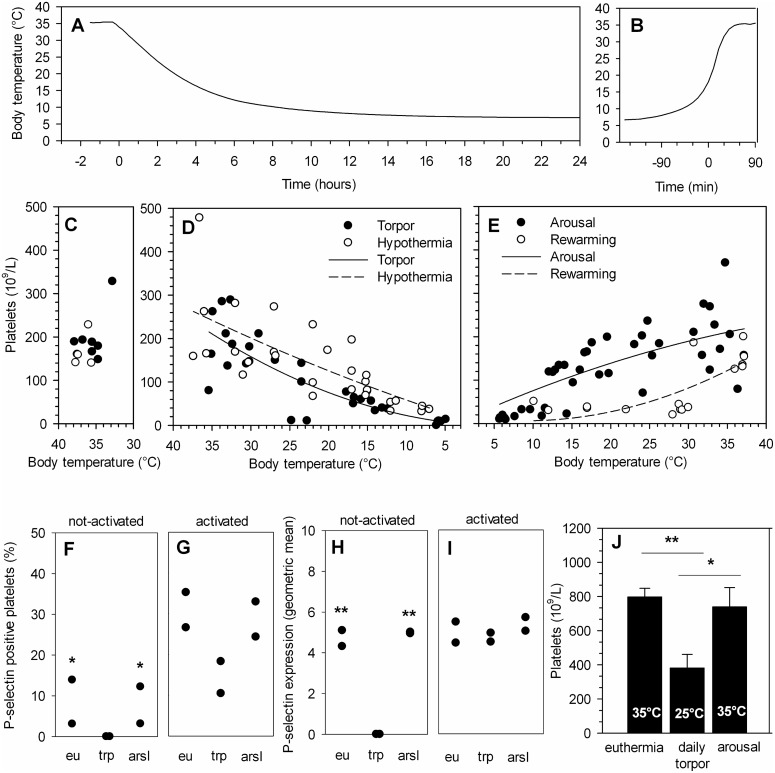
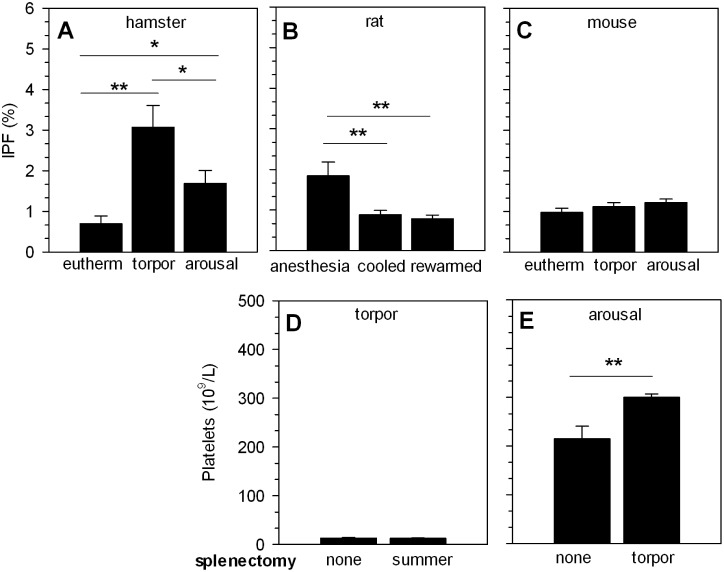
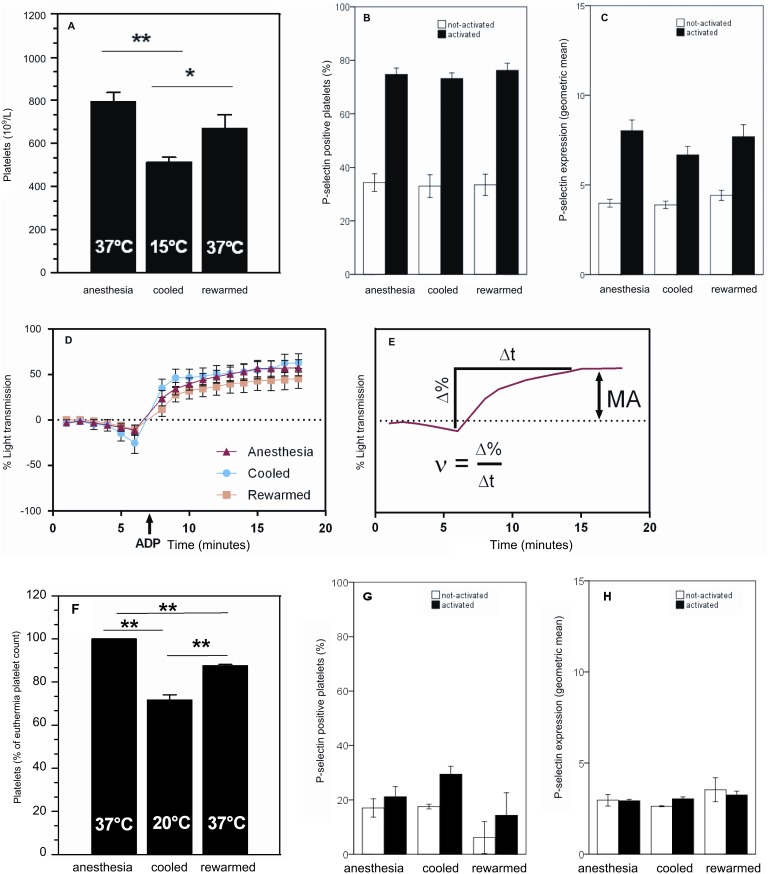
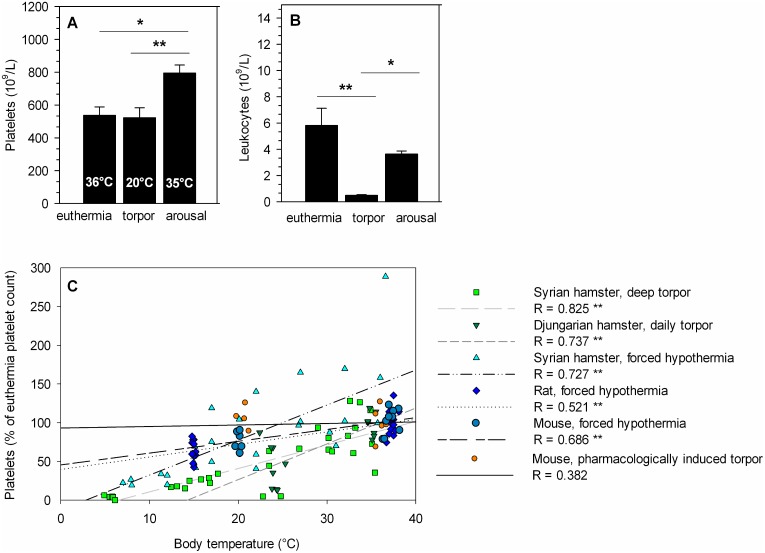
Hibernation is an energy-conserving behavior in winter characterized by two phases: torpor and arousal. During torpor, markedly reduced metabolic activity results in inactivity and decreased body temperature. Arousal periods intersperse the torpor bouts and feature increased metabolism and euthermic body temperature. Alterations in physiological parameters, such as suppression of hemostasis, are thought to allow hibernators to survive periods of torpor and arousal without organ injury. While the state of torpor is potentially procoagulant, due to low blood flow, increased viscosity, immobility, hypoxia, and low body temperature, organ injury due to thromboembolism is absent. To investigate platelet dynamics during hibernation, we measured platelet count and function during and after natural torpor, pharmacologically induced torpor and forced hypothermia. Splenectomies were performed to unravel potential storage sites of platelets during torpor. Here we show that decreasing body temperature drives thrombocytopenia during torpor in hamster with maintained functionality of circulating platelets. Interestingly, hamster platelets during torpor do not express P-selectin, but expression is induced by treatment with ADP. Platelet count rapidly restores during arousal and rewarming. Platelet dynamics in hibernation are not affected by splenectomy before or during torpor. Reversible thrombocytopenia was also induced by forced hypothermia in both hibernating (hamster) and non-hibernating (rat and mouse) species without changing platelet function. Pharmacological torpor induced by injection of 5'-AMP in mice did not induce thrombocytopenia, possibly because 5'-AMP inhibits platelet function. The rapidness of changes in the numbers of circulating platelets, as well as marginal changes in immature platelet fractions upon arousal, strongly suggest that storage-and-release underlies the reversible thrombocytopenia during natural torpor. Possibly, margination of platelets, dependent on intrinsic platelet functionality, governs clearance of circulating platelets during torpor.
冬眠是一种冬季的节能行为,其特征在于两个阶段:蛰伏和觉醒。在蛰伏期间,代谢活动显著降低导致动物不活动且体温下降。觉醒期穿插在蛰伏期之间,其特征是代谢增加和体温恢复正常。生理参数的改变,如止血抑制,被认为使冬眠动物能够在蛰伏和觉醒期间存活而不发生器官损伤。虽然蛰伏状态由于低血流、血液粘度增加、不动、缺氧和低温而可能具有促凝血作用,但不存在血栓栓塞引起的器官损伤。为了研究冬眠期间的血小板动态,我们测量了自然蛰伏期间及之后、药物诱导的蛰伏和强制低温期间及之后的血小板计数和功能。进行脾切除术以揭示蛰伏期间血小板的潜在储存部位。在这里我们表明,体温下降会导致仓鼠在蛰伏期间血小板减少,而循环血小板的功能保持不变。有趣的是,仓鼠在蛰伏期间的血小板不表达P-选择素,但用ADP处理可诱导其表达。血小板计数在觉醒和复温期间迅速恢复。冬眠期间的血小板动态不受蛰伏前或蛰伏期间脾切除术的影响。强制低温在冬眠(仓鼠)和非冬眠(大鼠和小鼠)物种中也诱导了可逆性血小板减少,而不改变血小板功能。注射5'-AMP诱导的小鼠药物性蛰伏未诱导血小板减少,可能是因为5'-AMP抑制血小板功能。循环血小板数量变化的快速性,以及觉醒时未成熟血小板比例的微小变化,强烈表明储存和释放是自然蛰伏期间可逆性血小板减少的基础。可能是依赖于血小板内在功能的血小板边缘化控制了蛰伏期间循环血小板的清除。