Mossbridge Julia A, Tressoldi Patrizio, Utts Jessica, Ives John A, Radin Dean, Jonas Wayne B
Department of Psychology, Northwestern University Evanston, IL, USA.
Dipartimento di Psicologia Generale, Universita di Padova Padova, Italy.
Front Hum Neurosci. 2014 Mar 25;8:146. doi: 10.3389/fnhum.2014.00146. eCollection 2014.
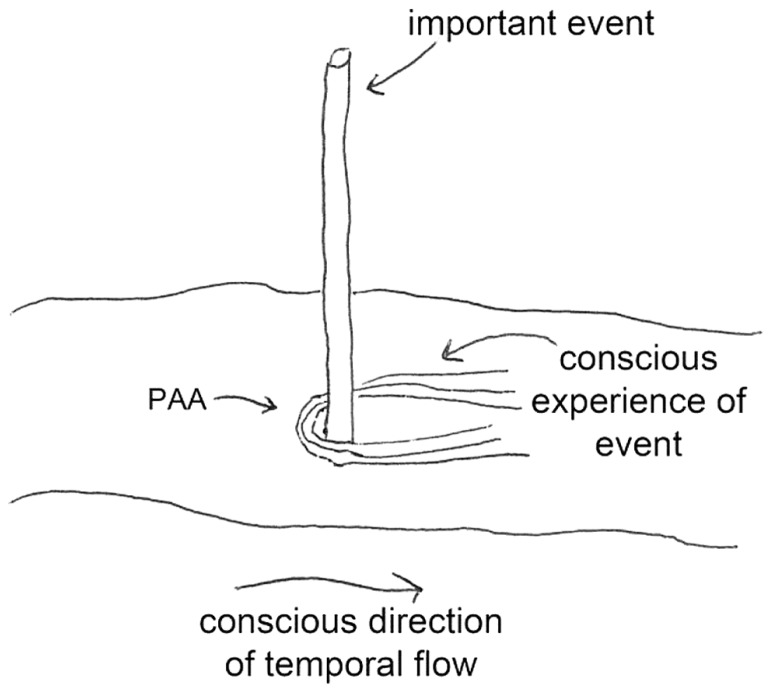
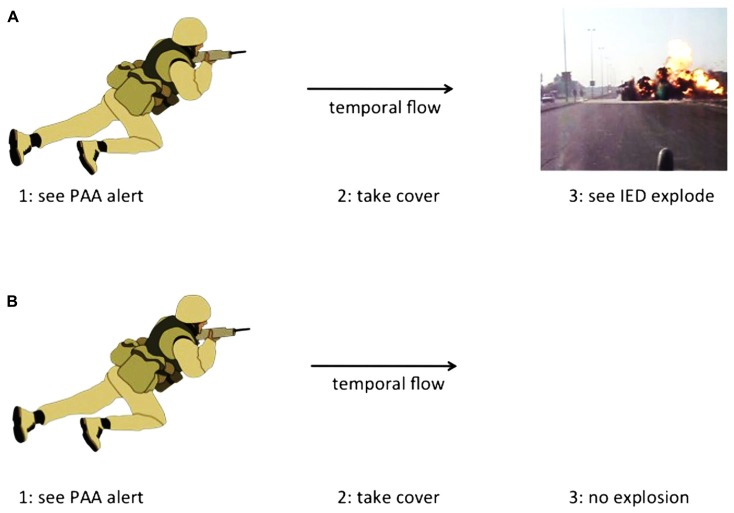
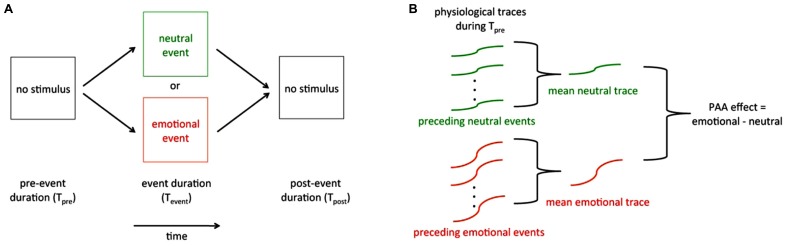
A recent meta-analysis of experiments from seven independent laboratories (n = 26) indicates that the human body can apparently detect randomly delivered stimuli occurring 1-10 s in the future (Mossbridge etal., 2012). The key observation in these studies is that human physiology appears to be able to distinguish between unpredictable dichotomous future stimuli, such as emotional vs. neutral images or sound vs. silence. This phenomenon has been called presentiment (as in "feeling the future"). In this paper we call it predictive anticipatory activity (PAA). The phenomenon is "predictive" because it can distinguish between upcoming stimuli; it is "anticipatory" because the physiological changes occur before a future event; and it is an "activity" because it involves changes in the cardiopulmonary, skin, and/or nervous systems. PAA is an unconscious phenomenon that seems to be a time-reversed reflection of the usual physiological response to a stimulus. It appears to resemble precognition (consciously knowing something is going to happen before it does), but PAA specifically refers to unconscious physiological reactions as opposed to conscious premonitions. Though it is possible that PAA underlies the conscious experience of precognition, experiments testing this idea have not produced clear results. The first part of this paper reviews the evidence for PAA and examines the two most difficult challenges for obtaining valid evidence for it: expectation bias and multiple analyses. The second part speculates on possible mechanisms and the theoretical implications of PAA for understanding physiology and consciousness. The third part examines potential practical applications.
最近一项对来自七个独立实验室(n = 26)的实验进行的荟萃分析表明,人体显然能够检测到未来1至10秒随机出现的刺激(莫斯布里奇等人,2012年)。这些研究中的关键观察结果是,人类生理学似乎能够区分不可预测的二分法未来刺激,例如情绪与中性图像或声音与寂静。这种现象被称为预感(如“感受未来”)。在本文中,我们将其称为预测性预期活动(PAA)。该现象具有“预测性”,因为它可以区分即将到来的刺激;它具有“预期性”,因为生理变化发生在未来事件之前;它是一种“活动”,因为它涉及心肺、皮肤和/或神经系统的变化。PAA是一种无意识现象,似乎是对刺激的通常生理反应的时间反转反映。它似乎类似于预知(在事情发生之前有意识地知道某事即将发生),但PAA具体指的是无意识的生理反应,而不是有意识的预感。虽然有可能PAA是预知的有意识体验的基础,但测试这一观点的实验尚未产生明确的结果。本文的第一部分回顾了PAA的证据,并审视了为其获取有效证据的两个最困难的挑战:预期偏差和多重分析。第二部分推测了PAA的可能机制及其对理解生理学和意识的理论意义。第三部分探讨了潜在的实际应用。