Dipartimento di Bioscienze, Università degli Studi di Milano Milan, Italy.
Front Plant Sci. 2014 Mar 27;5:117. doi: 10.3389/fpls.2014.00117. eCollection 2014.
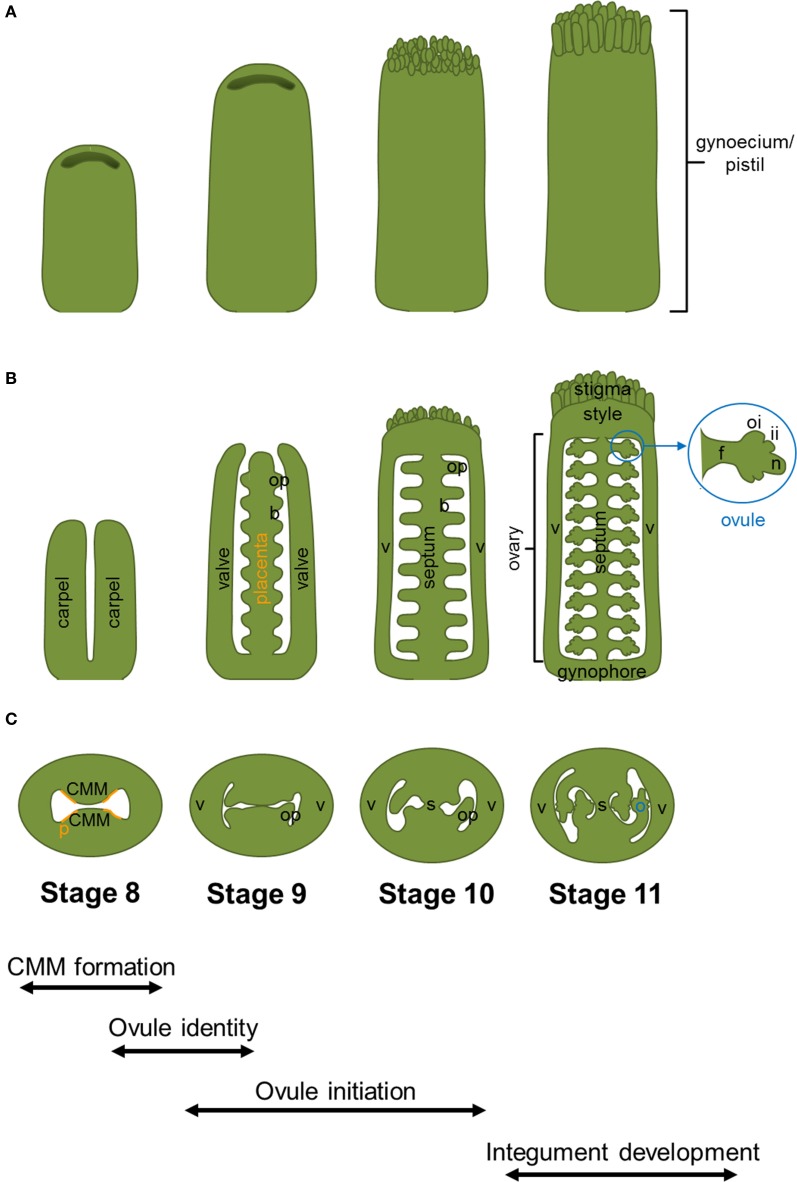
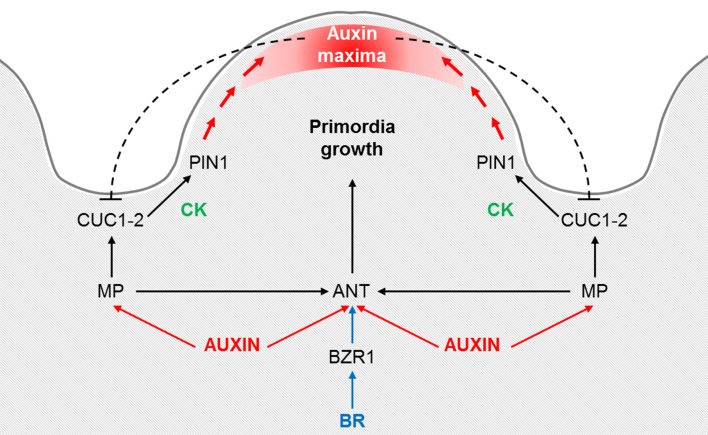
In spermatophytes the ovules upon fertilization give rise to the seeds. It is essential to understand the mechanisms that control ovule number and development as they ultimately determine the final number of seeds and, thereby, the yield in crop plants. In Arabidopsis thaliana, ovules arise laterally from a meristematic tissue within the carpel referred to as placenta. For a correct determination of the number of ovules, a precise establishment of the positions where ovule primordia emerge is needed, and a tight definition of the boundaries between ovules is therefore also required. In the last decades, few factors have been identified to be involved in the determination of ovule number. Recently, plant hormones have also been revealed as fundamental players in the control of the initiation of ovule formation. In this review we summarize the current knowledge about both the molecular and hormonal mechanisms that control ovule formation in Arabidopsis thaliana.
在种子植物中,胚珠受精后发育为种子。理解控制胚珠数量和发育的机制至关重要,因为它们最终决定了种子的最终数量,从而决定了作物的产量。在拟南芥中,胚珠从称为胎座的心皮内的一个分生组织侧向发育而来。为了正确确定胚珠的数量,需要精确确定胚珠原基出现的位置,因此还需要严格定义胚珠之间的边界。在过去的几十年中,已经确定了一些参与胚珠数量决定的因素。最近,植物激素也被揭示为控制胚珠形成启动的基本参与者。在这篇综述中,我们总结了控制拟南芥胚珠形成的分子和激素机制的最新知识。