Gong Zushun, Xing Shanshan, Zheng Fei, Xing Qichong
Department of Cardiology, Qianfoshan Hospital, Shandong University, 16766 Jingshi Road, Jinan 250014, China.
Department of Cardiology, Shandong University of Traditional Chinese Medicine, Jinan 250355, China.
Mediators Inflamm. 2014;2014:905463. doi: 10.1155/2014/905463. Epub 2014 Mar 4.
The purpose of this study was to investigate the changes of chitinase 3-like 1 (CHI3L1) in the aorta of patients with coronary atherosclerosis and to determine whether inhibition of CHI3L1 by lentivirus-mediated RNA interference could stabilize atherosclerotic plaques in apolipoprotein E-knockout (ApoE(-/-)) mice.
We collected discarded aortic specimens from patients undergoing coronary artery bypass graft surgery and renal arterial tissues from kidney donors. A lentivirus carrying small interfering RNA targeting the expression of CHI3L1 was constructed. Fifty ApoE(-/-) mice were divided into control group and CHI3L1 gene silenced group. A constrictive collar was placed around carotid artery to induce plaques formation. Then lentivirus was transfected into carotid plaques.
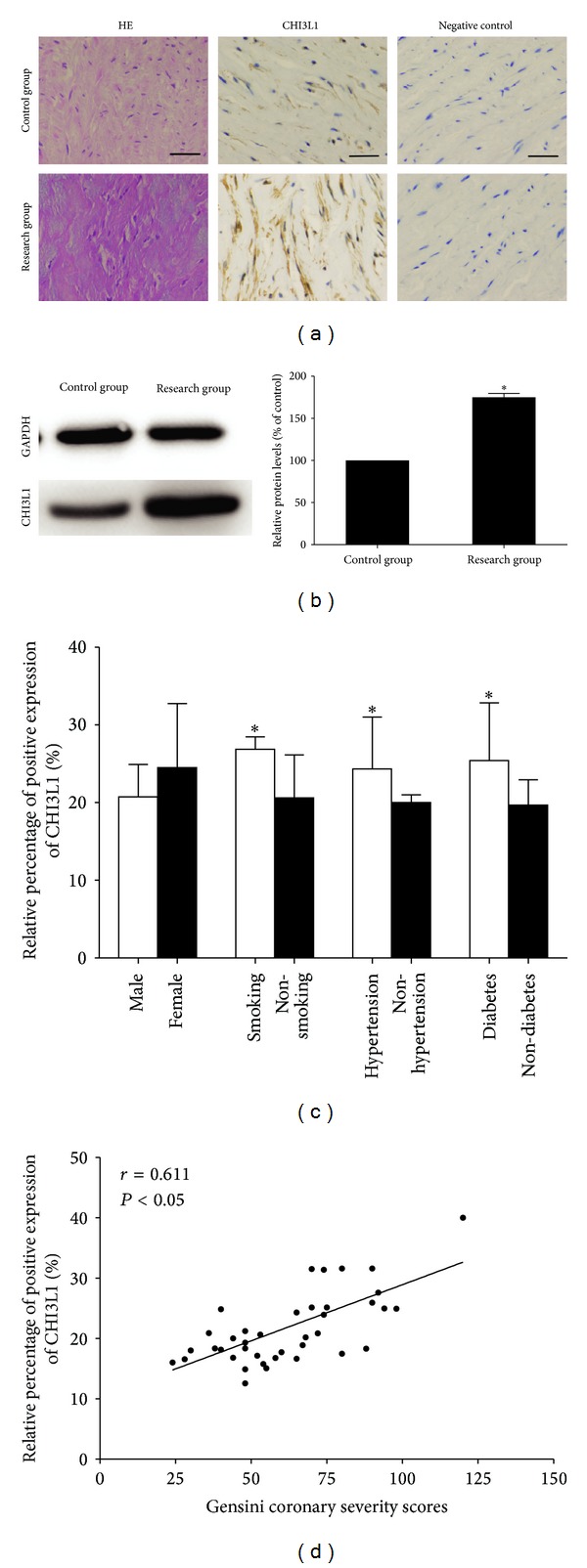
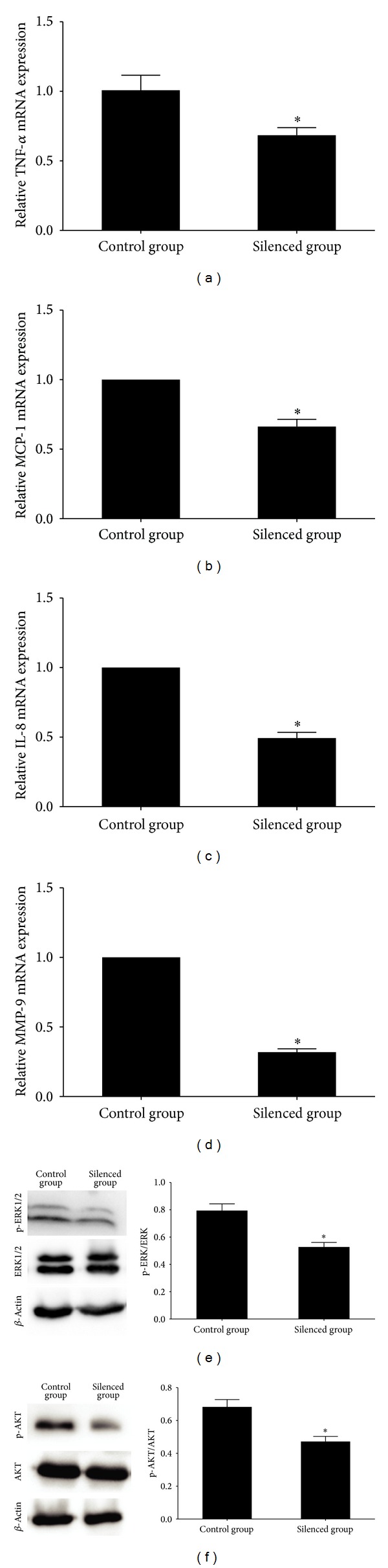
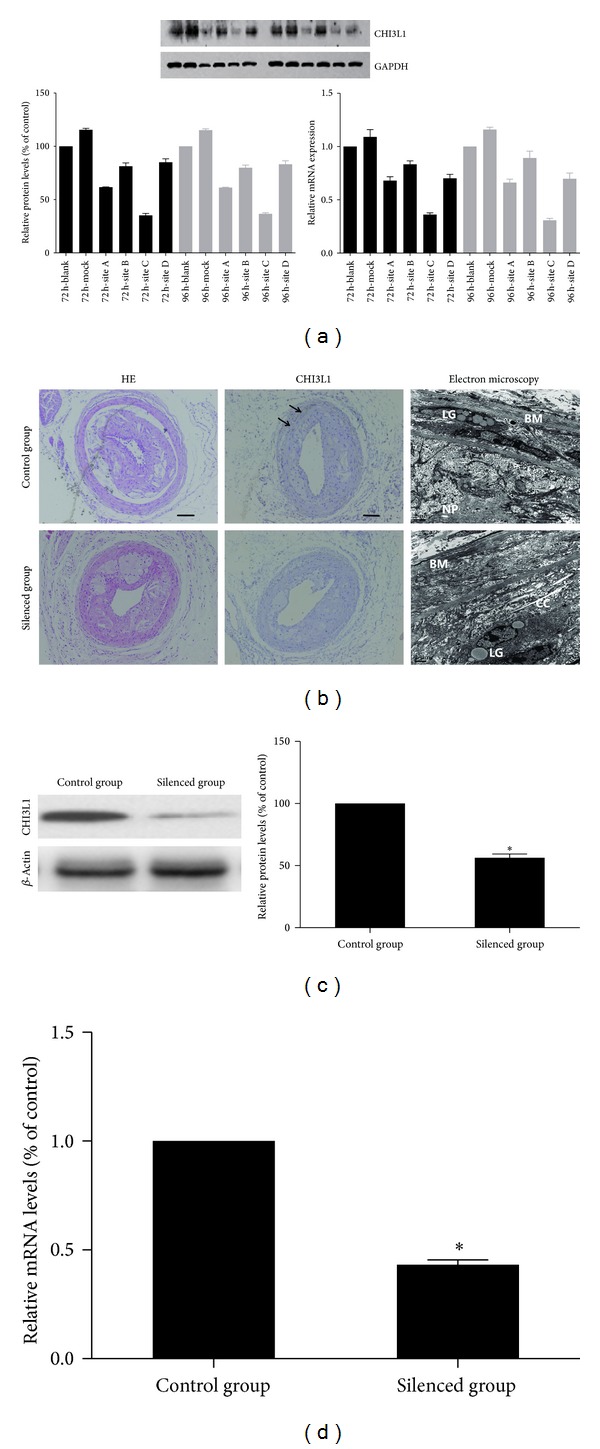
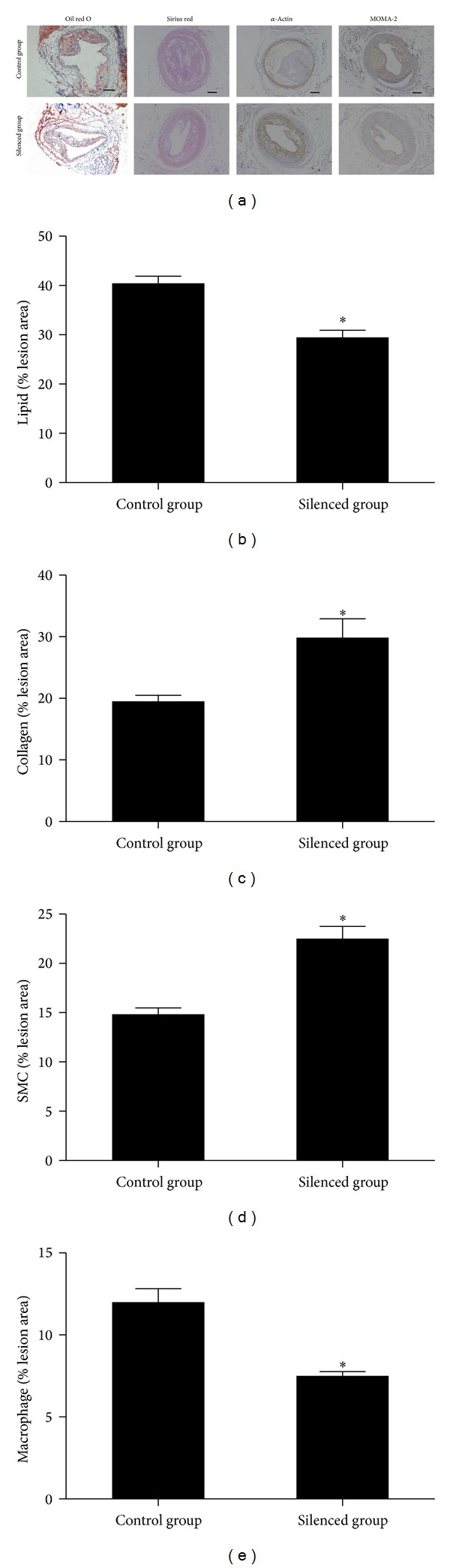
We found that CHI3L1 was overexpressed in aorta of patients with atherosclerosis and its expression was correlated with the atherosclerotic risk factors. After lentivirus transduction, mRNA and protein expression of CHI3L1 were attenuated in carotid plaques, leading to reduced plaque content of lipids and macrophages, and increased plaque content of collagen and smooth muscle cells. Moreover, CHI3L1 gene silencing downregulated the expression of local proinflammatory mediators.
CHI3L1 is overexpressed in aorta from patients with atherosclerosis and the lentivirus-mediated CHI3L1 gene silencing could represent a new strategy to inhibit plaques progression.
本研究旨在调查冠心病患者主动脉中几丁质酶3样1(CHI3L1)的变化,并确定慢病毒介导的RNA干扰抑制CHI3L1是否能稳定载脂蛋白E基因敲除(ApoE(-/-))小鼠的动脉粥样硬化斑块。
我们收集了接受冠状动脉搭桥手术患者废弃的主动脉标本以及肾脏供体的肾动脉组织。构建了携带靶向CHI3L1表达的小干扰RNA的慢病毒。将50只ApoE(-/-)小鼠分为对照组和CHI3L1基因沉默组。在颈动脉周围放置收缩套环以诱导斑块形成。然后将慢病毒转染到颈动脉斑块中。
我们发现CHI3L1在动脉粥样硬化患者的主动脉中过表达,其表达与动脉粥样硬化危险因素相关。慢病毒转导后,颈动脉斑块中CHI3L1的mRNA和蛋白表达减弱,导致斑块脂质和巨噬细胞含量减少,胶原蛋白和平滑肌细胞含量增加。此外,CHI3L1基因沉默下调了局部促炎介质的表达。
CHI3L1在动脉粥样硬化患者的主动脉中过表达,慢病毒介导的CHI3L1基因沉默可能代表一种抑制斑块进展的新策略。