Perumalsamy Sangeetha, Huri Hasniza Zaman, Abdullah Bashar Mudhaffar, Mazlan Othman, Wan Ahmad Wan Azman, Vethakkan Shireene Ratna D B
Department of Clinical Pharmacy and Pharmacy Practice, Faculty of Pharmacy, Universiti Malaya, Kuala Lumpur 50603, Malaysia.
Department of Medical Laboratories Techniques, Al-Rafidain University College, Baghdad 46036, Iraq.
Metabolites. 2023 Mar 14;13(3):427. doi: 10.3390/metabo13030427.
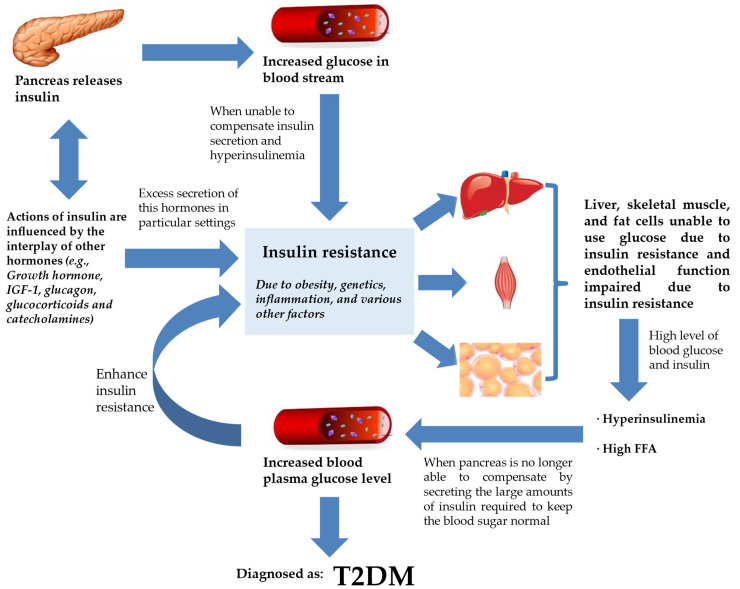
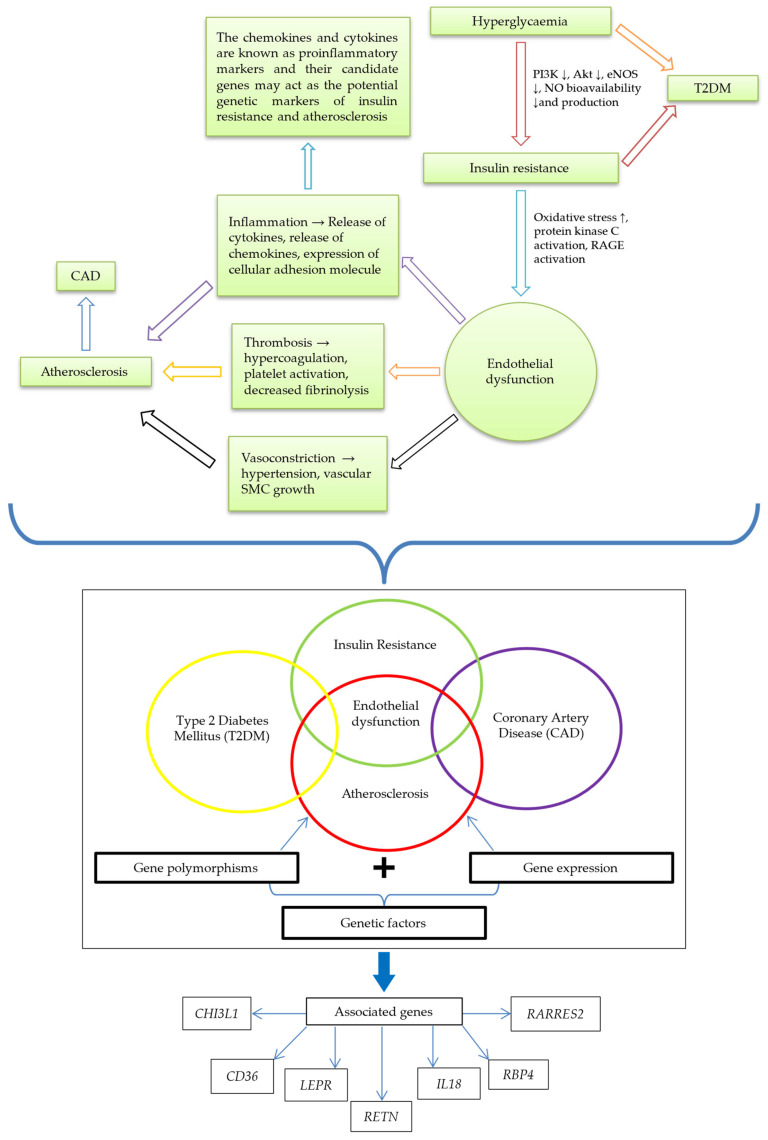
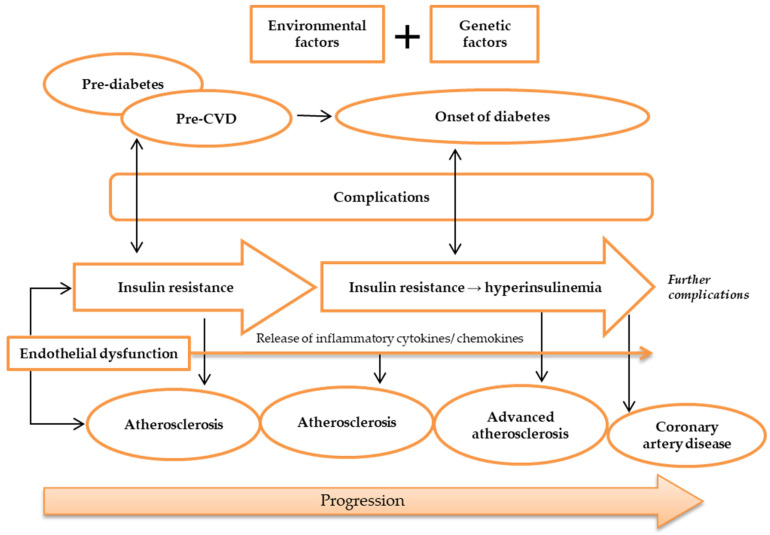
Type 2 diabetes mellitus (T2DM) is characterized by impaired insulin secretion on a background of insulin resistance (IR). IR and T2DM are associated with atherosclerotic coronary artery disease (CAD). The mechanisms of IR and atherosclerosis are known to share similar genetic and environmental roots. Endothelial dysfunction (ED) detected at the earliest stages of IR might be the origin of atherosclerosis progression. ED influences the secretion of pro-inflammatory cytokines and their encoding genes. The genes and their single nucleotide polymorphisms (SNPs) act as potential genetic markers of IR and atherosclerosis. This review focuses on the link between IR, T2DM, atherosclerosis, CAD, and the potential genetic markers , , , , , , and genes.
2型糖尿病(T2DM)的特征是在胰岛素抵抗(IR)的背景下胰岛素分泌受损。IR和T2DM与动脉粥样硬化性冠状动脉疾病(CAD)相关。已知IR和动脉粥样硬化的机制有相似的遗传和环境根源。在IR最早阶段检测到的内皮功能障碍(ED)可能是动脉粥样硬化进展的起源。ED影响促炎细胞因子及其编码基因的分泌。这些基因及其单核苷酸多态性(SNP)作为IR和动脉粥样硬化的潜在遗传标记。本综述重点关注IR、T2DM、动脉粥样硬化、CAD以及潜在遗传标记、、、、、、和基因之间的联系。