College of Pharmacy & Medical Research Center, Chungbuk National University, Cheongju, Chungbuk 28160, Korea.
Department of Dental Hygiene, Gwangyang Health Sciences University, Gwangyang, Jeonnam 57764, Korea.
Theranostics. 2018 Jan 1;8(3):749-766. doi: 10.7150/thno.20183. eCollection 2018.
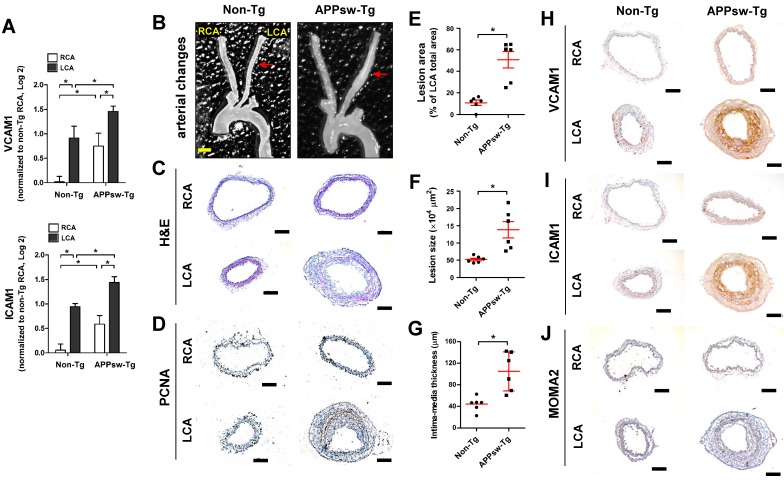
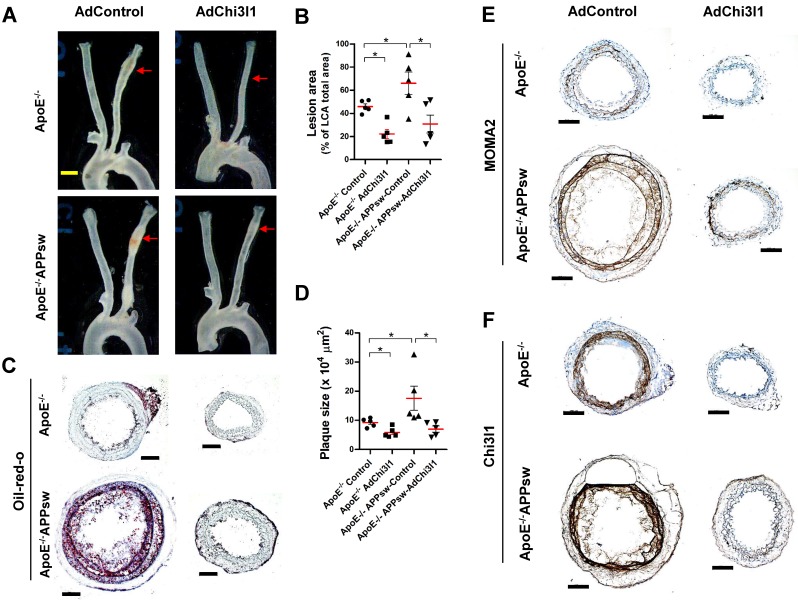
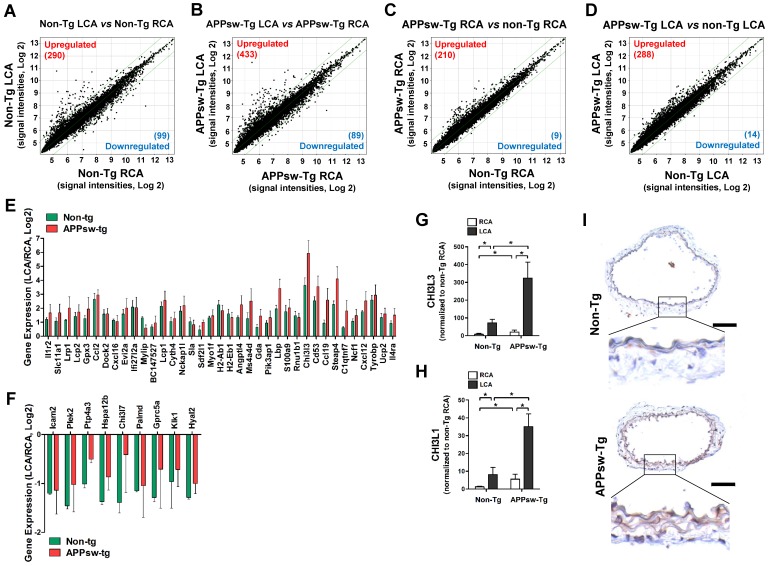
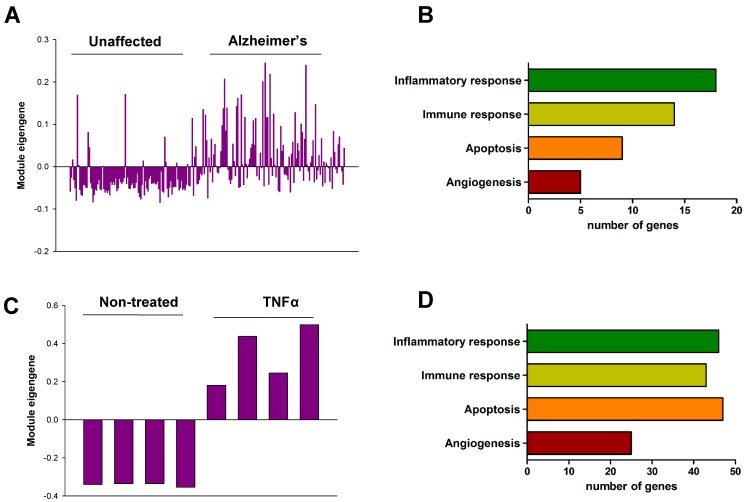
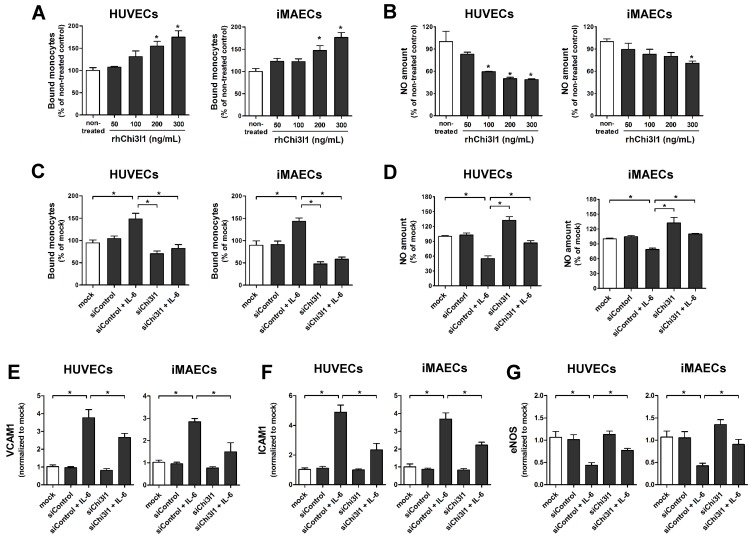
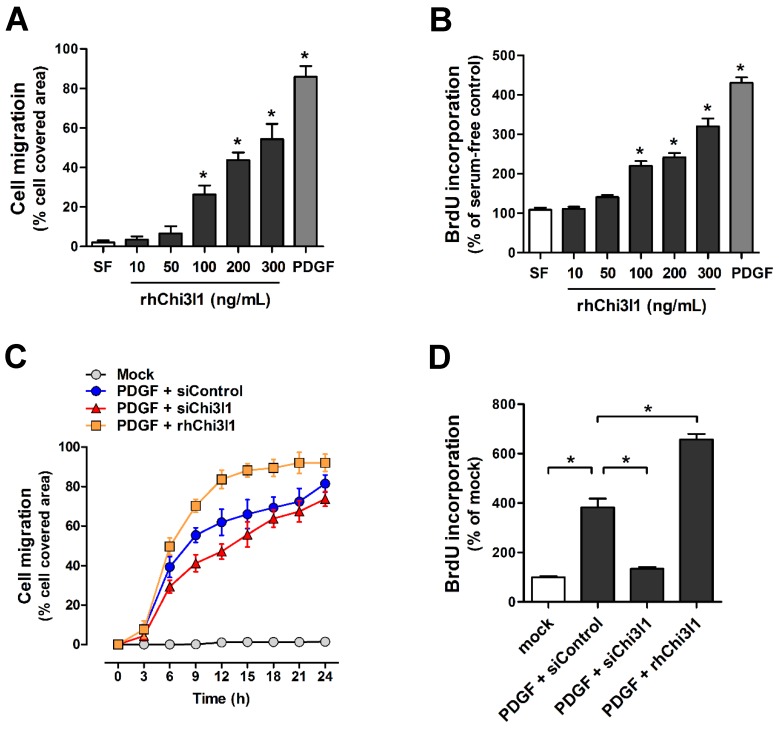
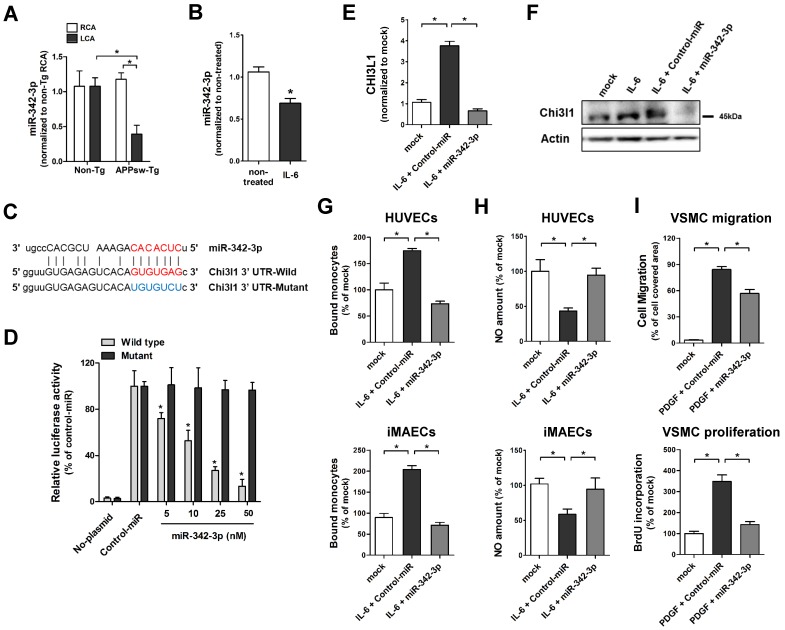
Although the important role of amyloid precursor protein (APP) in vascular diseases associated with Alzheimer's disease (AD) has been demonstrated, the underlying molecular mechanisms and physiological consequences are unclear. We aimed to evaluate vascular inflammation and atherosclerosis in Swedish mutant of human APP transgenic (APPsw-Tg) and ApoE/APPsw-Tg mice. We also aimed to explore the mechanisms underlying any changes observed in these mice compared with non-Tg controls. The transgenic and non-Tg mouse strains were subjected to partial ligation of the left carotid artery to induce atherosclerotic changes, which were measured using histological approaches, immunohistochemistry, quantitative polymerase chain reaction, and gene expression microarrays. Our results showed increased vascular inflammation, arterial wall thickness, and atherosclerosis in APPsw-Tg and ApoE/APPsw-Tg mice. We further found that the expression of chitinase-3-like-1 (Chi3l1) is increased in the APPsw-Tg mouse artery and Chi3l1 mediates endothelial cell (EC) inflammation and vascular smooth muscle cell (VSMC) activation, which in turn exacerbates atherosclerosis. In addition, using two publicly available microarray datasets from the dorsolateral prefrontal cortex of people with AD and unaffected controls as well as inflamed human umbilical vein endothelial cells, we found that Chi3l1 and associated inflammatory gene were significantly associated with AD, evaluated by co-expression network analysis and functional annotation. Knockdown of Chi3l1 in the arterial endothelium suppressed the development of atherosclerosis. We also show that microRNA 342-3p (miR-342-3p) inhibits EC inflammation and VSMC activation through directly targeting Chi3l1, and that APPsw increased Chi3l1 expression by reducing miR-342-3p expression in the arterial endothelium, promoting atherosclerosis. Our findings suggest that targeting Chi3l1 might provide new diagnostic and therapeutic strategies for vascular diseases in patients with AD.
尽管淀粉样前体蛋白(APP)在与阿尔茨海默病(AD)相关的血管疾病中的重要作用已得到证实,但潜在的分子机制和生理后果尚不清楚。我们旨在评估瑞典突变型人类 APP 转基因(APPsw-Tg)和 ApoE/APPsw-Tg 小鼠的血管炎症和动脉粥样硬化。我们还旨在探索与非转基因对照相比,这些小鼠中观察到的任何变化的机制。将转基因和非转基因小鼠品系进行左颈动脉部分结扎,以诱导动脉粥样硬化变化,通过组织学方法、免疫组织化学、定量聚合酶链反应和基因表达微阵列进行测量。 我们的结果表明,APPsw-Tg 和 ApoE/APPsw-Tg 小鼠的血管炎症、动脉壁厚度和动脉粥样硬化增加。我们进一步发现,APPsw-Tg 小鼠动脉中几丁质酶 3 样蛋白 1(Chi3l1)的表达增加,Chi3l1 介导内皮细胞(EC)炎症和血管平滑肌细胞(VSMC)激活,进而加剧动脉粥样硬化。此外,使用来自 AD 患者和无影响对照的背外侧前额叶皮层的两个公开可用的微阵列数据集以及炎症人脐静脉内皮细胞,我们通过共表达网络分析和功能注释发现 Chi3l1 和相关炎症基因与 AD 显著相关。动脉内皮细胞中的 Chi3l1 敲低抑制了动脉粥样硬化的发展。我们还表明,微小 RNA 342-3p(miR-342-3p)通过直接靶向 Chi3l1 抑制 EC 炎症和 VSMC 激活,而 APPsw 通过降低动脉内皮细胞中 miR-342-3p 的表达来增加 Chi3l1 表达,从而促进动脉粥样硬化。 我们的研究结果表明,靶向 Chi3l1 可能为 AD 患者的血管疾病提供新的诊断和治疗策略。