Narayan Rishikesh, Potowski Marco, Jia Zhi-Jun, Antonchick Andrey P, Waldmann Herbert
Max-Planck Institut für Molekulare Physiologie , Abteilung Chemische Biologie, Dortmund 44227, Germany.
Acc Chem Res. 2014 Apr 15;47(4):1296-310. doi: 10.1021/ar400286b. Epub 2014 Mar 22.
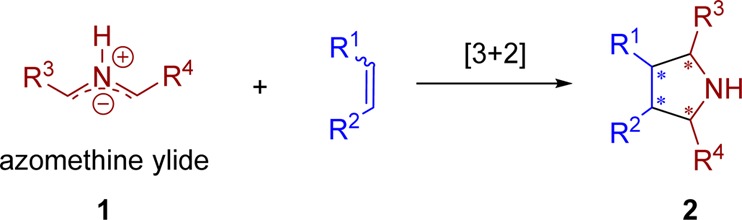
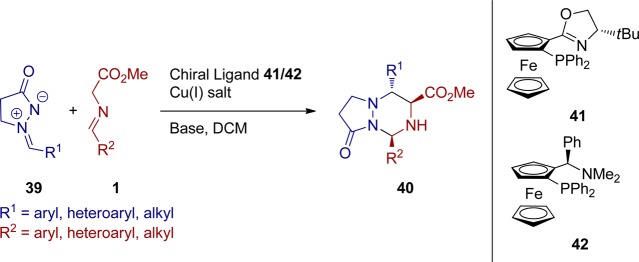
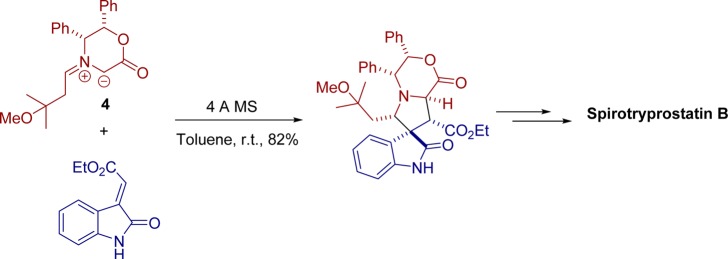
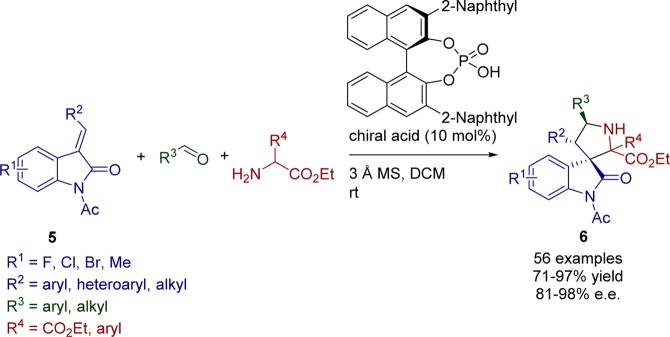
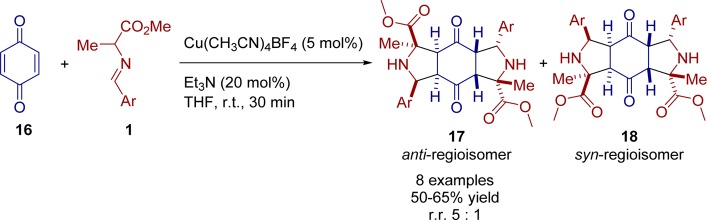
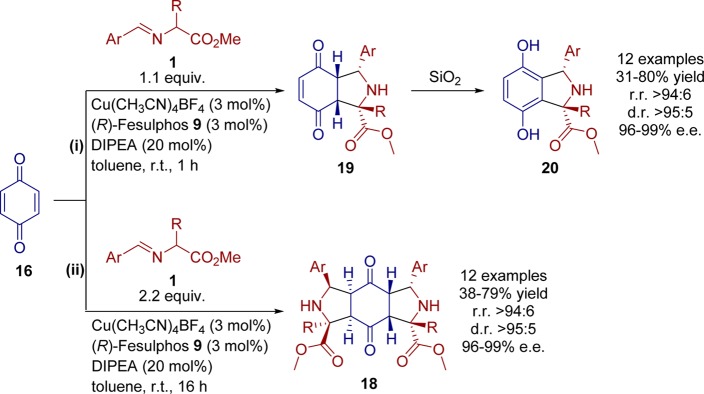
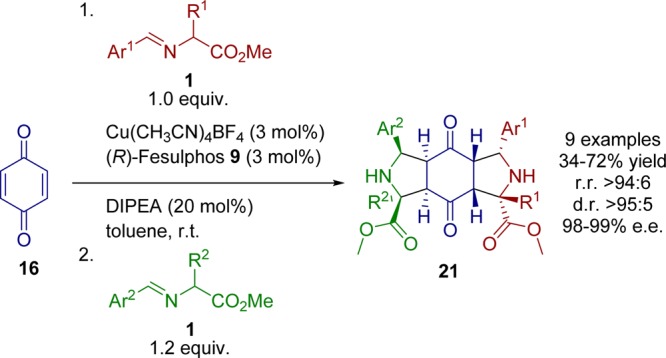
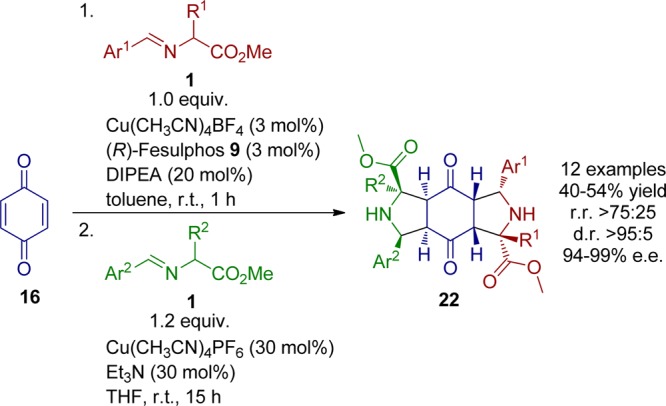
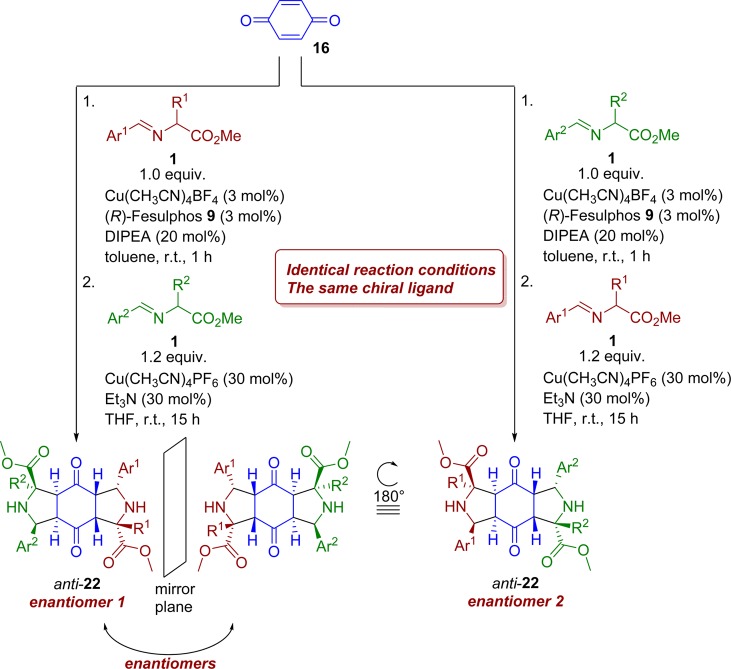
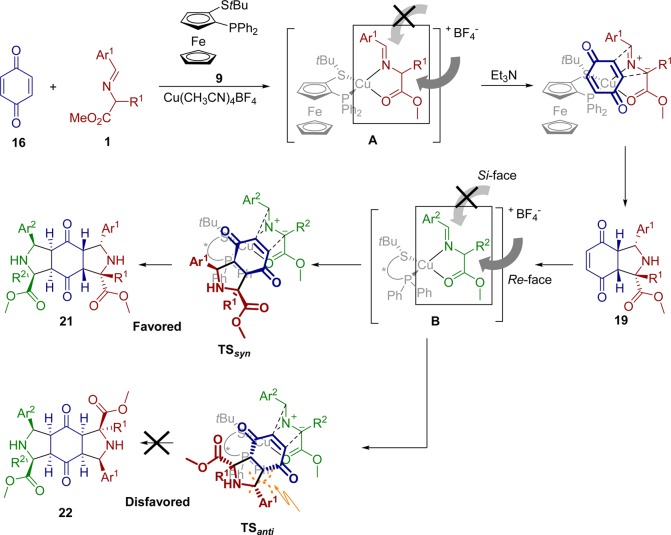
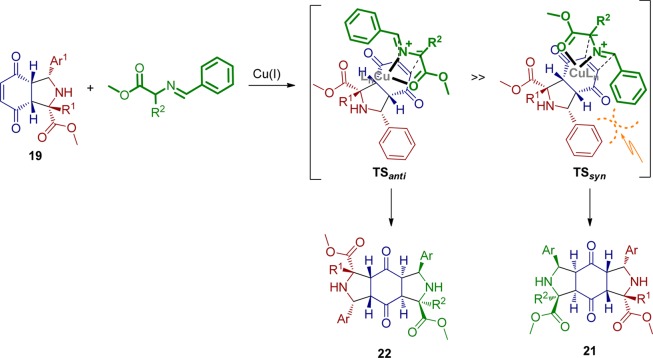
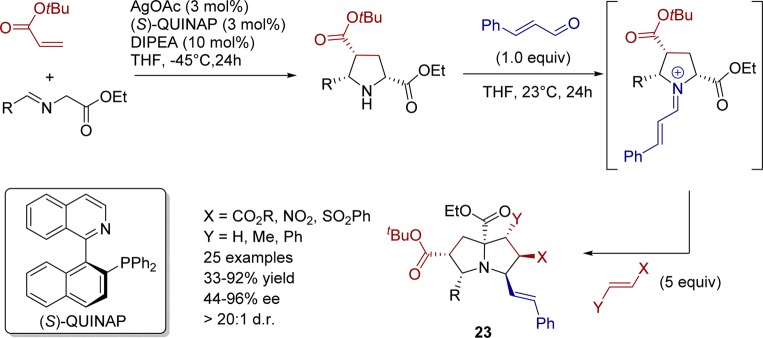
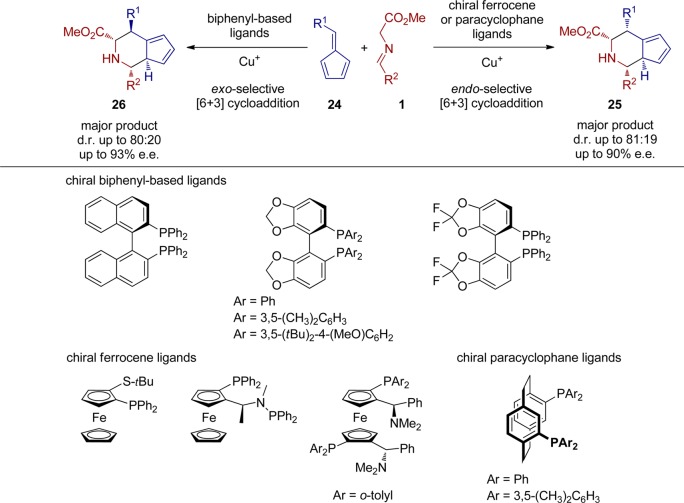
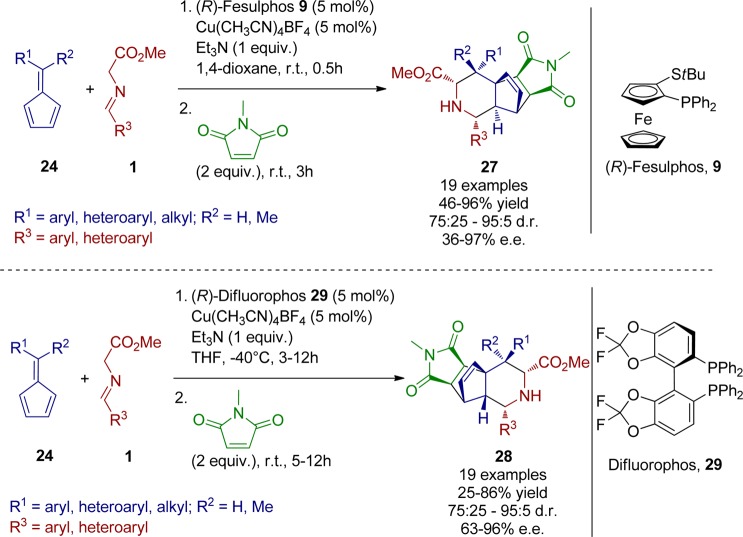
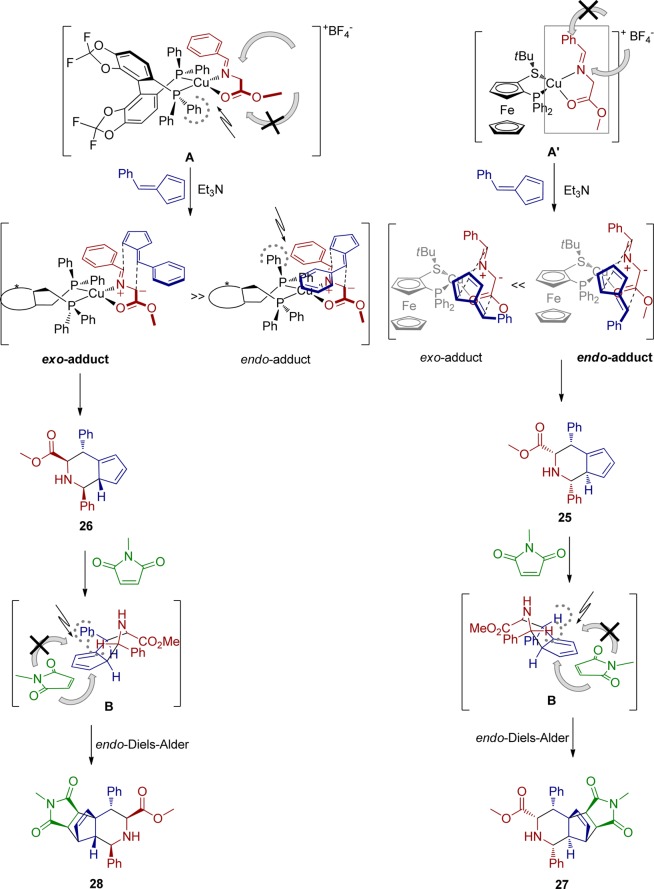
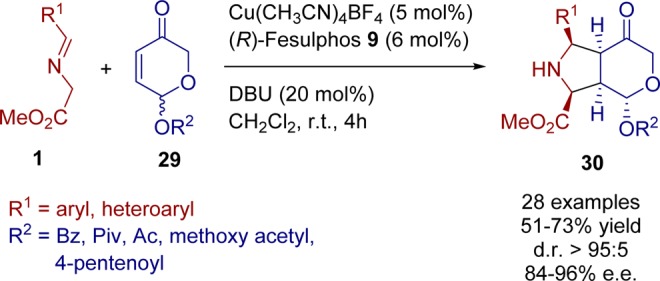
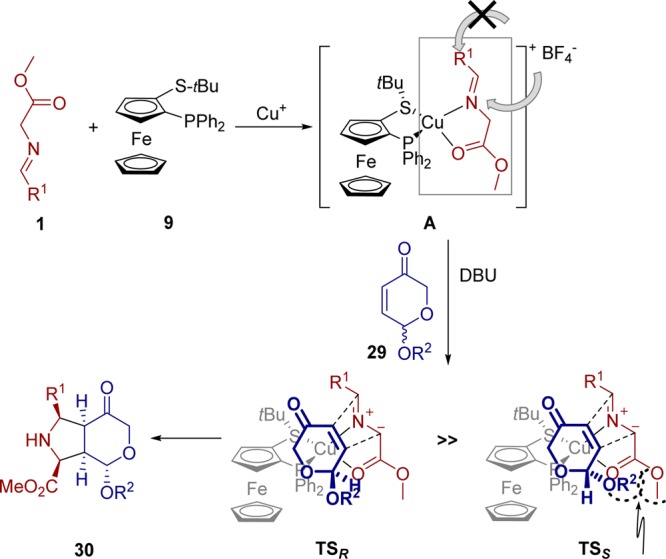
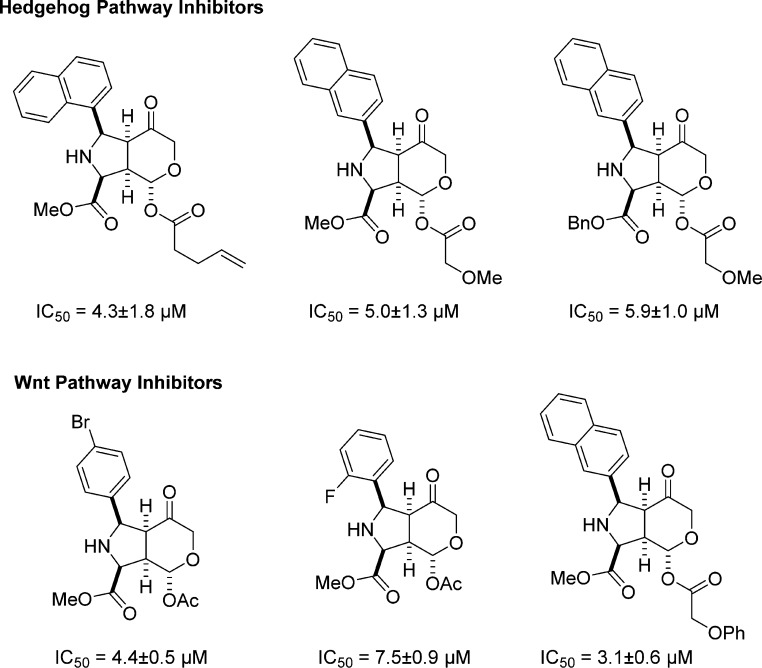
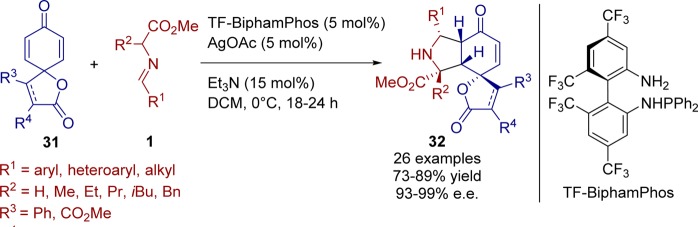
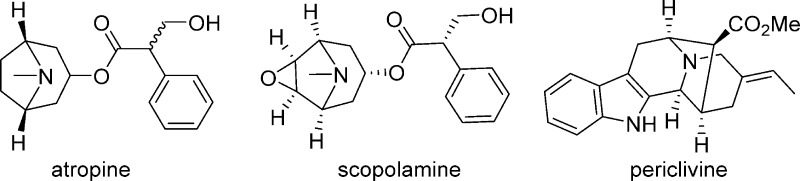
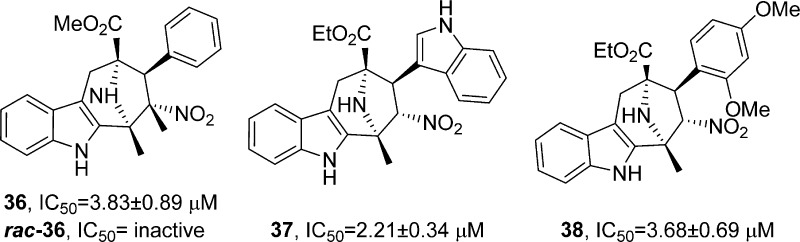
Cycloaddition reactions are among the most powerful methods for the synthesis of complex compounds. In particular, the development and application of the 1,3-dipolar cycloaddition, an important member of this reaction class, has grown immensely due to its powerful ability to efficiently build various five-membered heterocycles. Azomethine ylides are commonly used as dipoles for the synthesis of the pyrrolidine scaffold, which is an important motif in natural products, pharmaceuticals, and biological probes. The reaction between azomethine ylides and cyclic dipolarophiles allows access to polycyclic products with considerable complexity. The extensive application of the 1,3-dipolar cycloaddition is based on the fact that the desired products can be obtained with high yield in a regio- and stereocontrolled manner. The most attractive feature of the 1,3-dipolar cycloaddition of azomethine ylides is the possibility to generate pyrrolidines with multiple stereocenters in a single step. The development of enantioselective cycloadditions became a subject of intensive and impressive studies in recent years. Among many modes of stereoinduction, the application of chiral metal-ligand complexes has emerged as the most viable option for control of enantioselectivity. In chemical biology research based on the principle of biology-oriented synthesis (BIOS), compound collections are prepared inspired by natural product scaffolds. In BIOS, biological relevance is employed as the key criterion to generate hypotheses for the design and synthesis of focused compound libraries. In particular, the underlying scaffolds of natural product classes provide inspiration for BIOS because they define the areas of chemical space explored by nature, and therefore, they can be regarded as "privileged". The scaffolds of natural products are frequently complex and rich in stereocenters, which necessitates the development of efficient enantioselective methodologies. This Account highlights examples, mostly from our work, of the application of 1,3-dipolar cycloaddition reactions of azomethine ylides for the catalytic enantioselective synthesis of complex products. We successfully applied the 1,3-dipolar cycloaddition in the synthesis of spiro-compounds such as spirooxindoles, for kinetic resolution of racemic compounds in the synthesis of an iridoid inspired compound collection and in the synthesis of a nitrogen-bridged bicyclic tropane scaffold by application of 1,3-fused azomethine ylides. Furthermore, we performed the synthesis of complex molecules with eight stereocenters using tandem cycloadditions. In a programmable sequential double cycloaddition, we demonstrated the synthesis of both enantiomers of complex products by simple changes in the order of addition of chemicals. Complex products were obtained using enantioselective higher order [6 + 3] cycloaddition of azomethine ylides with fulvenes followed by Diels-Alder reaction. The bioactivity of these compound collections is also discussed.
环加成反应是合成复杂化合物最有效的方法之一。特别是1,3 - 偶极环加成反应作为这类反应的一个重要成员,由于其能够高效构建各种五元杂环的强大能力,其发展和应用得到了极大的拓展。甲亚胺叶立德通常用作合成吡咯烷骨架的偶极体,吡咯烷骨架是天然产物、药物和生物探针中的一个重要结构单元。甲亚胺叶立德与环状亲偶极体之间的反应能够得到具有相当复杂性的多环产物。1,3 - 偶极环加成反应的广泛应用基于这样一个事实,即可以通过区域和立体控制的方式高产率地获得所需产物。甲亚胺叶立德的1,3 - 偶极环加成反应最吸引人的特点是能够在一步反应中生成具有多个立体中心的吡咯烷。近年来,对映选择性环加成反应的发展成为了深入且引人注目的研究课题。在众多立体诱导模式中,手性金属 - 配体配合物的应用已成为控制对映选择性最可行的选择。在基于生物导向合成(BIOS)原理的化学生物学研究中,化合物库是受天然产物骨架启发而制备的。在BIOS中,生物学相关性被用作生成聚焦化合物库设计和合成假设的关键标准。特别是天然产物类别的潜在骨架为BIOS提供了灵感,因为它们定义了自然界探索的化学空间区域,因此可以被视为“特权”骨架。天然产物的骨架通常复杂且富含立体中心,这就需要开发高效的对映选择性方法。本综述重点介绍了甲亚胺叶立德的1,3 - 偶极环加成反应在催化对映选择性合成复杂产物中的应用实例,这些实例大多来自我们的工作。我们成功地将1,3 - 偶极环加成反应应用于螺环化合物(如螺环氧化吲哚)的合成、在合成环烯醚萜类化合物库时对外消旋化合物的动力学拆分以及通过应用1,3 - 稠合甲亚胺叶立德合成氮桥双环托烷骨架。此外,我们还通过串联环加成反应合成了具有八个立体中心的复杂分子。在一个可编程的顺序双环加成反应中,我们通过简单改变化学物质添加顺序证明了合成复杂产物的两种对映体。通过甲亚胺叶立德与富烯的对映选择性高阶[6 + 3]环加成反应,随后进行狄尔斯 - 阿尔德反应,得到了复杂产物。本文还讨论了这些化合物库的生物活性。