Pedroni Silvia M A, Turban Sophie, Kipari Tiina, Dunbar Donald R, McInnes Kerry, Saunders Philippa T K, Morton Nicholas M, Norman Jane E
Tommy's Centre for Maternal and Fetal Health, The University of Edinburgh, Queen's Medical Research Institute, Edinburgh, United Kingdom; MRC Centre for Reproductive Health, The University of Edinburgh, Queen's Medical Research Institute, Edinburgh, United Kingdom.
Endocrinology Unit, University/BHF Centre for Cardiovascular Science, The University of Edinburgh, Queen's Medical Research Institute, Edinburgh, United Kingdom.
PLoS One. 2014 Apr 14;9(4):e94680. doi: 10.1371/journal.pone.0094680. eCollection 2014.
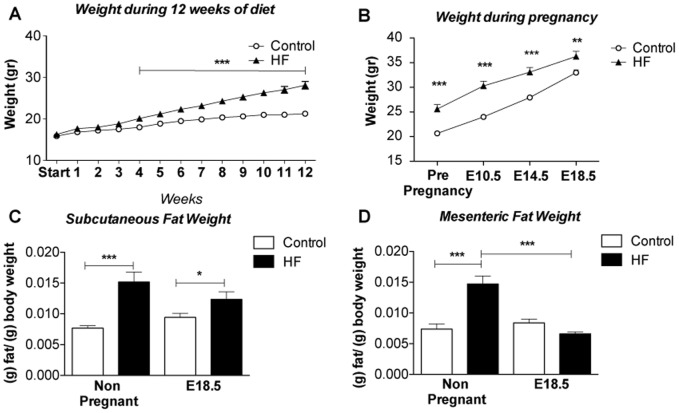
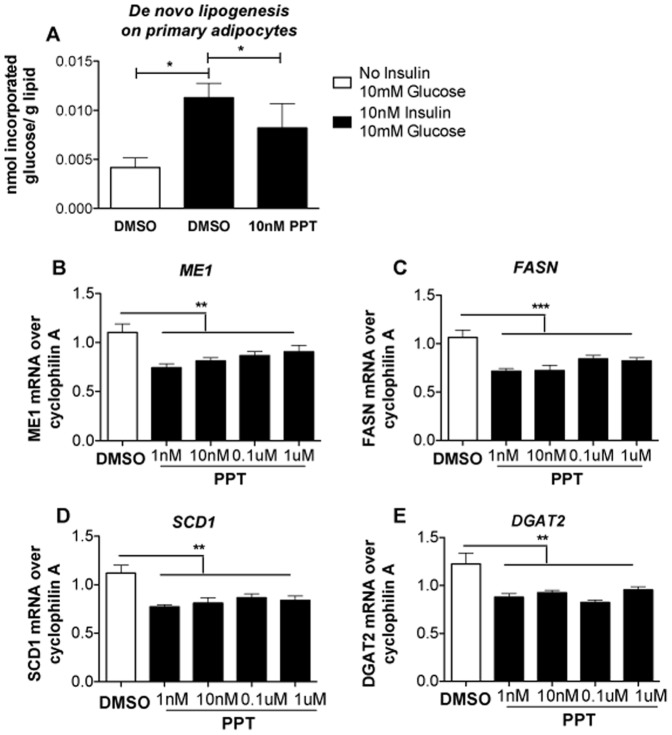
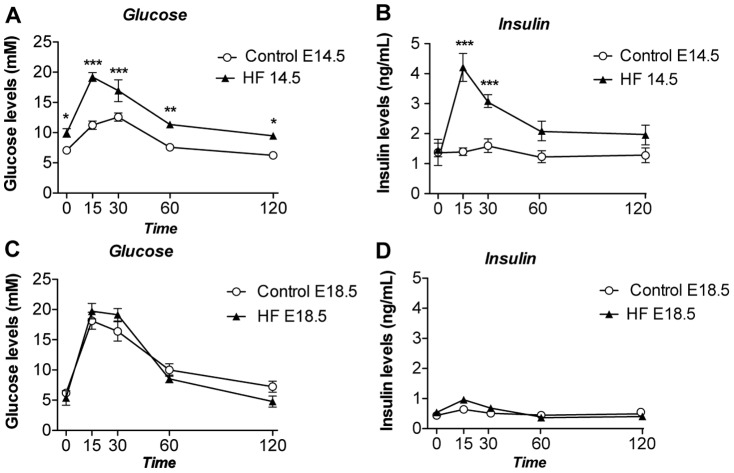
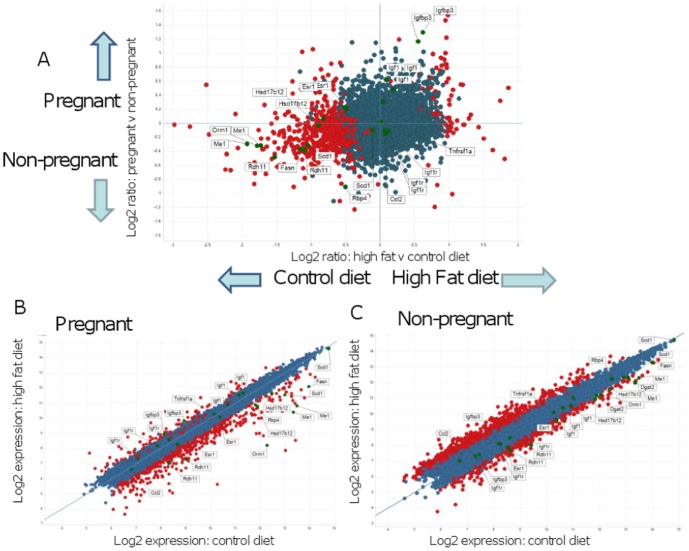
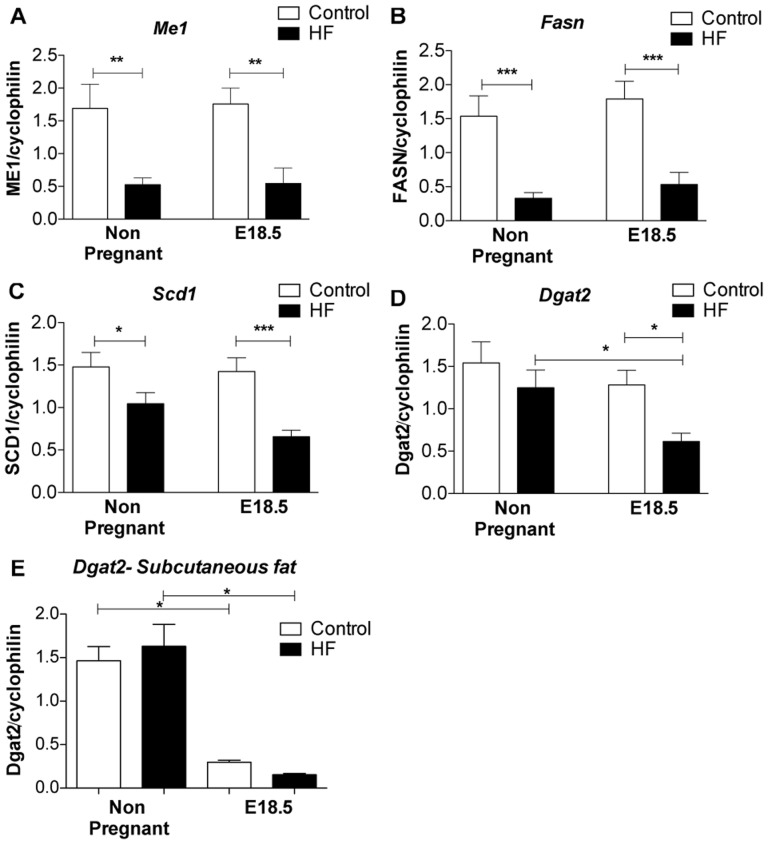
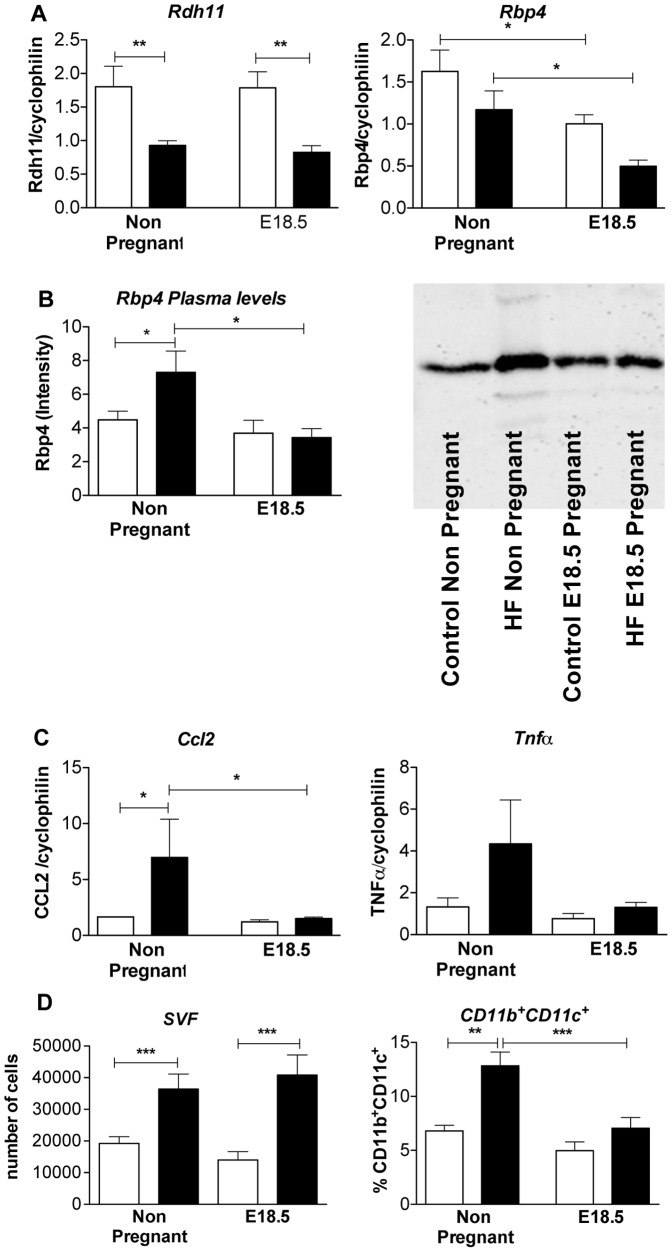
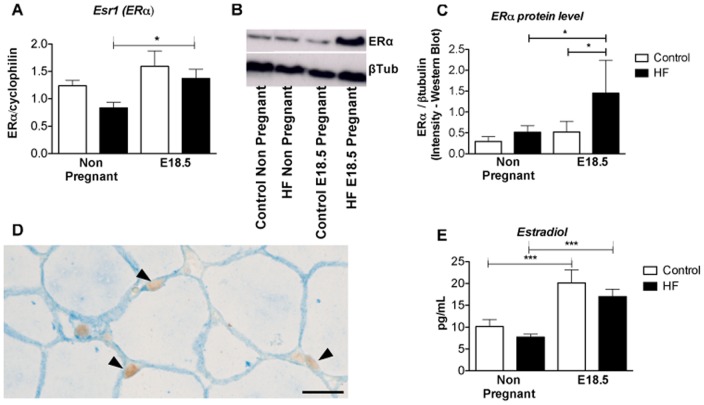
Maternal obesity is linked with increased adverse pregnancy outcomes for both mother and child. The metabolic impact of excessive fat within the context of pregnancy is not fully understood. We used a mouse model of high fat (HF) feeding to induce maternal obesity to identify adipose tissue-mediated mechanisms driving metabolic dysfunction in pregnant and non-pregnant obese mice. As expected, chronic HF-feeding for 12 weeks preceding pregnancy increased peripheral (subcutaneous) and visceral (mesenteric) fat mass. However, unexpectedly at late gestation (E18.5) HF-fed mice exhibited a remarkable normalization of visceral but not peripheral adiposity, with a 53% reduction in non-pregnant visceral fat mass expressed as a proportion of body weight (P<0.001). In contrast, in control animals, pregnancy had no effect on visceral fat mass proportion. Obesity exaggerated glucose intolerance at mid-pregnancy (E14.5). However by E18.5, there were no differences, in glucose tolerance between obese and control mice. Transcriptomic analysis of visceral fat from HF-fed dams at E18.5 revealed reduced expression of genes involved in de novo lipogenesis (diacylglycerol O-acyltransferase 2--Dgat2) and inflammation (chemokine C-C motif ligand 20--Ccl2) and upregulation of estrogen receptor α (ERα) compared to HF non pregnant. Attenuation of adipose inflammation was functionally confirmed by a 45% reduction of CD11b+CD11c+ adipose tissue macrophages (expressed as a proportion of all stromal vascular fraction cells) in HF pregnant compared to HF non pregnant animals (P<0.001). An ERα selective agonist suppressed both de novo lipogenesis and expression of lipogenic genes in adipocytes in vitro. These data show that, in a HF model of maternal obesity, late gestation is associated with amelioration of visceral fat hypertrophy, inflammation and glucose intolerance, and suggest that these effects are mediated in part by elevated visceral adipocyte ERα signaling.
母体肥胖与母婴不良妊娠结局的增加有关。孕期过多脂肪的代谢影响尚未完全了解。我们使用高脂肪(HF)喂养的小鼠模型诱导母体肥胖,以确定脂肪组织介导的机制,这些机制导致怀孕和未怀孕的肥胖小鼠出现代谢功能障碍。正如预期的那样,怀孕前12周的慢性HF喂养增加了外周(皮下)和内脏(肠系膜)脂肪量。然而,出乎意料的是,在妊娠晚期(E18.5),HF喂养的小鼠内脏脂肪量显著恢复正常,但外周脂肪量未恢复正常,非怀孕时的内脏脂肪量占体重的比例降低了53%(P<0.001)。相比之下,在对照动物中,怀孕对内脏脂肪量比例没有影响。肥胖加剧了妊娠中期(E14.5)的葡萄糖不耐受。然而,到E18.5时,肥胖小鼠和对照小鼠之间的葡萄糖耐量没有差异。对E18.5时HF喂养的母鼠的内脏脂肪进行转录组分析发现,与未怀孕的HF母鼠相比,参与从头脂肪生成(二酰甘油O-酰基转移酶2--Dgat2)和炎症(趋化因子C-C基序配体20--Ccl2)的基因表达降低,雌激素受体α(ERα)上调。与未怀孕的HF动物相比,怀孕的HF动物中CD11b+CD11c+脂肪组织巨噬细胞减少45%(以所有基质血管部分细胞的比例表示),从功能上证实了脂肪炎症的减轻(P<0.001)。一种ERα选择性激动剂在体外抑制了脂肪细胞中的从头脂肪生成和脂肪生成基因的表达。这些数据表明,在母体肥胖的HF模型中,妊娠晚期与内脏脂肪肥大、炎症和葡萄糖不耐受的改善有关,并表明这些作用部分是由内脏脂肪细胞ERα信号升高介导的。