Department of Molecular and Integrative Physiology, University of Michigan Medical School, Ann Arbor, MI, USA.
Department of Microbiology and Immunology, University of Buffalo, Buffalo, NY, USA.
Mol Metab. 2020 Sep;39:100992. doi: 10.1016/j.molmet.2020.100992. Epub 2020 Apr 20.
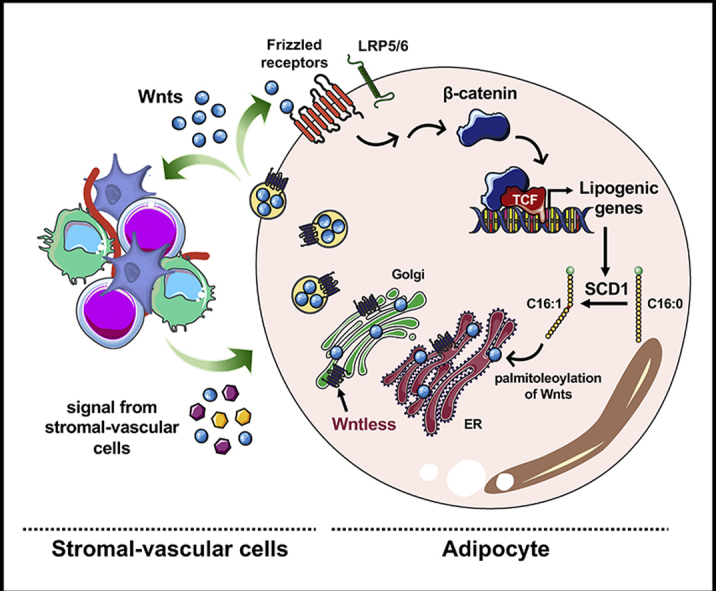
Obesity is a key risk factor for many secondary chronic illnesses, including type 2 diabetes and cardiovascular disease. Canonical Wnt/β-catenin signaling is established as an important endogenous inhibitor of adipogenesis. This pathway is operative in mature adipocytes; however, its roles in this context remain unclear due to complexities of Wnt signaling and differences in experimental models. In this study, we used novel cultured cell and mouse models to investigate functional roles of Wnts secreted from adipocytes.
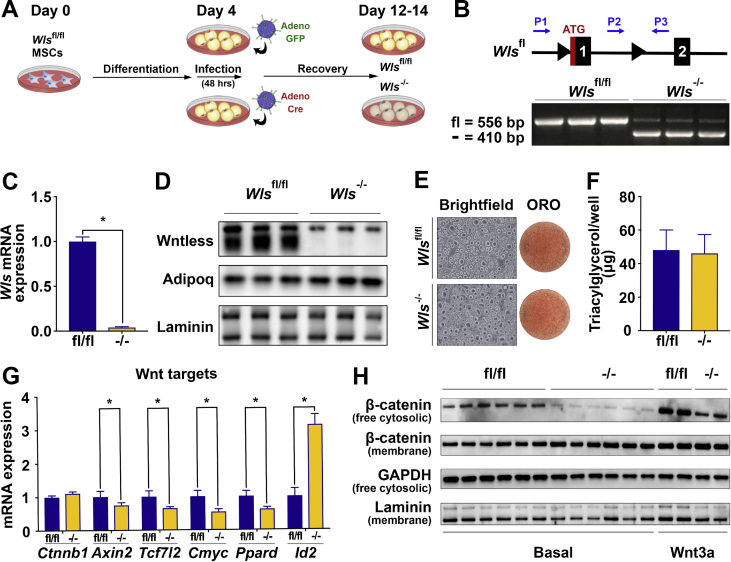
We generated adipocyte-specific Wntless (Wls) knockout mice and cultured cell models to investigate molecular and metabolic consequences of disrupting Wnt secretion from mature adipocytes. To characterize Wls-deficient cultured adipocytes, we evaluated the expression of Wnt target and lipogenic genes and the downstream functional effects on carbohydrate and lipid metabolism. We also investigated the impact of adipocyte-specific Wls deletion on adipose tissues and global glucose metabolism in mice fed normal chow or high-fat diets.
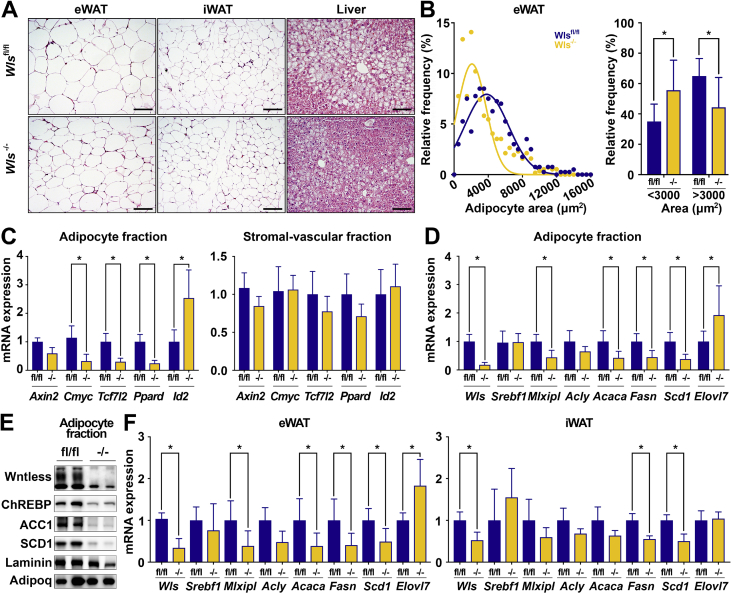
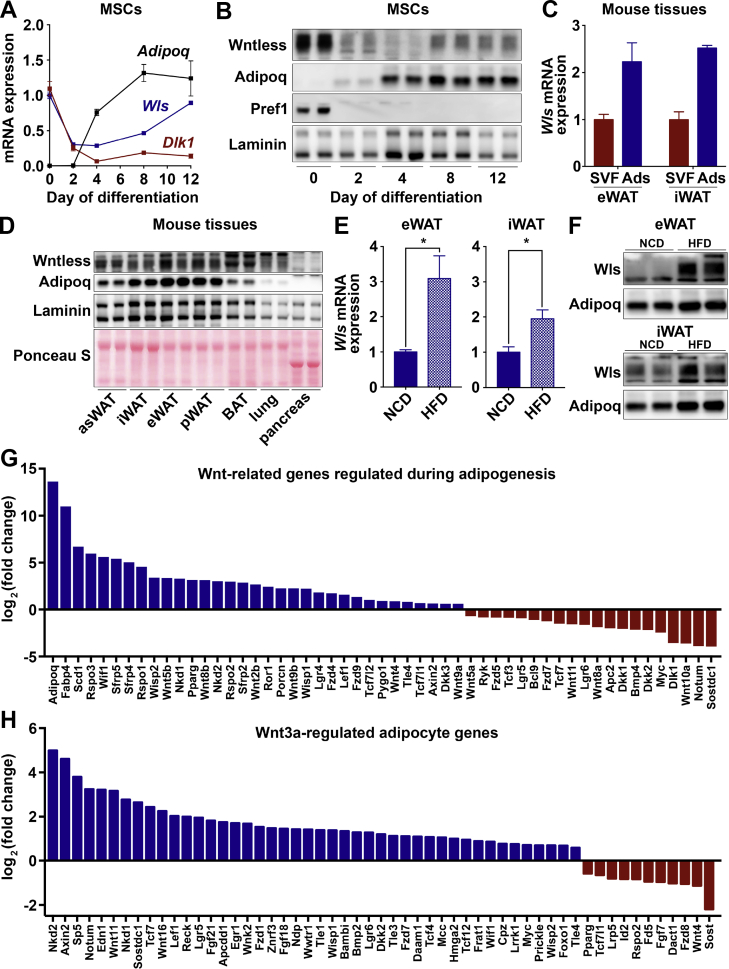
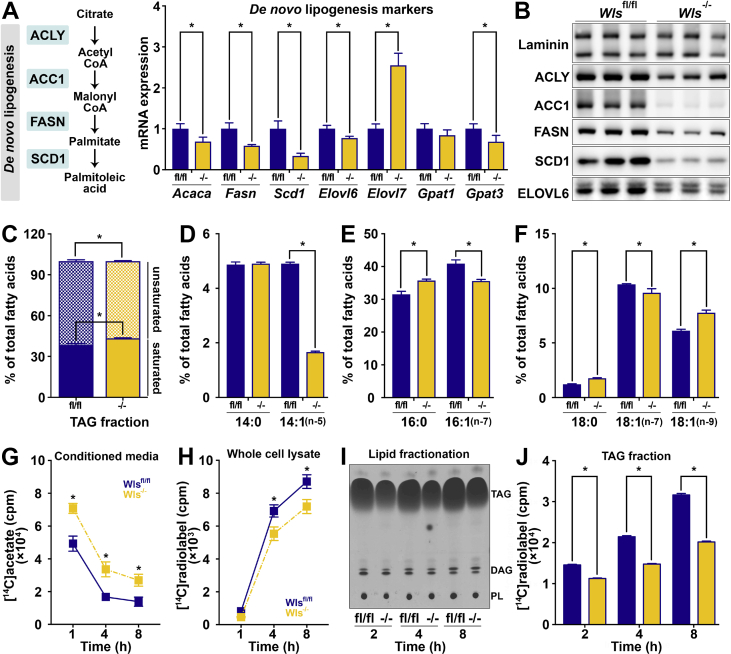
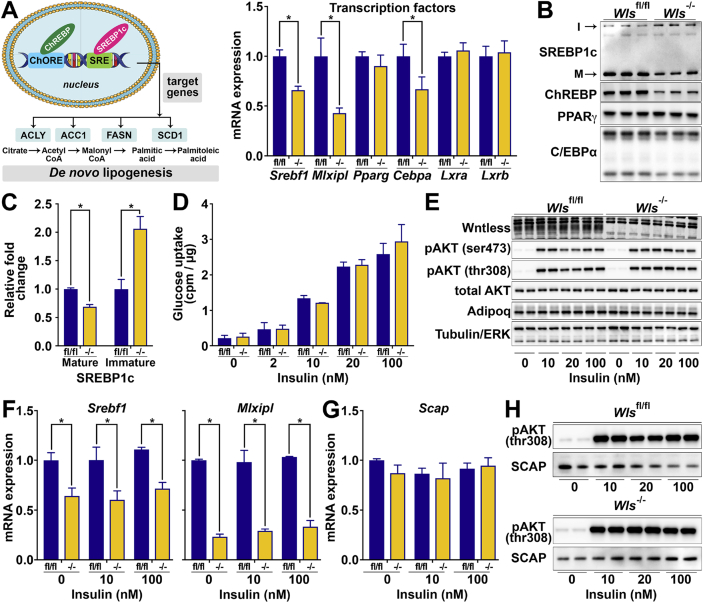
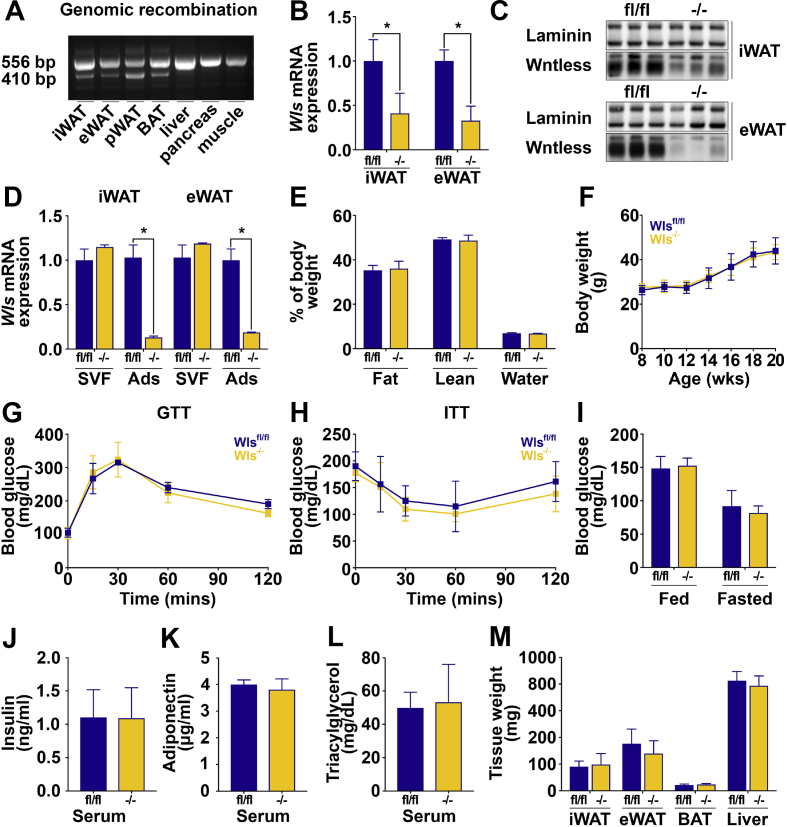
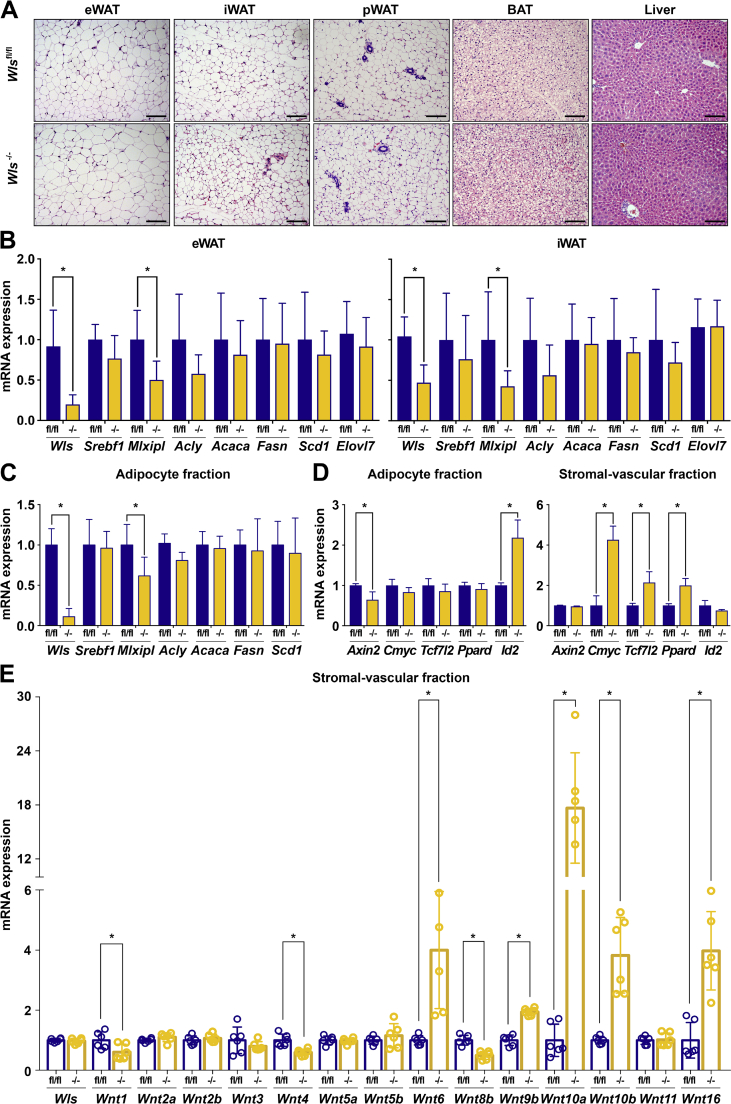
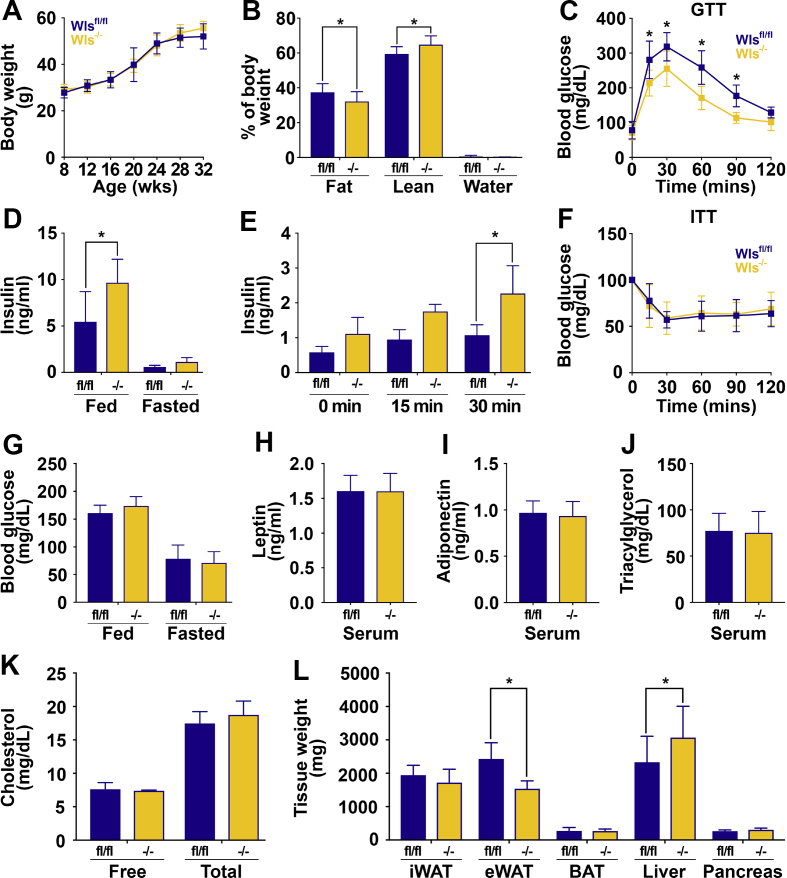
Many aspects of the Wnt signaling apparatus are expressed and operative in mature adipocytes, including the Wnt chaperone Wntless. Deletion of Wntless in cultured adipocytes results in the inhibition of de novo lipogenesis and lipid monounsaturation, likely through repression of Srebf1 (SREBP1c) and Mlxipl (ChREBP) and impaired cleavage of immature SREBP1c into its active form. Adipocyte-specific Wls knockout mice (Wls) have lipogenic gene expression in adipose tissues and isolated adipocytes similar to that of controls when fed a normal chow diet. However, closer investigation reveals that a subset of Wnts and downstream signaling targets are upregulated within stromal-vascular cells of Wls mice, suggesting that adipose tissues defend loss of Wnt secretion from adipocytes. Interestingly, this compensation is lost with long-term high-fat diet challenges. Thus, after six months of a high-fat diet, Wls mice are characterized by decreased adipocyte lipogenic gene expression, reduced visceral adiposity, and improved glucose homeostasis.
Taken together, these studies demonstrate that adipocyte-derived Wnts regulate de novo lipogenesis and lipid desaturation and coordinate the expression of lipogenic genes in adipose tissues. In addition, we report that Wnt signaling within adipose tissues is defended, such that a loss of Wnt secretion from adipocytes is sensed and compensated for by neighboring stromal-vascular cells. With chronic overnutrition, this compensatory mechanism is lost, revealing that Wls mice are resistant to diet-induced obesity, adipocyte hypertrophy, and metabolic dysfunction.
肥胖是许多继发性慢性病的关键风险因素,包括 2 型糖尿病和心血管疾病。经典 Wnt/β-连环蛋白信号通路被确立为脂肪生成的重要内源性抑制剂。该途径在成熟脂肪细胞中起作用;然而,由于 Wnt 信号的复杂性和实验模型的差异,其在这种情况下的作用仍不清楚。在这项研究中,我们使用新型培养细胞和小鼠模型来研究脂肪细胞分泌的 Wnts 的功能作用。
我们生成了脂肪细胞特异性 Wntless (Wls) 敲除小鼠和培养细胞模型,以研究破坏成熟脂肪细胞中 Wnt 分泌的分子和代谢后果。为了表征 Wls 缺陷培养脂肪细胞,我们评估了 Wnt 靶基因和脂肪生成基因的表达以及对碳水化合物和脂质代谢的下游功能影响。我们还研究了脂肪细胞特异性 Wls 缺失对正常饮食或高脂肪饮食喂养的小鼠脂肪组织和全身葡萄糖代谢的影响。
成熟脂肪细胞中表达并起作用的 Wnt 信号装置的许多方面,包括 Wnt 伴侣 Wntless。在培养的脂肪细胞中敲除 Wntless 会抑制从头脂肪生成和脂质单不饱和,这可能是通过抑制 Srebf1 (SREBP1c) 和 Mlxipl (ChREBP) 和抑制不成熟 SREBP1c 切割成其活性形式。当喂食正常饮食时,脂肪细胞特异性 Wls 敲除小鼠 (Wls) 的脂肪组织和分离的脂肪细胞中的脂肪生成基因表达与对照相似。然而,更深入的研究表明,Wls 小鼠的基质血管细胞中存在一组 Wnts 和下游信号靶标上调,表明脂肪组织可以防止脂肪细胞中 Wnt 分泌的丧失。有趣的是,这种补偿在长期高脂肪饮食挑战中丢失。因此,在高脂肪饮食六个月后,Wls 小鼠的特征是脂肪生成基因表达减少、内脏脂肪减少和葡萄糖稳态改善。
总之,这些研究表明脂肪细胞衍生的 Wnts 调节从头脂肪生成和脂质去饱和,并协调脂肪组织中脂肪生成基因的表达。此外,我们报告说,脂肪组织内的 Wnt 信号受到防御,因此,脂肪细胞中 Wnt 分泌的丧失被相邻的基质血管细胞感知并补偿。随着慢性营养过剩,这种补偿机制丢失,表明 Wls 小鼠对饮食诱导的肥胖、脂肪细胞肥大和代谢功能障碍具有抗性。