Mishori Ranit, Singh Lisa Oberoi, Levy Brendan, Newport Calvin
Department of Family Medicine's Center for Health Communication, Media and Primary Care, Georgetown University School of Medicine, Washington, DC, United States.
J Med Internet Res. 2014 Apr 14;16(4):e107. doi: 10.2196/jmir.3006.
Twitter is becoming an important tool in medicine, but there is little information on Twitter metrics. In order to recommend best practices for information dissemination and diffusion, it is important to first study and analyze the networks.
This study describes the characteristics of four medical networks, analyzes their theoretical dissemination potential, their actual dissemination, and the propagation and distribution of tweets.
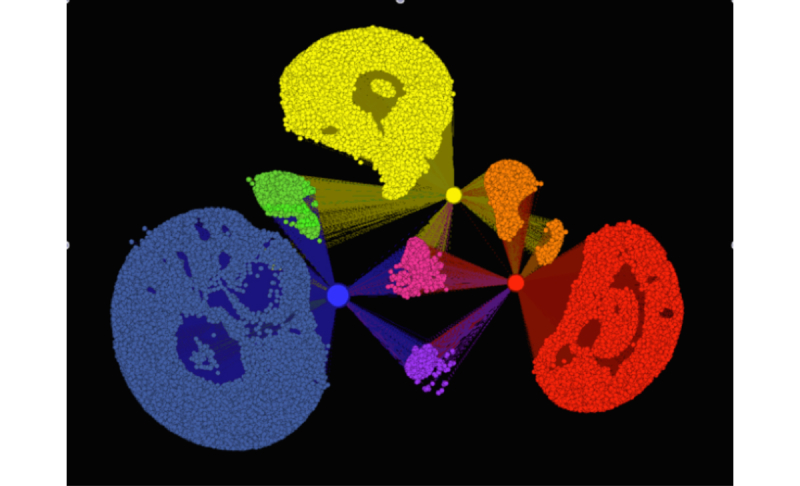
Open Twitter data was used to characterize four networks: the American Medical Association (AMA), the American Academy of Family Physicians (AAFP), the American Academy of Pediatrics (AAP), and the American College of Physicians (ACP). Data were collected between July 2012 and September 2012. Visualization was used to understand the follower overlap between the groups. Actual flow of the tweets for each group was assessed. Tweets were examined using Topsy, a Twitter data aggregator.
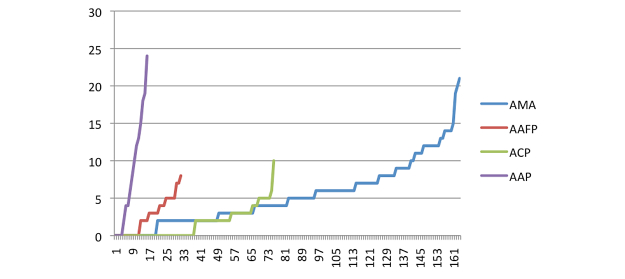
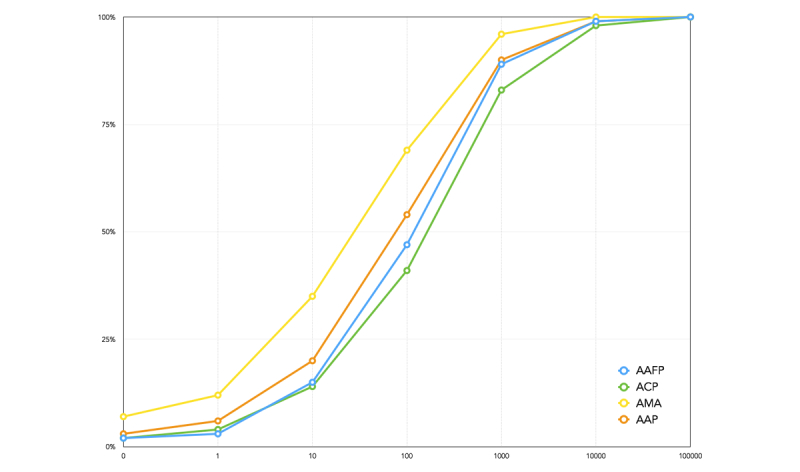
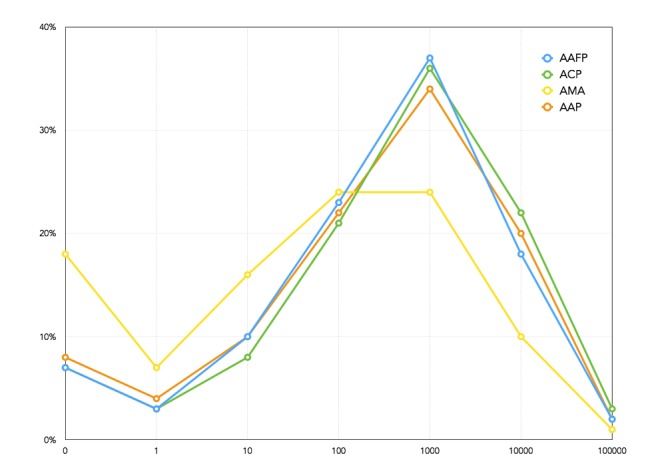
The theoretical information dissemination potential for the groups is large. A collective community is emerging, where large percentages of individuals are following more than one of the groups. The overlap across groups is small, indicating a limited amount of community cohesion and cross-fertilization. The AMA followers' network is not as active as the other networks. The AMA posted the largest number of tweets while the AAP posted the fewest. The number of retweets for each organization was low indicating dissemination that is far below its potential.
To increase the dissemination potential, medical groups should develop a more cohesive community of shared followers. Tweet content must be engaging to provide a hook for retweeting and reaching potential audience. Next steps call for content analysis, assessment of the behavior and actions of the messengers and the recipients, and a larger-scale study that considers other medical groups using Twitter.
推特正在成为医学领域的一项重要工具,但关于推特指标的信息却很少。为了推荐信息传播和扩散的最佳实践,首先研究和分析这些网络很重要。
本研究描述了四个医学网络的特征,分析了它们的理论传播潜力、实际传播情况以及推文的传播和分布。
使用公开的推特数据来描述四个网络的特征:美国医学协会(AMA)、美国家庭医师学会(AAFP)、美国儿科学会(AAP)和美国医师学会(ACP)。数据收集于2012年7月至2012年9月之间。通过可视化来了解各群体之间的关注者重叠情况。评估了每个群体推文的实际传播情况。使用推特数据聚合器Topsy对推文进行了检查。
这些群体的理论信息传播潜力很大。一个集体社区正在形成,其中很大比例的人关注了不止一个群体。各群体之间的重叠很小,表明社区凝聚力和交叉融合程度有限。AMA的关注者网络不如其他网络活跃。AMA发布的推文数量最多,而AAP发布的最少。每个组织的转发次数都很低,表明传播远低于其潜力。
为了提高传播潜力,医学团体应发展一个更具凝聚力的共享关注者社区。推文内容必须引人入胜,以便为转发和触及潜在受众提供契机。下一步需要进行内容分析,评估传播者和接收者的行为及行动,并开展一项更大规模的研究,考虑使用推特的其他医学团体。