Instituto de Fisiología, Universidad Autónoma de Puebla Puebla, México.
Front Cell Neurosci. 2014 Mar 27;8:90. doi: 10.3389/fncel.2014.00090. eCollection 2014.
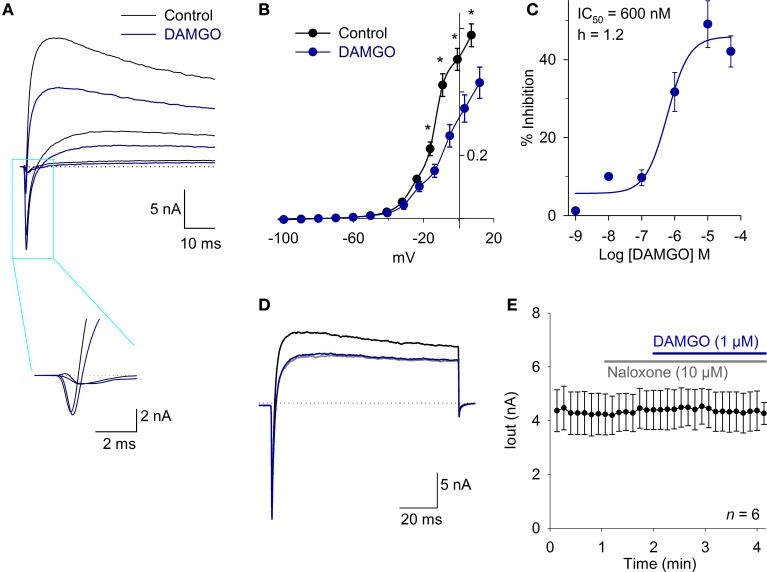
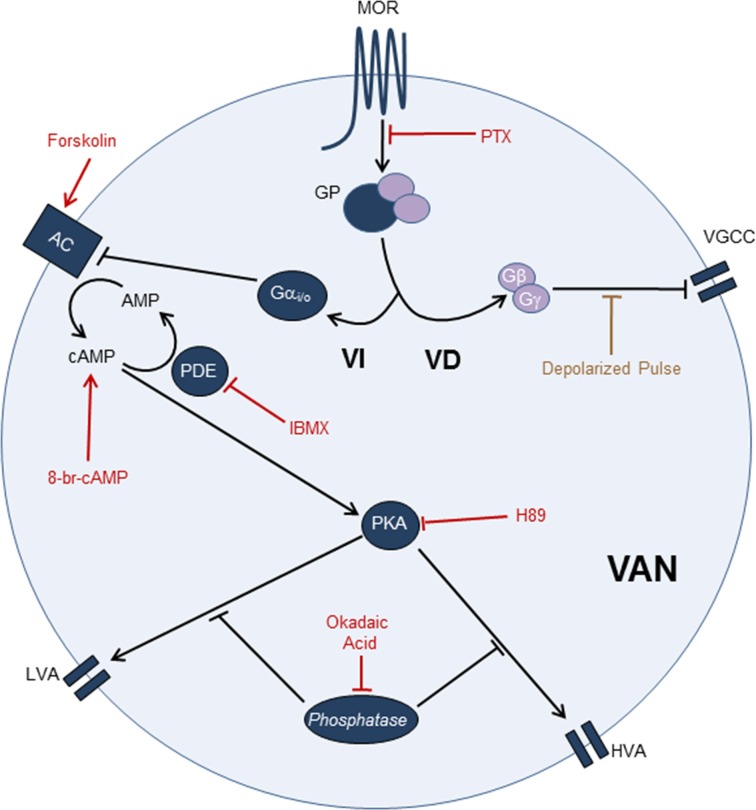
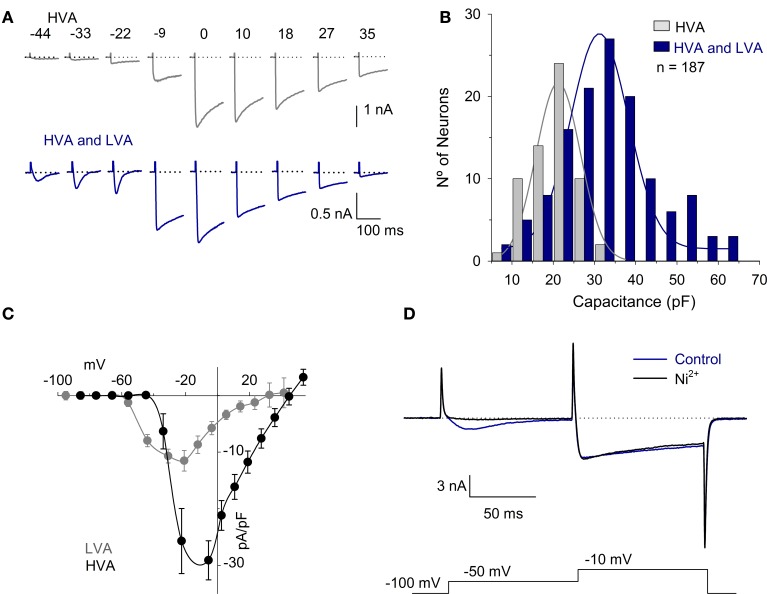
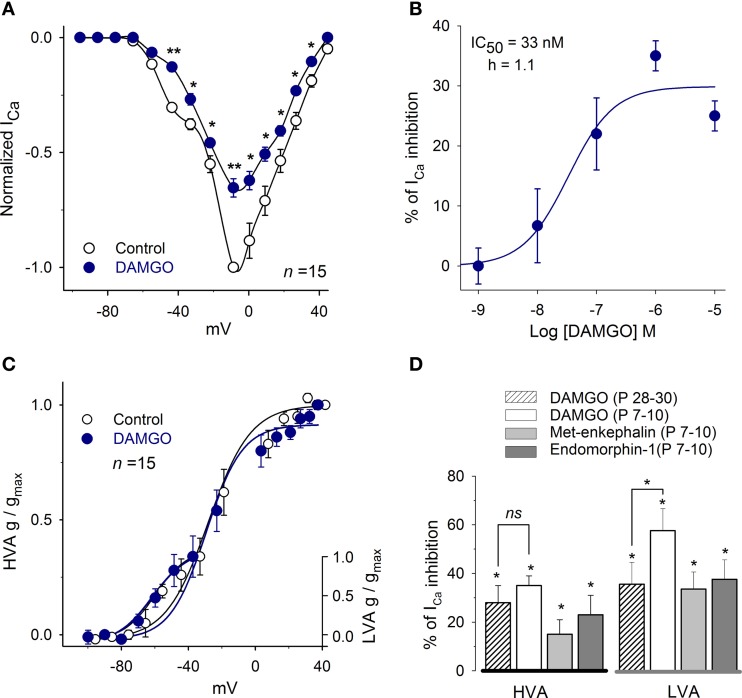
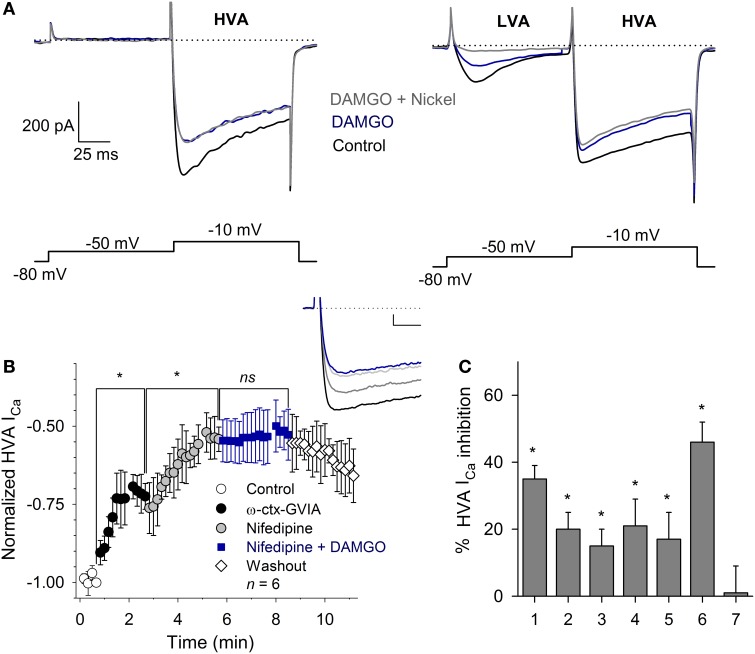
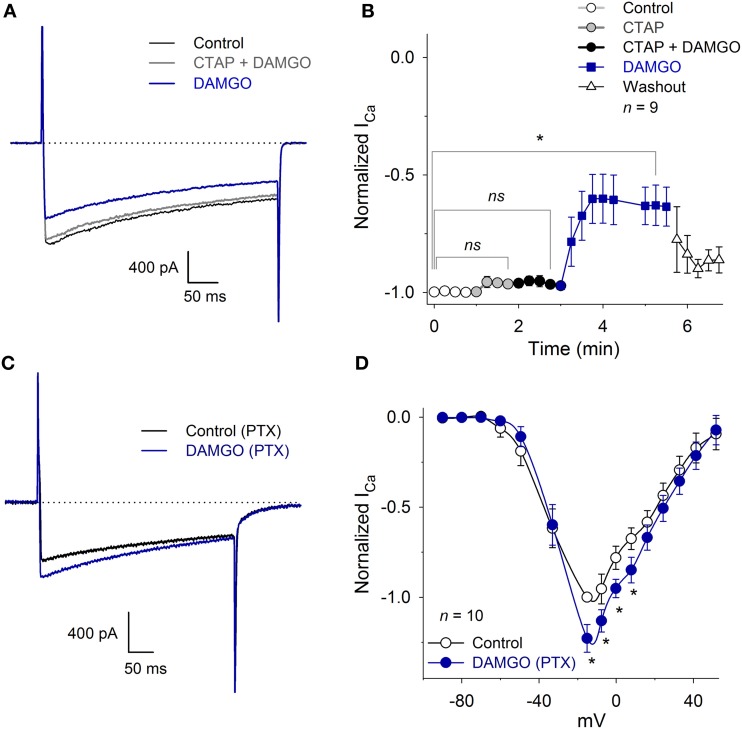
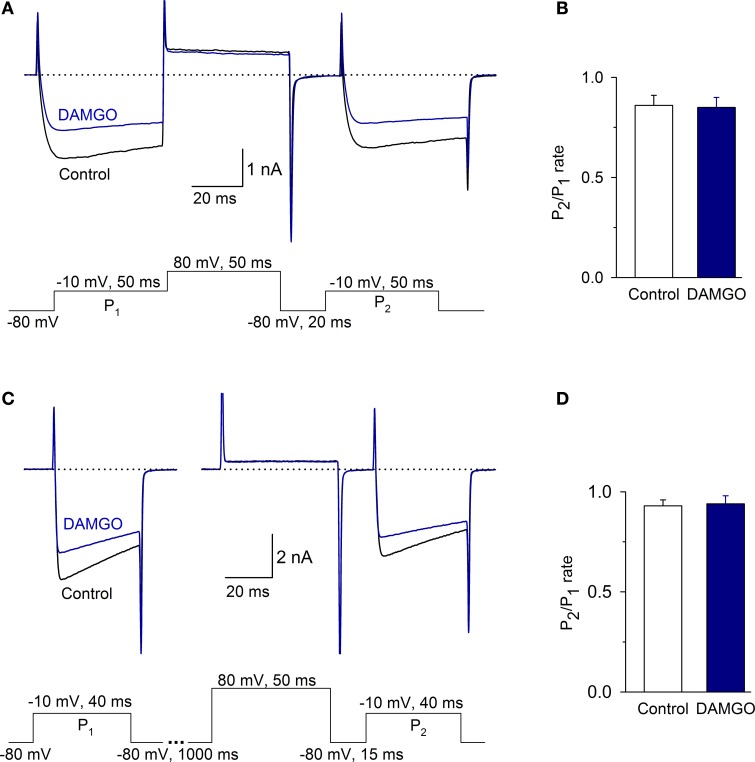
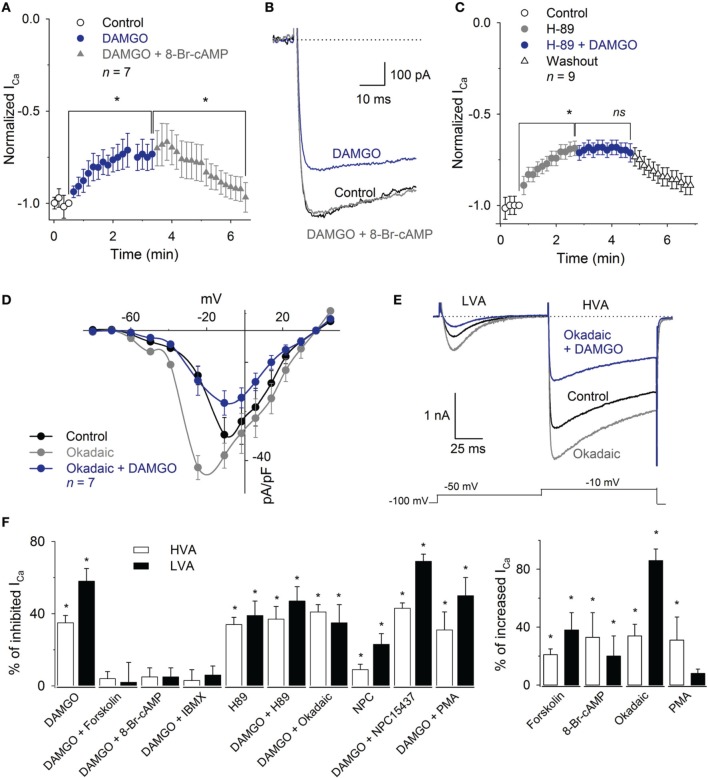
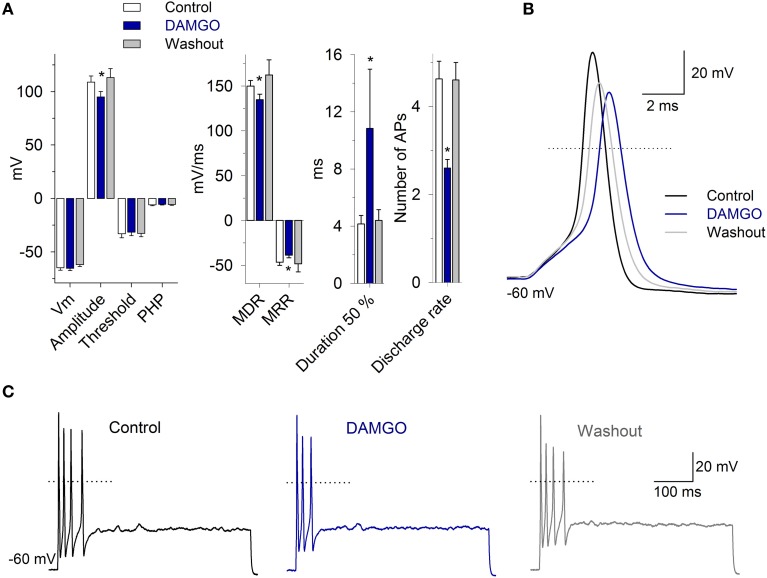
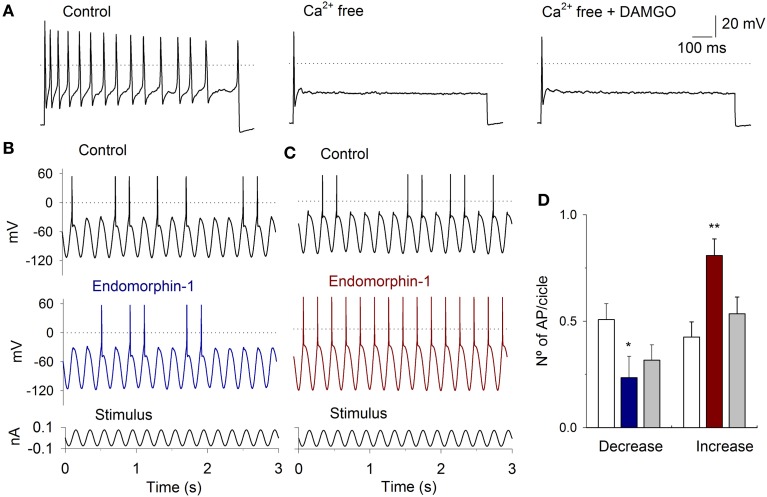
Opioid receptors are expressed in the vestibular endorgans (afferent neurons and hair cells) and are activated by the efferent system, which modulates the discharge of action potentials in vestibular afferent neurons (VANs). In mammals, VANs mainly express the μ opioid-receptor, but the function of this receptors activation and the cellular mechanisms by which they exert their actions in these neurons are poorly studied. To determine the actions of μ opioid receptor (MOR) and cell signaling mechanisms in VANs, we made perforated patch-clamp recordings of VANs that were obtained from postnatal days 7 to 10 (P7-10) rats and then maintained in primary culture. The MOR agonist [D-Ala(2), N-Me-Phe(4), Gly(5)-ol]-enkephalin (DAMGO) inhibited the total voltage-gated outward current; this effect was prevented by the perfusion of a Ca(2+)-free extracellular solution. We then studied the voltage-gated calcium current (Ica) and found that DAMGO Met-enkephalin or endomorphin-1 inhibited the ICa in a dose-response fashion. The effects of DAMGO were prevented by the MOR antagonist (CTAP) or by pertussis toxin (PTX). The use of specific calcium channel blockers showed that MOR activation inhibited T-, L- and N-type ICa. The use of various enzyme activators and inhibitors and of cAMP analogs allowed us to demonstrate that the MOR acts through a cAMP dependent signaling mechanism. In current clamp experiments, MOR activation increased the duration and decreased the amplitude of the action potentials and modulated the discharge produced by current injection. Pre-incubation with PTX occluded MOR activation effect. We conclude that MOR activation inhibits the T-, L- and N-type ICa through activation of a Gαi/o protein that involves a decrease in AC-cAMP-PKA activity. The modulation of ICa may have an impact on the synaptic integration, excitability, and neurotransmitter release from VANs.
阿片受体在前庭内脏器官(传入神经元和毛细胞)中表达,并被传出系统激活,后者调节前庭传入神经元(VAN)的动作电位放电。在哺乳动物中,VAN 主要表达 μ 阿片受体,但对其激活的功能以及它们在这些神经元中发挥作用的细胞机制研究甚少。为了确定 μ 阿片受体(MOR)和细胞信号转导机制在 VAN 中的作用,我们对出生后 7 至 10 天(P7-10)大鼠获得的 VAN 进行了穿孔膜片钳记录,然后在原代培养中维持。MOR 激动剂 [D-Ala(2), N-Me-Phe(4), Gly(5)-ol]-enkephalin(DAMGO)抑制了总电压门控外向电流;该效应可通过灌流无钙细胞外液来预防。然后,我们研究了电压门控钙电流(Ica),发现 DAMGO、Met-enkephalin 或内吗啡肽-1 以剂量反应的方式抑制 Ica。DAMGO 的作用可被 MOR 拮抗剂(CTAP)或百日咳毒素(PTX)预防。使用特定的钙通道阻断剂表明,MOR 激活抑制 T、L 和 N 型 ICa。使用各种酶激活剂和抑制剂以及 cAMP 类似物,我们证明了 MOR 通过 cAMP 依赖的信号转导机制发挥作用。在电流钳实验中,MOR 激活增加了动作电位的持续时间并降低了幅度,并调节了电流注入产生的放电。PTX 的预孵育阻断了 MOR 激活的作用。我们得出的结论是,MOR 激活通过激活 Gαi/o 蛋白抑制 T、L 和 N 型 ICa,该蛋白涉及 AC-cAMP-PKA 活性的降低。Ica 的调节可能对 VAN 的突触整合、兴奋性和神经递质释放产生影响。