Hawkes Richard
Department of Cell Biology and Anatomy, University of Calgary Calgary, AB, Canada ; Hotchkiss Brain Institute, University of Calgary Calgary, AB, Canada ; Genes and Development Research Group, Faculty of Medicine, University of Calgary Calgary, AB, Canada.
Front Syst Neurosci. 2014 Mar 28;8:41. doi: 10.3389/fnsys.2014.00041. eCollection 2014.
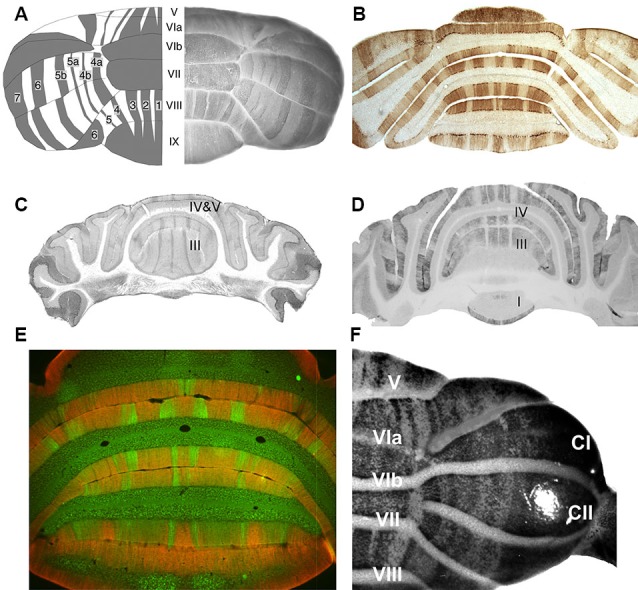
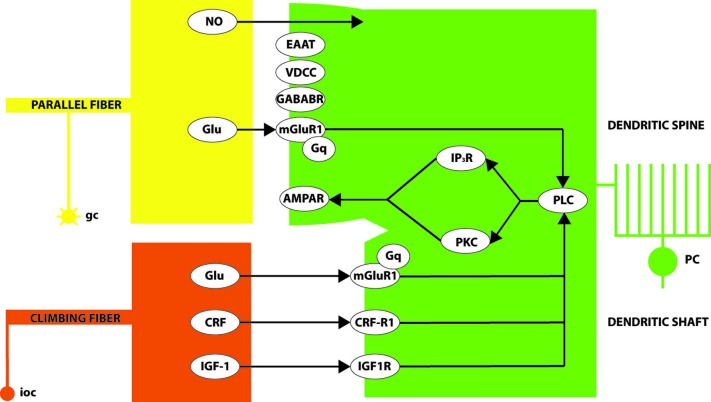
The cerebellar cortex comprises a stereotyped array of transverse zones and parasagittal stripes, built around multiple Purkinje cell subtypes, which is highly conserved across birds and mammals. This architecture is revealed in the restricted expression patterns of numerous molecules, in the terminal fields of the afferent projections, in the distribution of interneurons, and in the functional organization. This review provides an overview of cerebellar architecture with an emphasis on attempts to relate molecular architecture to the expression of long-term depression (LTD) at the parallel fiber-Purkinje cell (pf-PC) synapse.
小脑皮质由围绕多种浦肯野细胞亚型构建的横向区域和矢状旁条纹的定型阵列组成,这种结构在鸟类和哺乳动物中高度保守。这种结构在众多分子的受限表达模式、传入投射的终末区域、中间神经元的分布以及功能组织中得以体现。本综述概述了小脑结构,重点是尝试将分子结构与平行纤维-浦肯野细胞(pf-PC)突触处的长时程抑制(LTD)表达联系起来。