Hebbar Shripad, Misha Mehak, Rai Lavanya
Department of Obstetrics and Gynaecology, Kasturba Medical College, Manipal University, Manipal 576 104, India.
J Pregnancy. 2014;2014:496416. doi: 10.1155/2014/496416. Epub 2014 Mar 6.
To evaluate the effect of preeclampsia on the cord blood and maternal NRBC count and to correlate NRBC count and neonatal outcome in preeclampsia and control groups.
This is a prospective case control observational study.
Maternal and cord blood NRBC counts were studied in 50 preeclamptic women and 50 healthy pregnant women. Using automated cell counter total leucocyte count was obtained and peripheral smear was prepared to obtain NRBC count. Corrected WBC count and NRBC count/100 leucocytes in maternal venous blood and in cord blood were compared between the 2 groups.
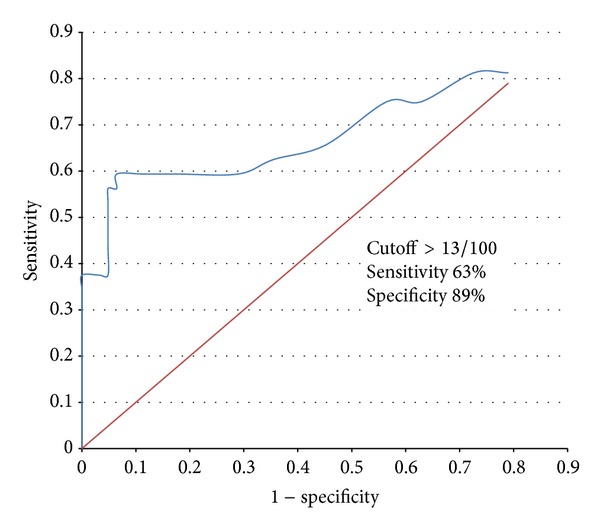
No significant differences were found in corrected WBC count in maternal and cord blood in cases and controls. Significant differences were found in mean cord blood NRBC count in preeclampsia and control groups (40.0 ± 85.1 and 5.9 ± 6.3, P = 0.006). The mean maternal NRBC count in two groups was 2.4 ± 9.0 and 0.8 ± 1.5, respectively (P = 0.214). Cord blood NRBC count cut off value ≤ 13 could rule out adverse neonatal outcome with a sensitivity of 63% and specificity of 89%.
Cord blood NRBC are significantly raised in preeclampsia. Neonates with elevated cord blood NRBC counts are more likely to have IUGR, low birth weight, neonatal ICU admission, respiratory distress syndrome, and assisted ventilation. Below the count of 13/100 leucocytes, adverse neonatal outcome is quite less likely.
评估子痫前期对脐血和母体有核红细胞计数的影响,并比较子痫前期组和对照组中有核红细胞计数与新生儿结局的相关性。
这是一项前瞻性病例对照观察性研究。
对50例子痫前期孕妇和50例健康孕妇的母体和脐血有核红细胞计数进行研究。使用自动血细胞计数器获得总白细胞计数,并制备外周血涂片以获得有核红细胞计数。比较两组母体静脉血和脐血中校正白细胞计数以及每100个白细胞中的有核红细胞计数。
病例组和对照组母体及脐血的校正白细胞计数无显著差异。子痫前期组和对照组的脐血有核红细胞平均计数存在显著差异(40.0±85.1和5.9±6.3,P = 0.006)。两组母体有核红细胞平均计数分别为(2.4±9.0)和(0.8±1.5)(P = 0.214)。脐血有核红细胞计数临界值≤13可排除不良新生儿结局,灵敏度为63%,特异度为89%。
子痫前期患者脐血有核红细胞显著升高。脐血有核红细胞计数升高的新生儿更有可能出现宫内生长受限、低出生体重、入住新生儿重症监护病房、呼吸窘迫综合征和接受辅助通气。当计数低于13/100白细胞时,出现不良新生儿结局的可能性较小。