Goepfert Ryan P, Kezirian Eric J, Wang Steven J
Department of Otolaryngology-Head and Neck Surgery, University of California, San Francisco, 2233 Post Street, San Francisco, CA 94115, USA.
ISRN Otolaryngol. 2014 Mar 10;2014:529395. doi: 10.1155/2014/529395. eCollection 2014.
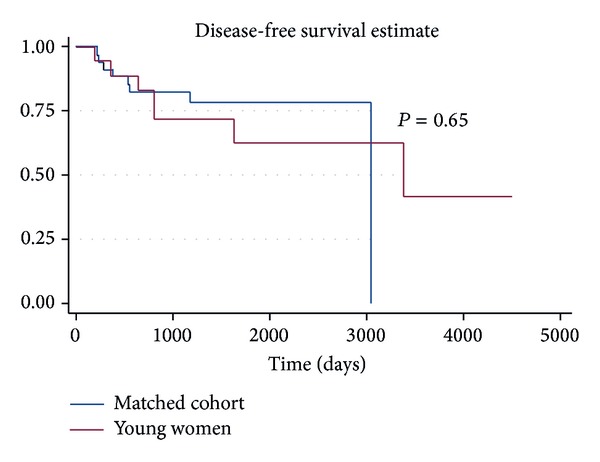
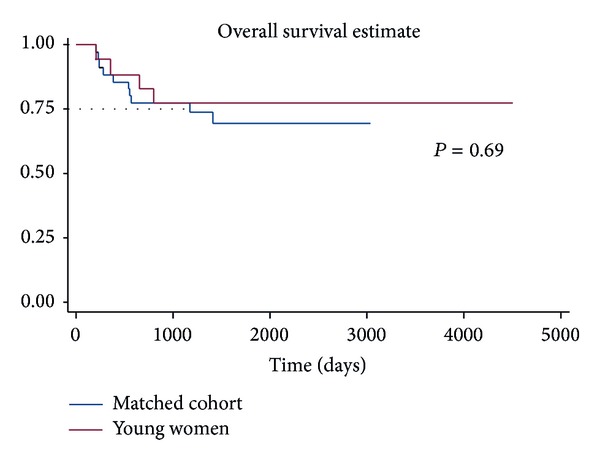
Background. The incidence of oral tongue squamous cell carcinoma (OTSCC) in young women is increasing with uncertain outcomes compared to traditional patients. Published outcomes data are at odds in this cohort of young women. Methods. Retrospective analysis comparing demographic, clinicopathologic, and outcomes data of women OTSCC patients younger than 45 years old matched 1 : 2 by stage with men both younger and older than 45 and women older than 45. Results. No disease-free or overall survival differences were found between cohorts. Young women were significantly more likely to receive radiation therapy, particularly in stage I disease, even when controlling for common pathologic indications. Conclusions. OTSCC in young women was not associated with worse outcomes compared to a matched cohort of other patients. Increased frequency of radiation treatment for this cohort may not be justified.
背景。与传统患者相比,年轻女性口腔舌鳞状细胞癌(OTSCC)的发病率正在上升,但其预后尚不确定。已发表的关于这一年轻女性队列的预后数据存在分歧。方法。对年龄小于45岁的OTSCC女性患者的人口统计学、临床病理和预后数据进行回顾性分析,按分期以1:2的比例与年龄小于45岁和大于45岁的男性以及年龄大于45岁的女性进行匹配。结果。各队列之间未发现无病生存率或总生存率的差异。即使在控制常见病理指征的情况下,年轻女性接受放射治疗的可能性也显著更高,尤其是在I期疾病中。结论。与其他匹配队列的患者相比,年轻女性的OTSCC与较差的预后无关。该队列增加放射治疗频率可能不合理。