Mizukami Junya, Sato Takehiro, Camps Montserrat, Ji Hong, Rueckle Thomas, Swinnen Dominique, Tsuboi Ryoji, Takeda Kohsuke, Ichijo Hidenori
1] Laboratory of Cell Signaling, Graduate School of Pharmaceutical Sciences, The University of Tokyo, 7-3-1 Hongo, Bunkyo-ku, Tokyo, Japan, 113-0033 [2] Department of Dermatology, Tokyo Medical University, 6-7-1 Nishishinjuku, Shinjuku-ku, Tokyo, Japan, 160-0023.
Laboratory of Cell Signaling, Graduate School of Pharmaceutical Sciences, The University of Tokyo, 7-3-1 Hongo, Bunkyo-ku, Tokyo, Japan, 113-0033.
Sci Rep. 2014 Apr 16;4:4714. doi: 10.1038/srep04714.
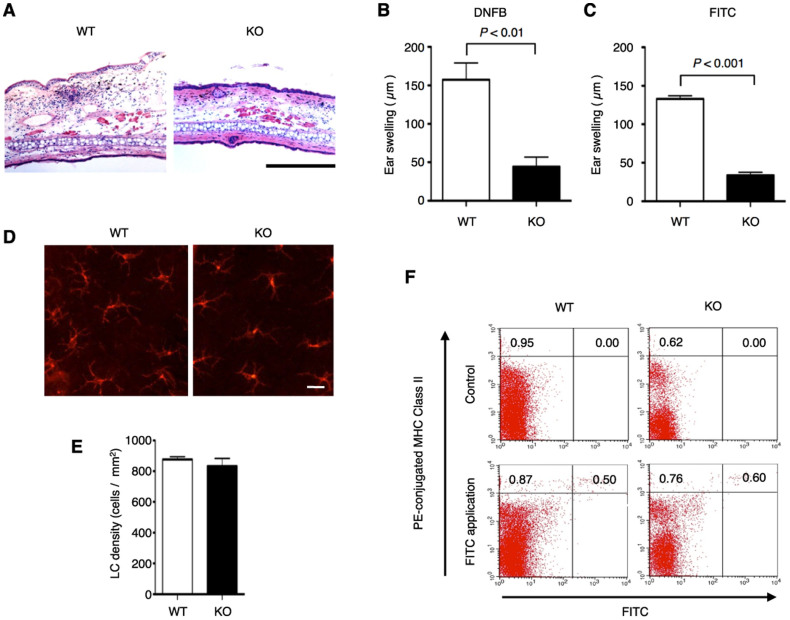
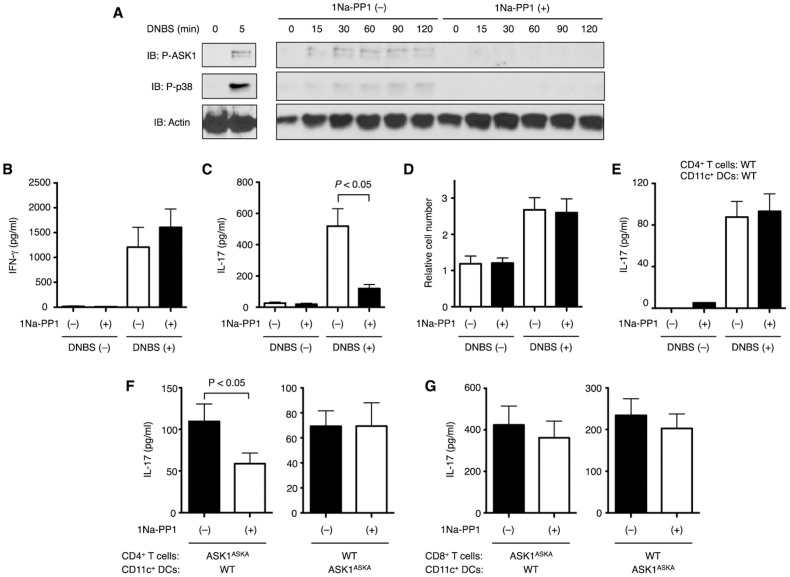
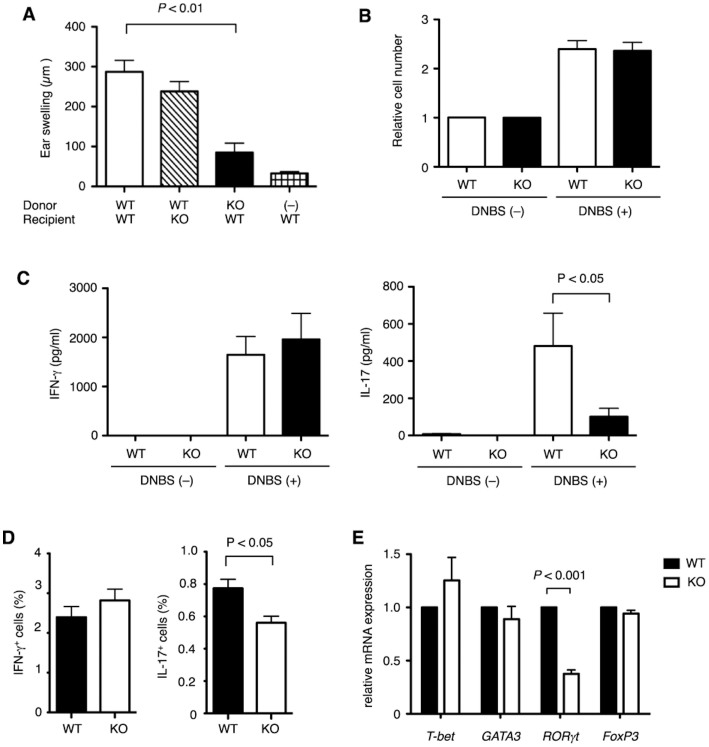
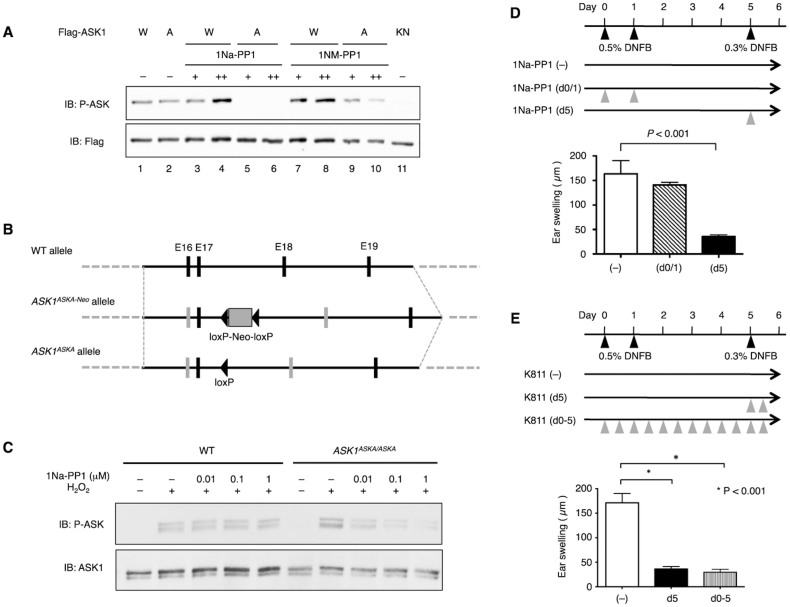
Contact hypersensitivity (CHS) is a form of delayed-type hypersensitivity triggered by the response to reactive haptens (sensitization) and subsequent challenge (elicitation). Here, we show that ASK1 promotes CHS and that suppression of ASK1 during the elicitation phase is sufficient to attenuate CHS. ASK1 knockout (KO) mice exhibited impaired 2,4-dinitrofluorobenzene (DNFB)-induced CHS. The suppression of ASK1 activity during the elicitation phase through a chemical genetic approach or a specific inhibitory compound significantly reduced the CHS response to a level similar to that observed in ASK1 KO mice. The reduced response was concomitant with the strong inhibition of production of IL-17, a cytokine that plays an important role in CHS and other inflammatory diseases, from sensitized lymph node cells. These results suggest that ASK1 is relevant to the overall CHS response during the elicitation phase and that ASK1 may be a promising therapeutic target for allergic contact dermatitis and other IL-17-related inflammatory diseases.
接触性超敏反应(CHS)是一种迟发型超敏反应,由对反应性半抗原的反应(致敏)和随后的激发(引发)触发。在此,我们表明ASK1促进CHS,并且在激发阶段抑制ASK1足以减轻CHS。ASK1基因敲除(KO)小鼠表现出2,4-二硝基氟苯(DNFB)诱导的CHS受损。通过化学遗传学方法或特定抑制性化合物在激发阶段抑制ASK1活性,可显著降低CHS反应,使其达到与ASK1 KO小鼠中观察到的水平相似。反应降低伴随着致敏淋巴结细胞中IL-17产生的强烈抑制,IL-17是一种在CHS和其他炎症性疾病中起重要作用的细胞因子。这些结果表明,ASK1在激发阶段与整体CHS反应相关,并且ASK1可能是过敏性接触性皮炎和其他IL-17相关炎症性疾病的有前景的治疗靶点。