Hwang In-Sul, Hochi Shinichi
Interdisciplinary Graduate School of Science and Technology, Shinshu University, Tokida 3-15-1, Ueda, Nagano 386-8567, Japan ; Animal Biotechnology Division, National Institute of Animal Science, Rural Development Administration, Seosuwon-ro 143-13, Suwon, Gyeonggi-do 441-706, Republic of Korea.
Interdisciplinary Graduate School of Science and Technology, Shinshu University, Tokida 3-15-1, Ueda, Nagano 386-8567, Japan ; Faculty of Textile Science and Technology, Shinshu University, Tokida 3-15-1, Ueda, Nagano 386-8567, Japan.
Biomed Res Int. 2014;2014:570647. doi: 10.1155/2014/570647. Epub 2014 Mar 16.
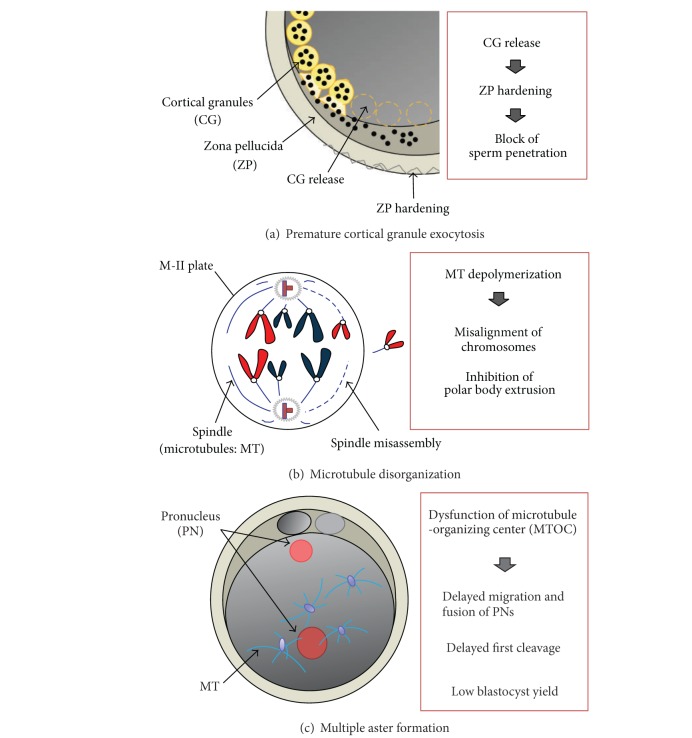
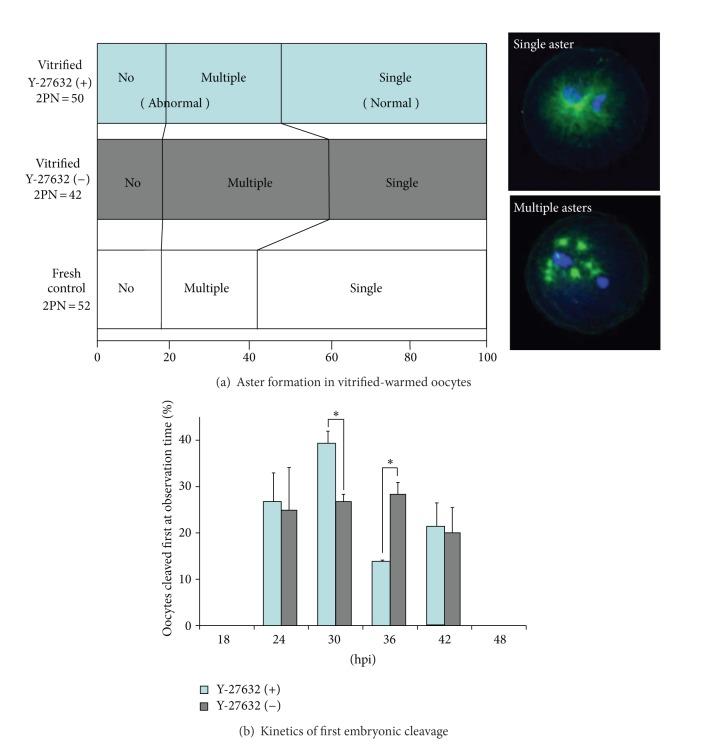
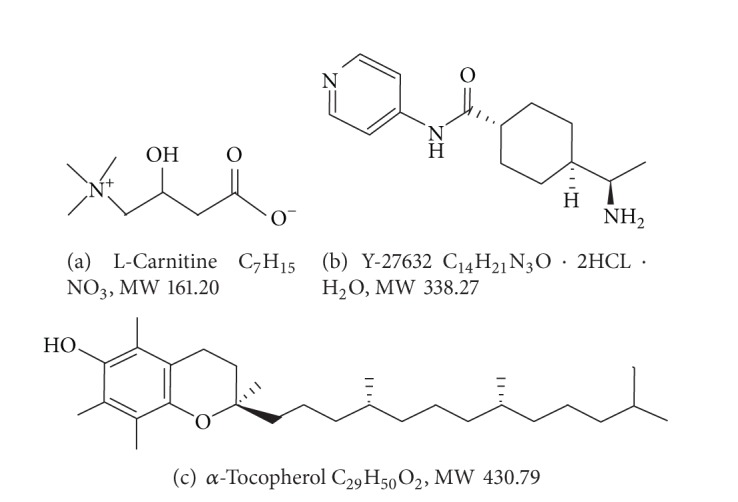
Principle of oocyte cryoinjury is first overviewed and then research history of cryopreservation using bovine oocytes is summarized for the last two decades with a few special references to recent progresses. Various types of cryodevices have been developed to accelerate the cooling rate and applied to the oocytes from large domestic species enriched with cytoplasmic lipid droplets. Two recent approaches include the qualitative improvement of IVM oocytes prior to the vitrification and the short-term recovery culture of vitrified-warmed oocytes prior to the subsequent IVF. Supplementation of L-carnitine to IVM medium of bovine oocytes has been reported to reduce the amount of cytoplasmic lipid droplets and improve the cryotolerance of the oocytes, but it is still controversial whether the positive effect of L-carnitine is reproducible. Incidence of multiple aster formation, a possible cause for low developmental potential of vitrified-warmed bovine oocytes, was inhibited by a short-term culture of the postwarm oocytes in the presence of Rho-associated coiled-coil kinase (ROCK) inhibitor. Use of an antioxidant α-tocopherol, instead of the ROCK inhibitor, also supported the revivability of the postwarm bovine oocytes. Further improvements of the vitrification procedure, combined with pre- and postvitrification chemical treatment, would overcome the high sensitivity of bovine oocytes to cryopreservation.
首先概述卵母细胞冷冻损伤的原理,然后总结过去二十年使用牛卵母细胞进行冷冻保存的研究历史,并特别提及一些近期进展。已开发出各种冷冻装置以加快冷却速度,并应用于富含细胞质脂滴的大型家畜物种的卵母细胞。最近的两种方法包括在玻璃化之前对体外成熟(IVM)卵母细胞进行质量改进,以及在随后的体外受精(IVF)之前对玻璃化-复温后的卵母细胞进行短期恢复培养。据报道,在牛卵母细胞的IVM培养基中添加L-肉碱可减少细胞质脂滴的数量并提高卵母细胞的耐冻性,但L-肉碱的积极作用是否可重复仍存在争议。通过在Rho相关卷曲螺旋激酶(ROCK)抑制剂存在下对复温后的卵母细胞进行短期培养,可抑制多个星体形成的发生率,这是玻璃化-复温后的牛卵母细胞发育潜力低的一个可能原因。使用抗氧化剂α-生育酚代替ROCK抑制剂也支持复温后牛卵母细胞的复苏能力。玻璃化程序的进一步改进,结合玻璃化前后的化学处理,将克服牛卵母细胞对冷冻保存的高敏感性。