Threatened Species Unit, Department of Environment and Heritage Protection, Dutton Park, Queensland, Australia.
PLoS One. 2014 Apr 16;9(4):e94849. doi: 10.1371/journal.pone.0094849. eCollection 2014.
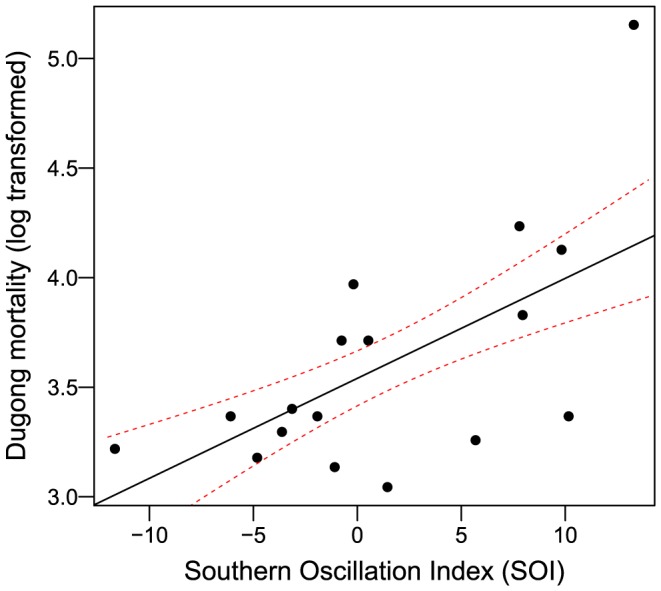
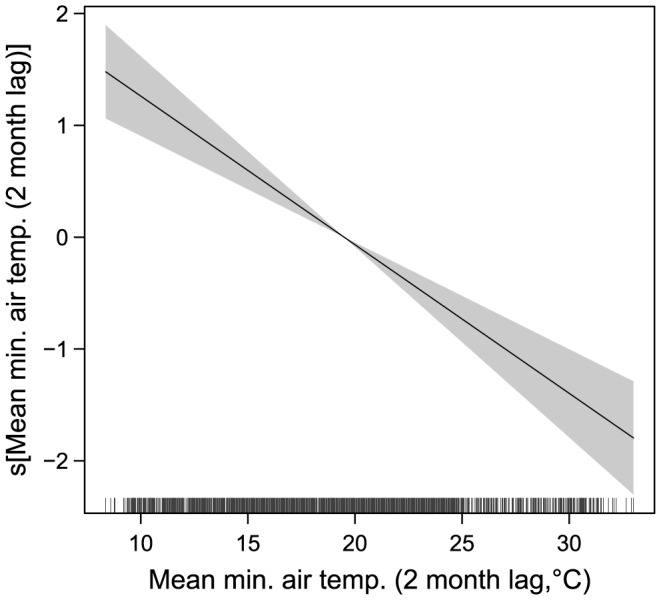
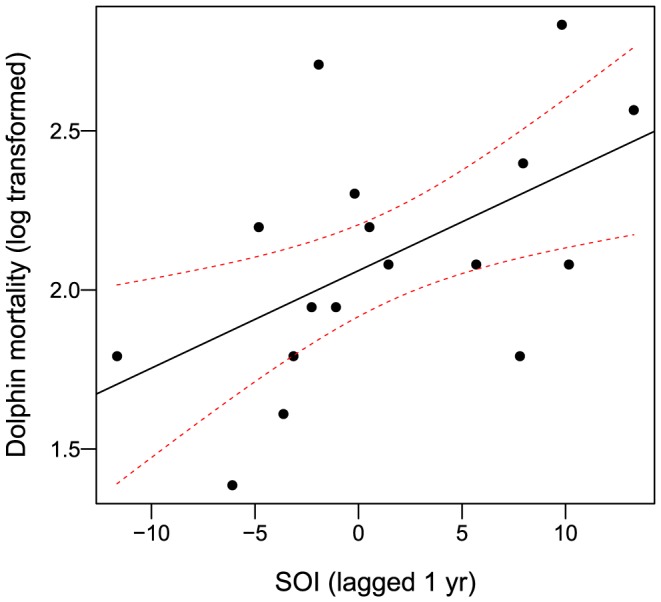
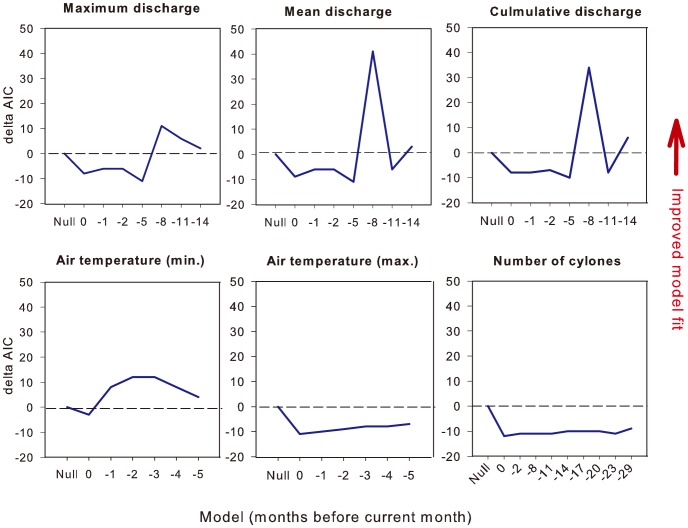
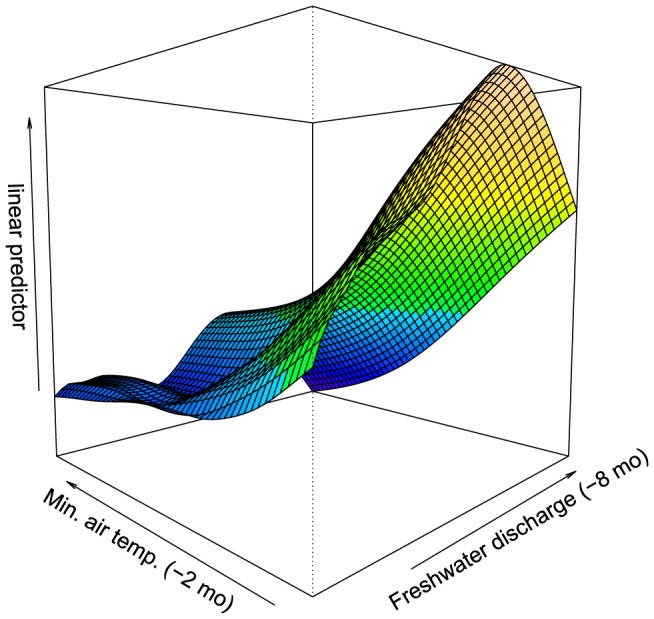
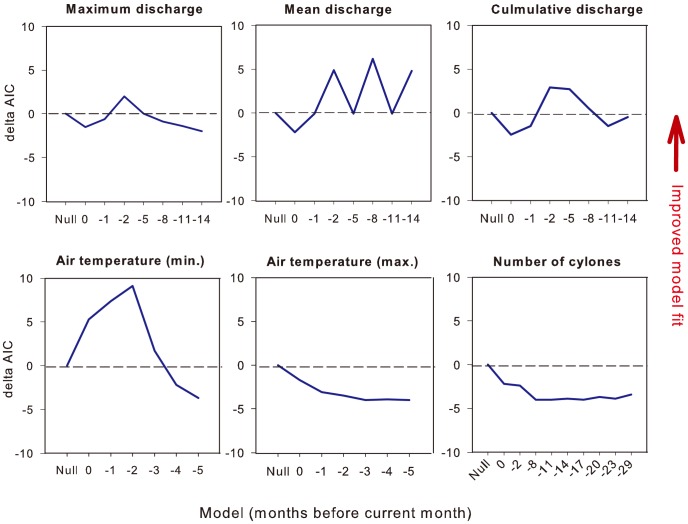
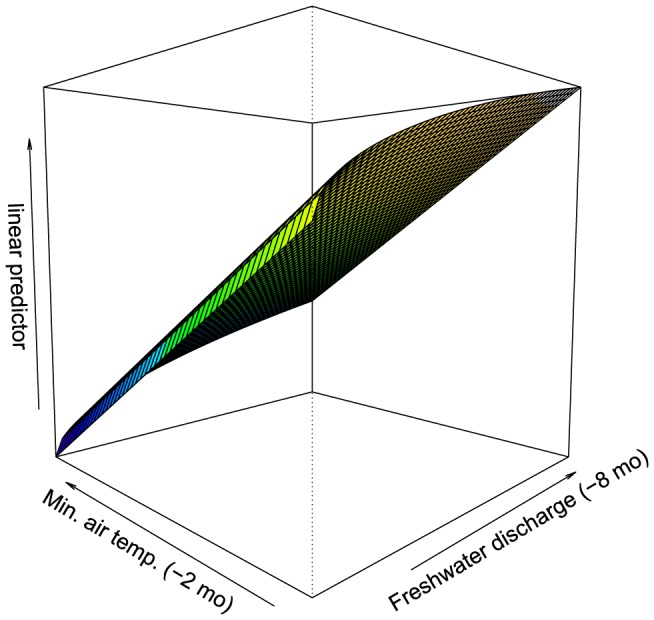
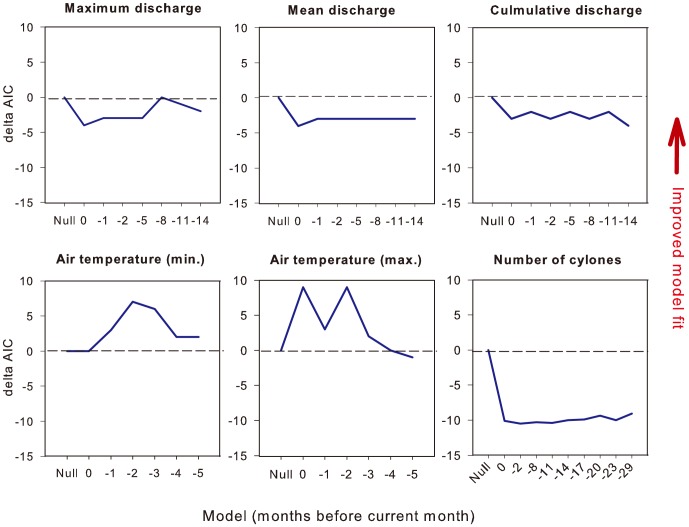
Understanding environmental and climatic drivers of natural mortality of marine mammals is critical for managing populations effectively and for predicting responses to climate change. Here we use a 17-year dataset to demonstrate a clear relationship between environmental forcing and natural mortality of inshore marine mammals across a subtropical-tropical coastline spanning a latitudinal gradient of 13° (>2000 km of coastline). Peak mortality of inshore dolphins and dugongs followed sustained periods of elevated freshwater discharge (9 months) and low air temperature (3 months). At a regional scale, these results translated into a strong relationship between annual mortality and an index of El Niño-Southern Oscillation. The number of cyclones crossing the coastline had a comparatively weak effect on inshore marine mammal mortality, and only in the tropics. Natural mortality of offshore/migratory cetaceans was not predicted by freshwater discharge, but was related to lagged air temperature. These results represent the first quantitative link between environmental forcing and marine mammal mortality in the tropics, and form the basis of a predictive tool for managers to prepare responses to periods of elevated marine mammal mortality.
了解海洋哺乳动物自然死亡率的环境和气候驱动因素对于有效管理种群和预测对气候变化的响应至关重要。在这里,我们使用了 17 年的数据集,证明了在跨越亚热带-热带海岸线的纬度梯度(>2000 公里的海岸线)范围内,近海海洋哺乳动物的环境胁迫与自然死亡率之间存在明显的关系。近岸海豚和儒艮的死亡率高峰紧随持续时间较长的高淡水排放期(9 个月)和低空气温度期(3 个月)。在区域尺度上,这些结果转化为年度死亡率与厄尔尼诺-南方涛动指数之间的强烈关系。穿越海岸线的气旋数量对近海海洋哺乳动物死亡率的影响相对较弱,但仅限于热带地区。近海/洄游鲸类的自然死亡率不受淡水排放的预测,但与滞后的空气温度有关。这些结果代表了环境胁迫与热带地区海洋哺乳动物死亡率之间的第一个定量联系,并为管理者提供了一种预测工具,以准备应对海洋哺乳动物死亡率升高的时期。