Department of Endangered Species Management, Wildlife Institute of India, Chandrabani, Dehradun, Uttarakhand, 248001, India.
Marine Mammal and Turtle Division, Southeast Fisheries Science Center, National Marine Fisheries Service, 75 Virginia Beach Drive, Miami, FL, USA.
Sci Rep. 2022 Mar 8;12(1):4128. doi: 10.1038/s41598-022-06156-0.
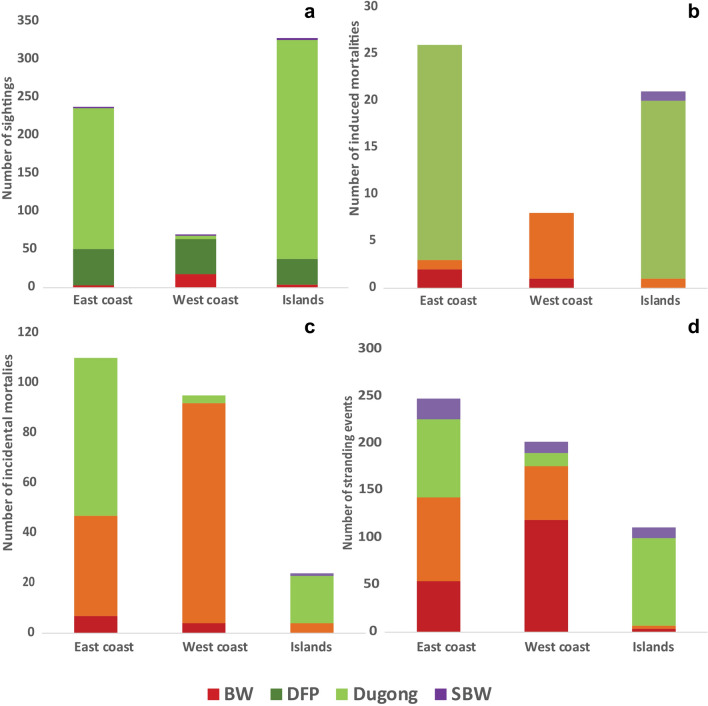
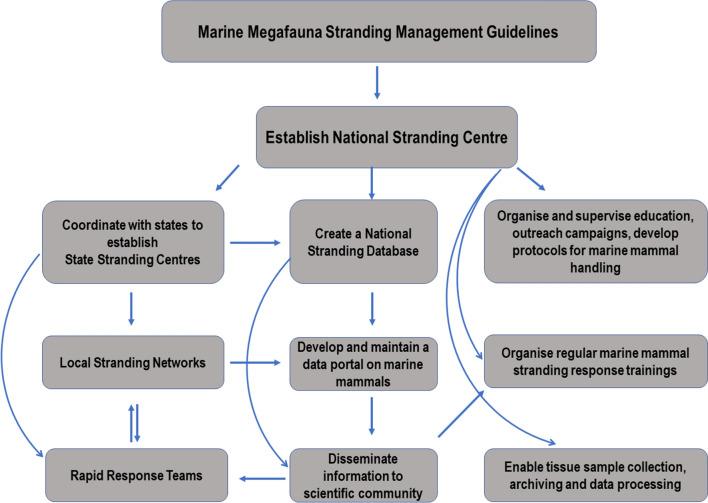
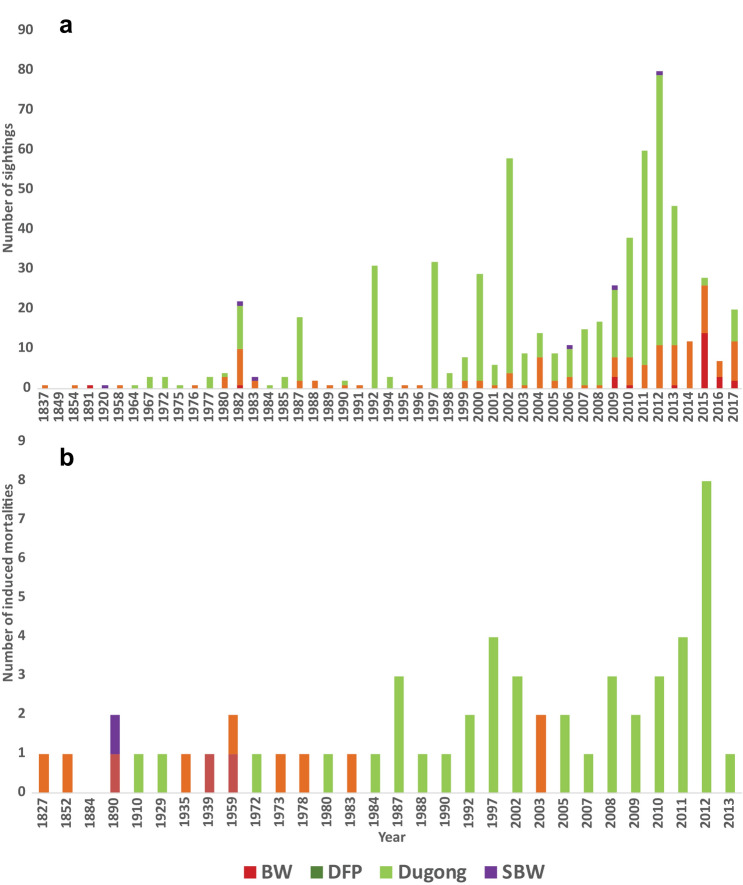
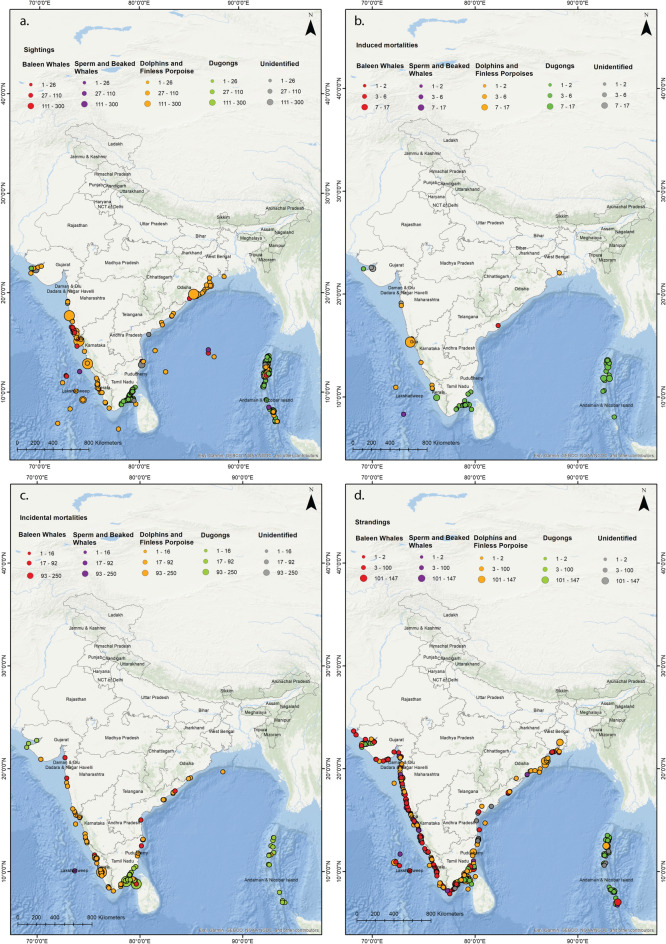
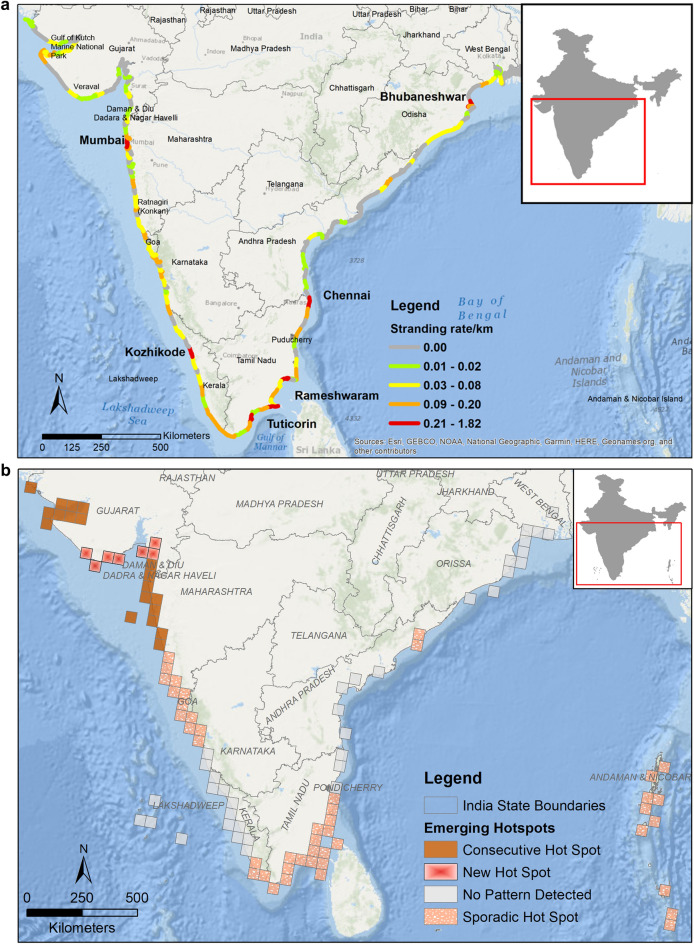
Marine mammal strandings provide vital information on species' life histories, population health and status of marine ecosystems. Opportunistic reporting of strandings also serve as a powerful low-cost tool for monitoring these elusive mammals. We collated data over ~ 270 years available through various open access databases, reports and publications. Annual strandings along the Indian coast (mean = 11.25 ± SE 9.1) increased in the last two years of the study (2015-2017, mean = 27.66 ± SE 8.5 strandings /year). We found that stranding events spike during June-September along the west coast and during December-January along the east coast. We identified several sections of the coastline, such as Mumbai (0.38 strandings/km), Kozhikode (0.28 strandings/km), Tuticorin (0.4 strandings/km), Rameswaram (1.82 strandings/km), Chennai (0.32 strandings/km) and Bhubaneshwar (0.26 strandings/km) with a higher number of stranded animals reported. Emerging Hotspot Analysis located new and consecutive hotspots along the north-west coast, and sporadic hotspots along the south-east coast. We recommend establishing regional stranding response centres at the identified hotspots coordinated by a National Stranding Centre with adequately trained personnel and central funding support. Regular stranding response training programs for field veterinarians, and frontline personnel of State Forest Departments near stranding hotspots would provide an improved understanding of marine mammal health and threats in Indian waters. Further, the suggested National Stranding Centre needs to maintain a 'National Stranding Database' for long-term marine mammal conservation planning in India.
海洋哺乳动物搁浅为了解物种的生活史、种群健康和海洋生态系统状况提供了重要信息。偶然报告的搁浅事件也是监测这些难以捉摸的哺乳动物的一种强大的低成本工具。我们整理了通过各种开放获取数据库、报告和出版物获得的近 270 年的数据。印度沿海的年度搁浅数量(平均值= 11.25 ± SE 9.1)在研究的最后两年(2015-2017 年)有所增加(平均值= 27.66 ± SE 8.5 次/年)。我们发现,西海岸的搁浅事件在 6 月至 9 月期间激增,而东海岸则在 12 月至 1 月期间激增。我们确定了一些海岸线的地段,如孟买(0.38 次/公里)、高知(0.28 次/公里)、杜蒂戈林(0.4 次/公里)、拉梅斯瓦兰(1.82 次/公里)、钦奈(0.32 次/公里)和布巴内斯瓦尔(0.26 次/公里),这些地区报告的搁浅动物数量较多。新兴热点分析在西北海岸沿线确定了新的连续热点,以及东南海岸沿线的零星热点。我们建议在已确定的热点地区建立区域搁浅响应中心,由国家搁浅中心协调,该中心配备有经过充分培训的人员和中央资金支持。在靠近搁浅热点的州立森林部门的前线人员和兽医中定期进行搁浅响应培训计划,将有助于提高对印度水域海洋哺乳动物健康和威胁的了解。此外,建议的国家搁浅中心需要为印度的长期海洋哺乳动物保护规划维护一个“国家搁浅数据库”。