Sánchez-Ruiloba Lucía, Aicart-Ramos Clara, García-Guerra Lucía, Pose-Utrilla Julia, Rodríguez-Crespo Ignacio, Iglesias Teresa
Instituto de Investigaciones Biomédicas "Alberto Sols", Consejo Superior de Investigaciones Científicas-Universidad Autónoma de Madrid (CSIC-UAM), Madrid, Spain; CIBERNED, Centro de Investigación Biomédica en Red sobre Enfermedades Neurodegenerativas, Instituto de Salud Carlos III, Madrid, Spain.
Departamento de Bioquímica y Biología Molecular I, Universidad Complutense de Madrid (UCM), Madrid, Spain.
PLoS One. 2014 Apr 16;9(4):e95191. doi: 10.1371/journal.pone.0095191. eCollection 2014.
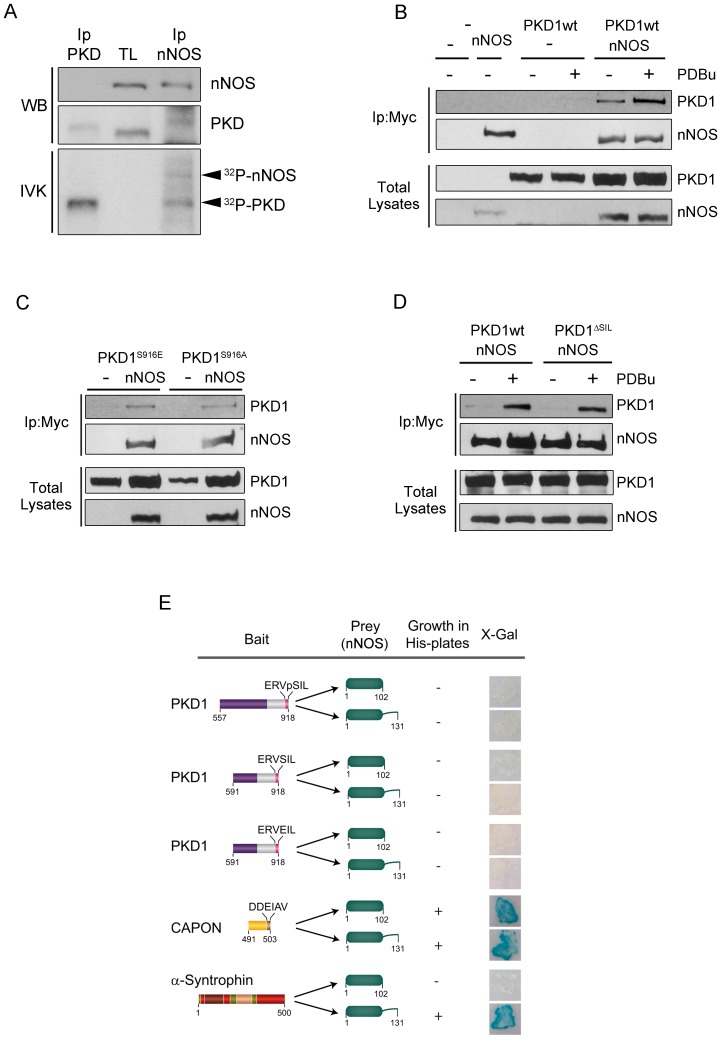
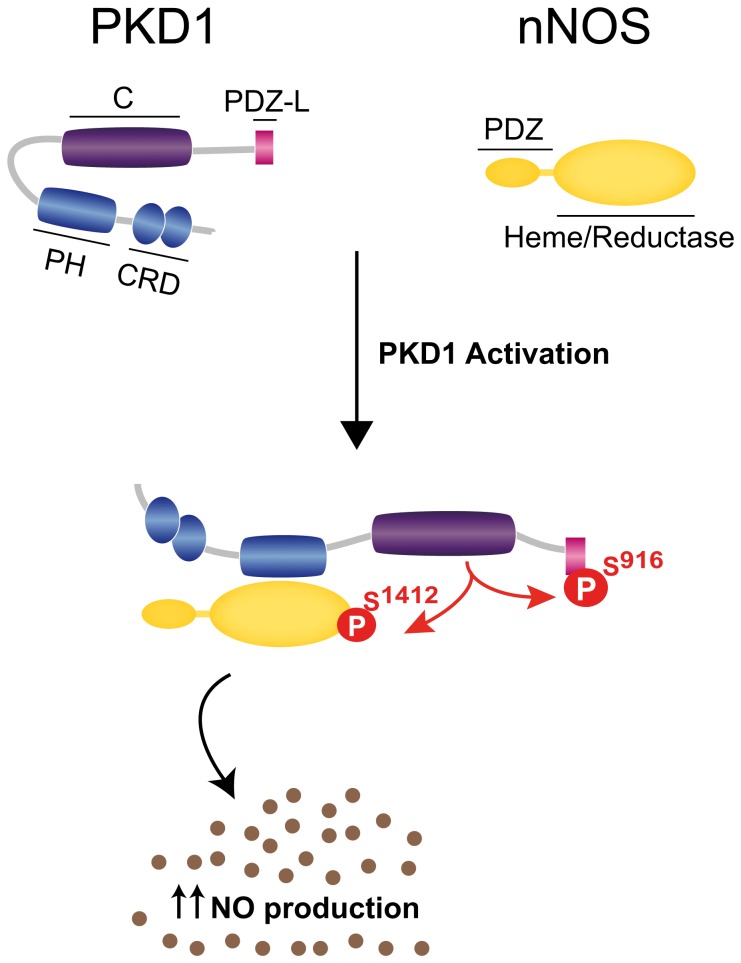
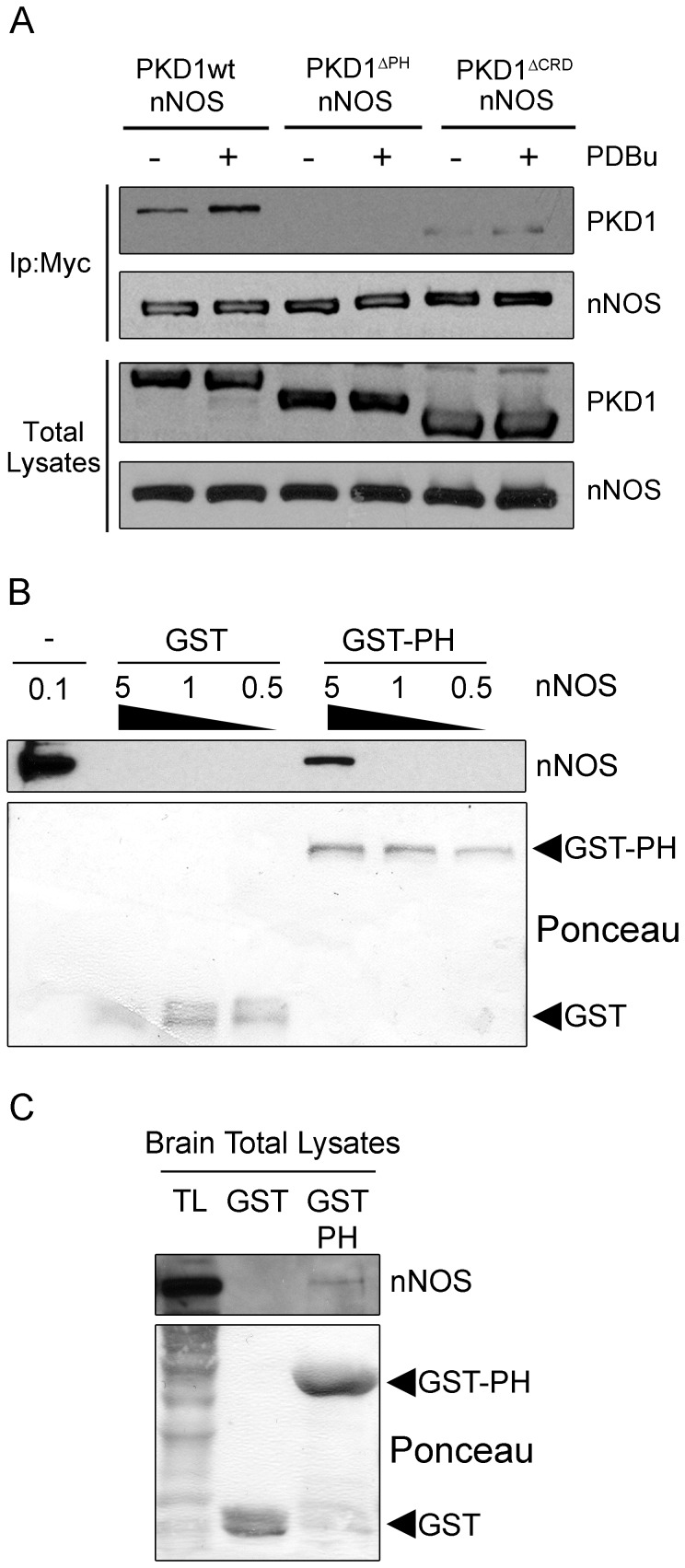
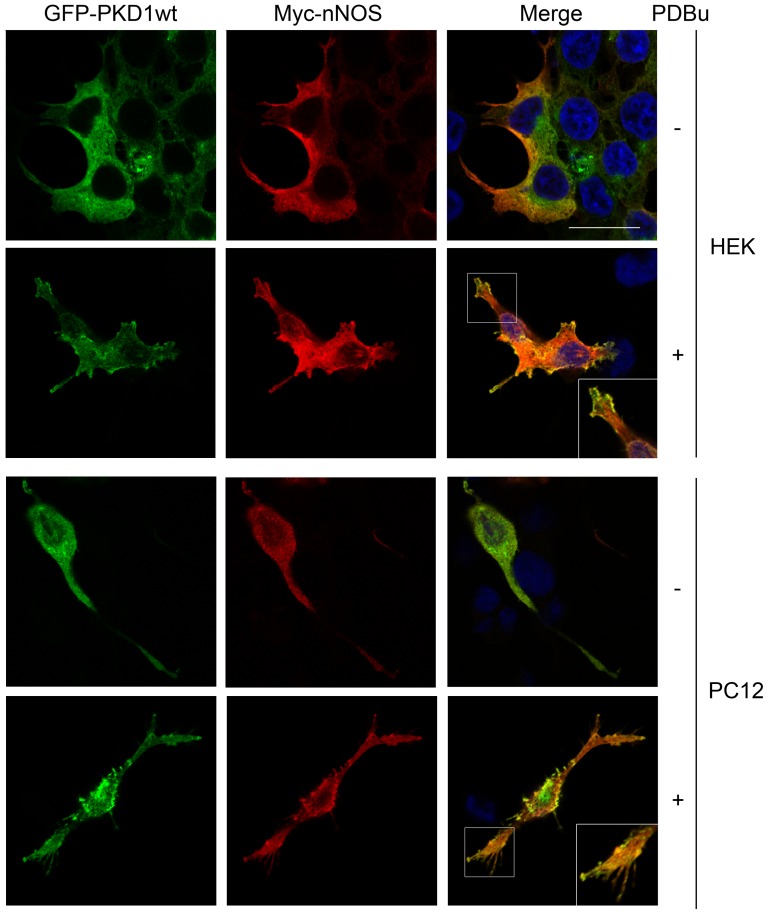
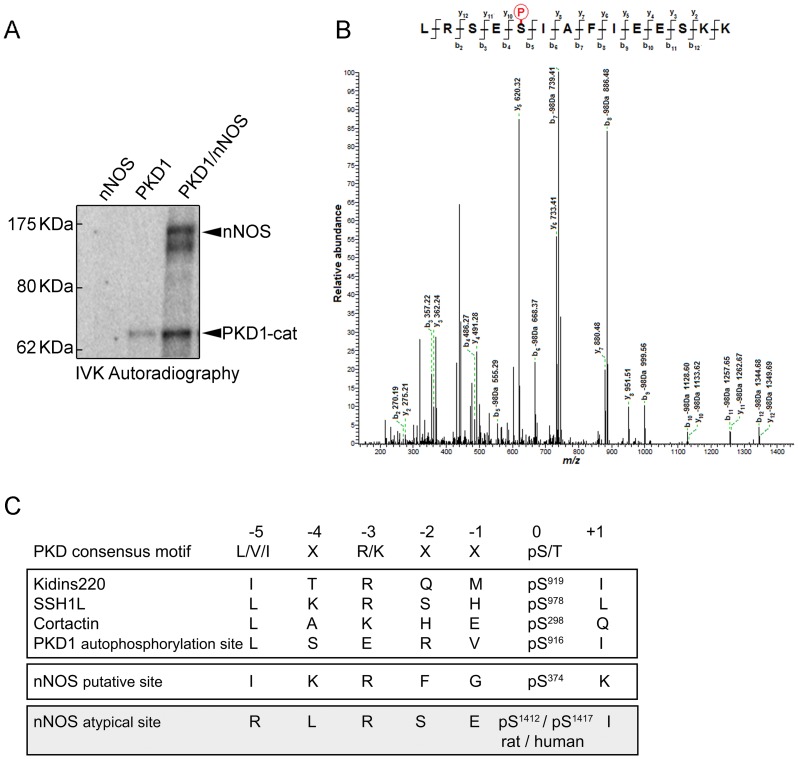
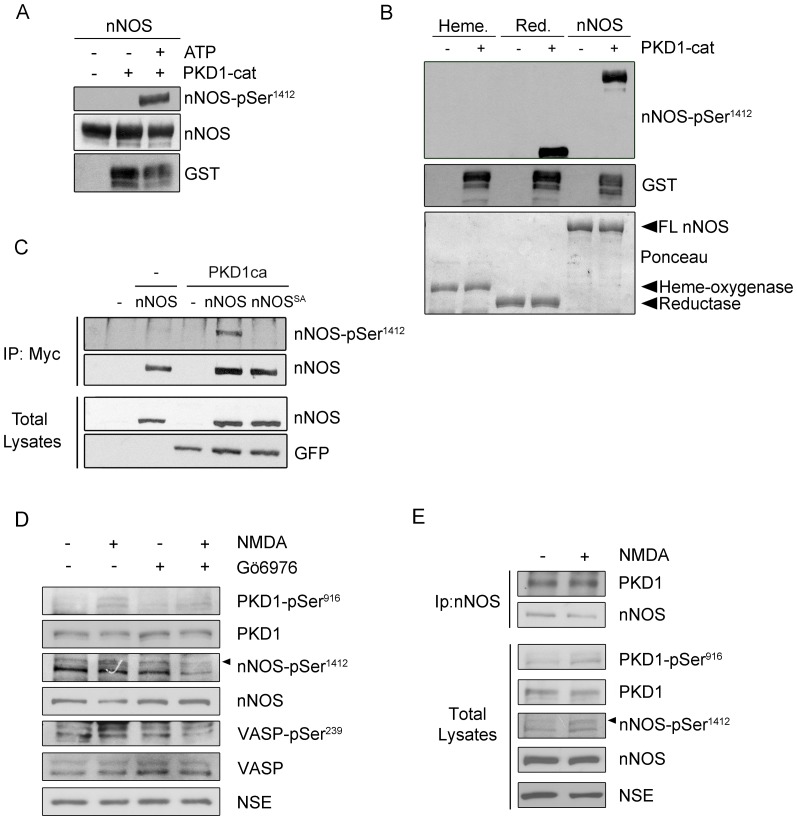
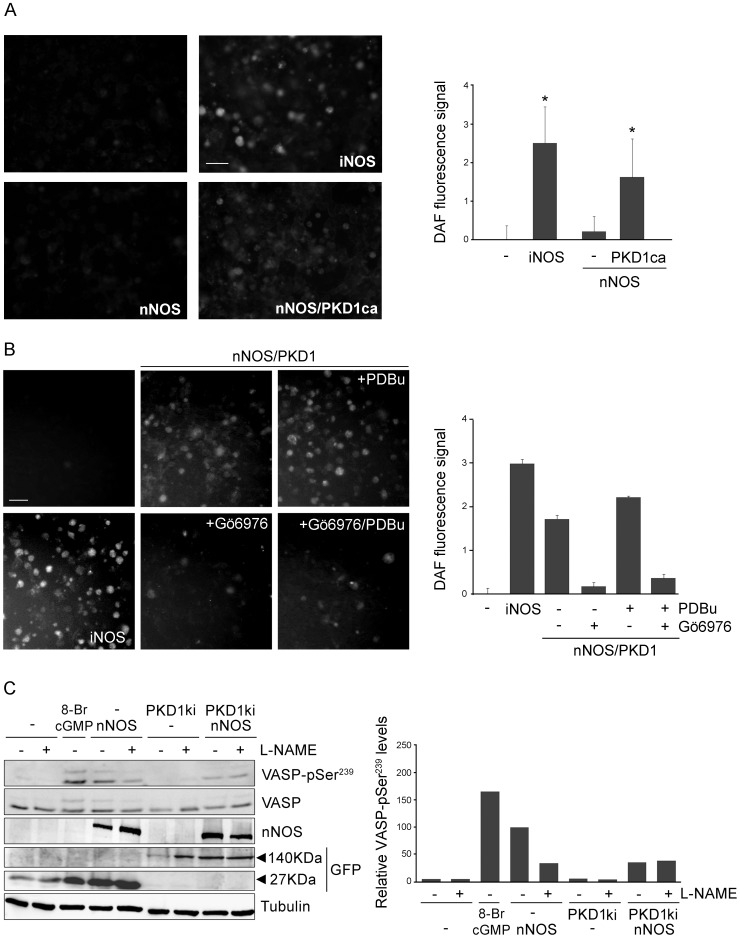
Neuronal Nitric Oxide Synthase (nNOS) is the biosynthetic enzyme responsible for nitric oxide (·NO) production in muscles and in the nervous system. This constitutive enzyme, unlike its endothelial and inducible counterparts, presents an N-terminal PDZ domain known to display a preference for PDZ-binding motifs bearing acidic residues at -2 position. In a previous work, we discovered that the C-terminal end of two members of protein kinase D family (PKD1 and PKD2) constitutes a PDZ-ligand. PKD1 has been shown to regulate multiple cellular processes and, when activated, becomes autophosphorylated at Ser 916, a residue located at -2 position of its PDZ-binding motif. Since nNOS and PKD are spatially enriched in postsynaptic densities and dendrites, the main objective of our study was to determine whether PKD1 activation could result in a direct interaction with nNOS through their respective PDZ-ligand and PDZ domain, and to analyze the functional consequences of this interaction. Herein we demonstrate that PKD1 associates with nNOS in neurons and in transfected cells, and that kinase activation enhances PKD1-nNOS co-immunoprecipitation and subcellular colocalization. However, transfection of mammalian cells with PKD1 mutants and yeast two hybrid assays showed that the association of these two enzymes does not depend on PKD1 PDZ-ligand but its pleckstrin homology domain. Furthermore, this domain was able to pull-down nNOS from brain extracts and bind to purified nNOS, indicating that it mediates a direct PKD1-nNOS interaction. In addition, using mass spectrometry we demonstrate that PKD1 specifically phosphorylates nNOS in the activatory residue Ser 1412, and that this phosphorylation increases nNOS activity and ·NO production in living cells. In conclusion, these novel findings reveal a crucial role of PKD1 in the regulation of nNOS activation and synthesis of ·NO, a mediator involved in physiological neuronal signaling or neurotoxicity under pathological conditions such as ischemic stroke or neurodegeneration.
神经元型一氧化氮合酶(nNOS)是负责在肌肉和神经系统中产生一氧化氮(·NO)的生物合成酶。这种组成型酶与其内皮型和诱导型对应物不同,具有一个N端PDZ结构域,已知该结构域对在-2位置带有酸性残基的PDZ结合基序表现出偏好。在先前的一项研究中,我们发现蛋白激酶D家族的两个成员(PKD1和PKD2)的C末端构成一个PDZ配体。PKD1已被证明可调节多种细胞过程,并且在激活时会在Ser 916处发生自磷酸化,该残基位于其PDZ结合基序的-2位置。由于nNOS和PKD在突触后密度和树突中在空间上富集,我们研究的主要目的是确定PKD1激活是否会通过它们各自的PDZ配体和PDZ结构域与nNOS直接相互作用,并分析这种相互作用的功能后果。在此我们证明PKD1在神经元和转染细胞中与nNOS相关联,并且激酶激活增强了PKD1 - nNOS的共免疫沉淀和亚细胞共定位。然而,用PKD1突变体转染哺乳动物细胞和酵母双杂交试验表明,这两种酶的关联不依赖于PKD1的PDZ配体,而是依赖于其普列克底物蛋白同源结构域。此外,该结构域能够从脑提取物中下拉nNOS并与纯化的nNOS结合,表明它介导了PKD1与nNOS的直接相互作用。另外,使用质谱分析我们证明PKD1在激活残基Ser 1412处特异性磷酸化nNOS,并且这种磷酸化增加了活细胞中的nNOS活性和·NO产生。总之,这些新发现揭示了PKD1在调节nNOS激活和·NO合成中的关键作用,·NO是一种参与生理神经元信号传导或在缺血性中风或神经退行性变等病理条件下的神经毒性的介质。