Zhang Jie, Zou Dan, Li Yang, Sun Xiang, Wang Na-Na, Gong Si-Ying, Zheng Yong, Li Xue-Bao
Hubei Key Laboratory of Genetic Regulation and Integrative Biology, School of Life Sciences, Central China Normal University, Wuhan, China.
PLoS One. 2014 Apr 17;9(4):e95642. doi: 10.1371/journal.pone.0095642. eCollection 2014.
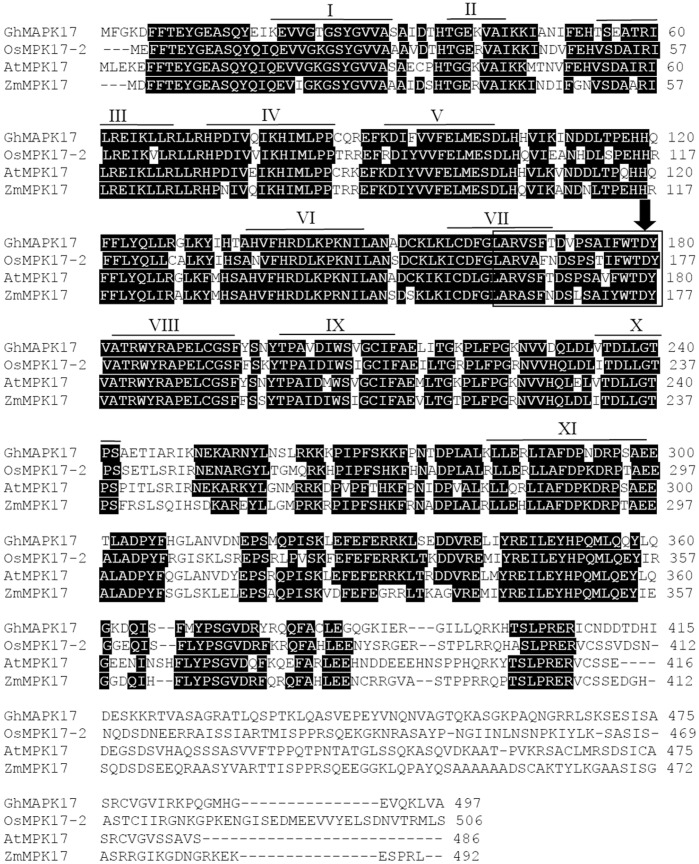
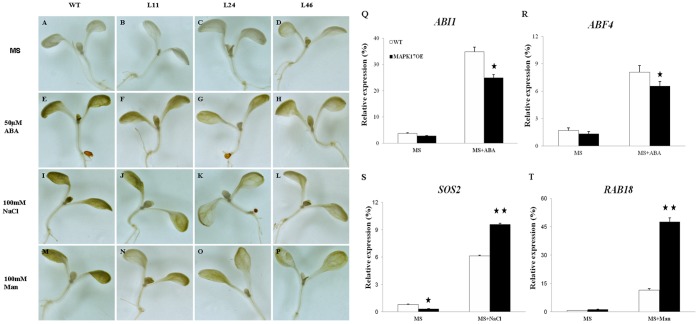
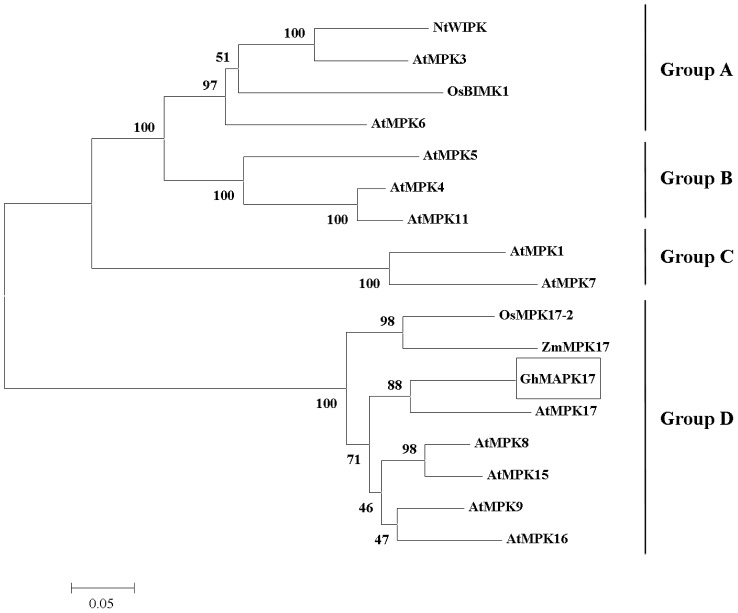
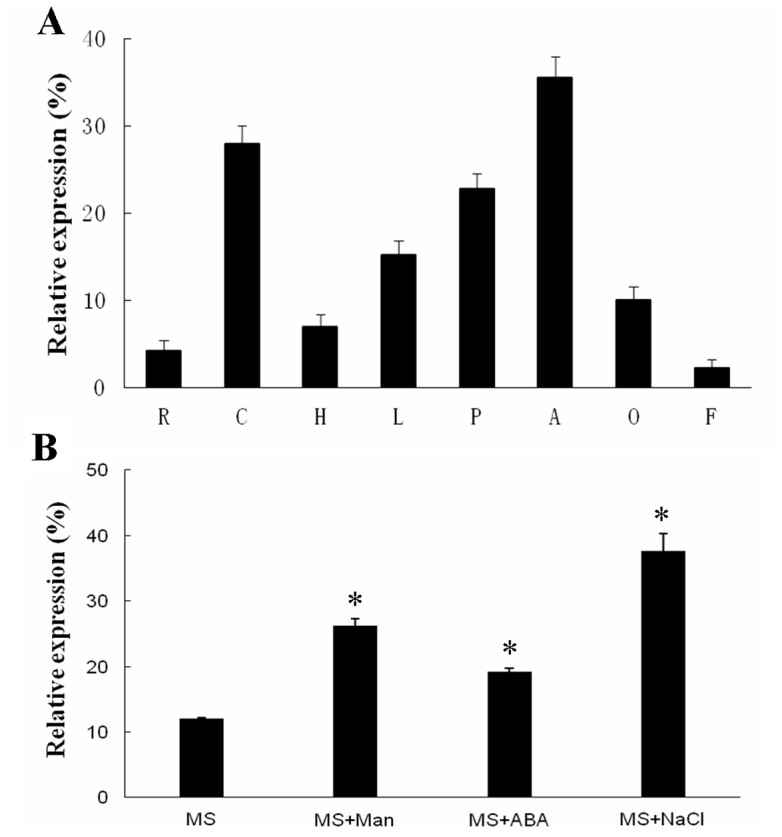
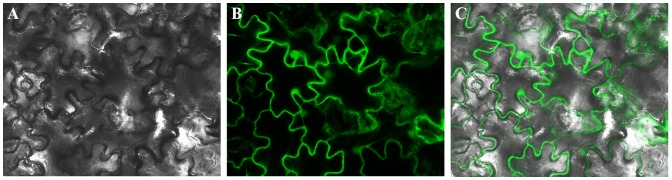
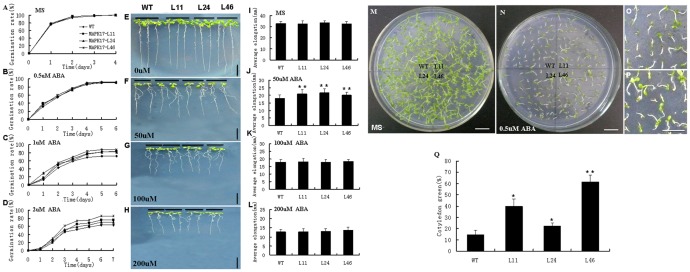
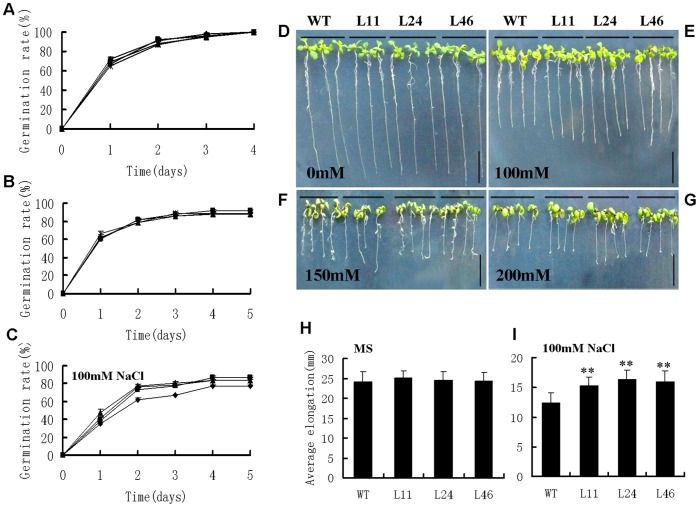
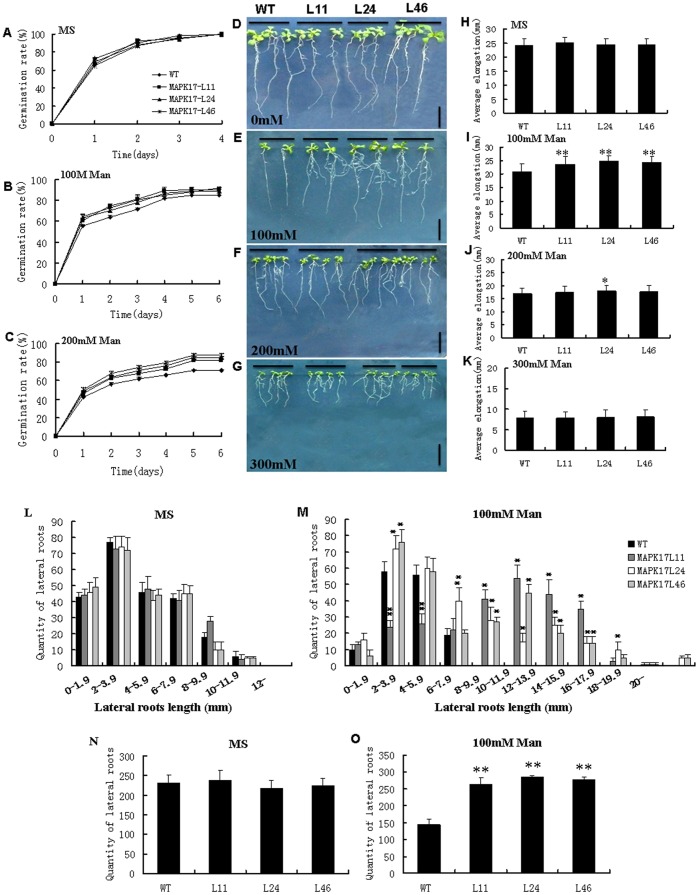
Mitogen-activated protein kinase (MAPK) cascades play pivotal roles in mediating biotic and abiotic stress responses. Cotton (Gossypium hirsutum) is the most important textile crop in the world, and often encounters abiotic stress during its growth seasons. In this study, a gene encoding a mitogen-activated protein kinase (MAPK) was isolated from cotton, and designated as GhMPK17. The open reading frame (ORF) of GhMPK17 gene is 1494 bp in length and encodes a protein with 497 amino acids. Quantitative RT-PCR analysis indicated that GhMPK17 expression was up-regulated in cotton under NaCl, mannitol and ABA treatments. The transgenic Arabidopsis plants expressing GhMPK17 gene showed higher seed germination, root elongation and cotyledon greening/expansion rates than those of the wild type on MS medium containing NaCl, mannitol and exogenous ABA, suggesting that overexpression of GhMPK17 in Arabidopsis increased plant ABA-insensitivity, and enhanced plant tolerance to salt and osmotic stresses. Furthermore, overexpression of GhMPK17 in Arabidopsis reduced H2O2 level and altered expression of ABA- and abiotic stress-related genes in the transgenic plants. Collectively, these data suggested that GhMPK17 gene may be involved in plant response to high salinity and osmotic stresses and ABA signaling.
丝裂原活化蛋白激酶(MAPK)级联反应在介导生物和非生物胁迫反应中起关键作用。棉花(陆地棉)是世界上最重要的纺织作物,在其生长季节经常遭遇非生物胁迫。在本研究中,从棉花中分离出一个编码丝裂原活化蛋白激酶(MAPK)的基因,并命名为GhMPK17。GhMPK17基因的开放阅读框(ORF)长度为1494 bp,编码一个含有497个氨基酸的蛋白质。定量RT-PCR分析表明,在NaCl、甘露醇和ABA处理下,棉花中GhMPK17的表达上调。在含有NaCl、甘露醇和外源ABA的MS培养基上,表达GhMPK17基因的转基因拟南芥植株的种子萌发率、根伸长率和子叶绿化/扩展率均高于野生型,这表明在拟南芥中过表达GhMPK17可增加植物对ABA的不敏感性,并增强植物对盐胁迫和渗透胁迫的耐受性。此外,在拟南芥中过表达GhMPK17可降低转基因植株中的H2O2水平,并改变ABA和非生物胁迫相关基因的表达。总体而言,这些数据表明GhMPK17基因可能参与植物对高盐和渗透胁迫以及ABA信号的响应。