Li Yujuan, Zeng Minting, Chen Weiqiang, Liu Chuiliang, Wang Fei, Han Xue, Zuo Zhiyi, Peng Shuling
Department of Anesthesiology, Sun Yat-sen Memorial Hospital, Sun Yat-sen University, Guangzhou, Guangdong, China.
Department of Anesthesiology, Sun Yat-sen Memorial Hospital, Sun Yat-sen University, Guangzhou, Guangdong, China; Department of Anesthesiology, Affiliated Shantou Hospital of Sun Yat-sen University, Shantou, Guangdong, China.
PLoS One. 2014 Apr 17;9(4):e93639. doi: 10.1371/journal.pone.0093639. eCollection 2014.
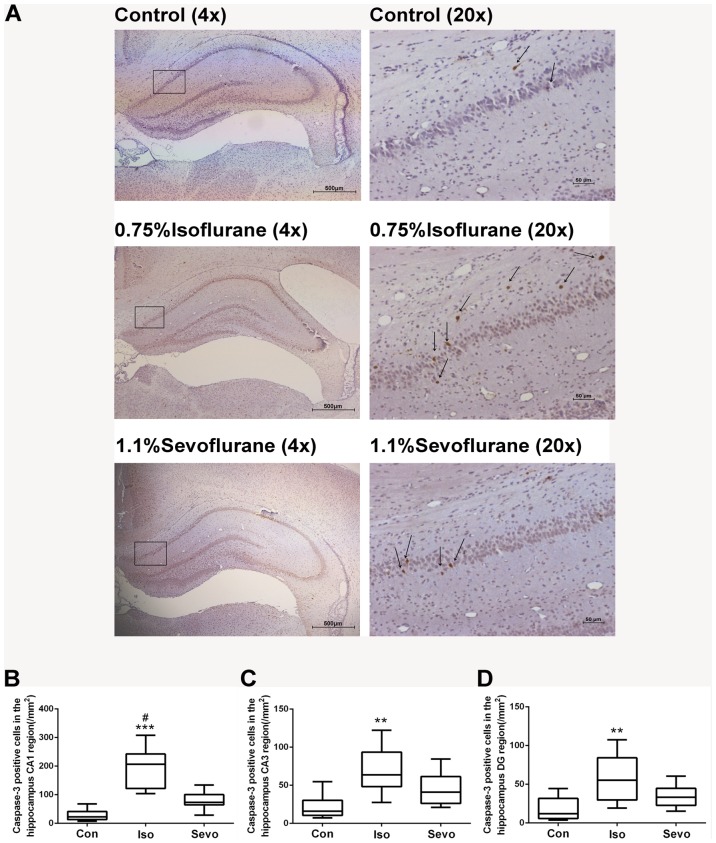
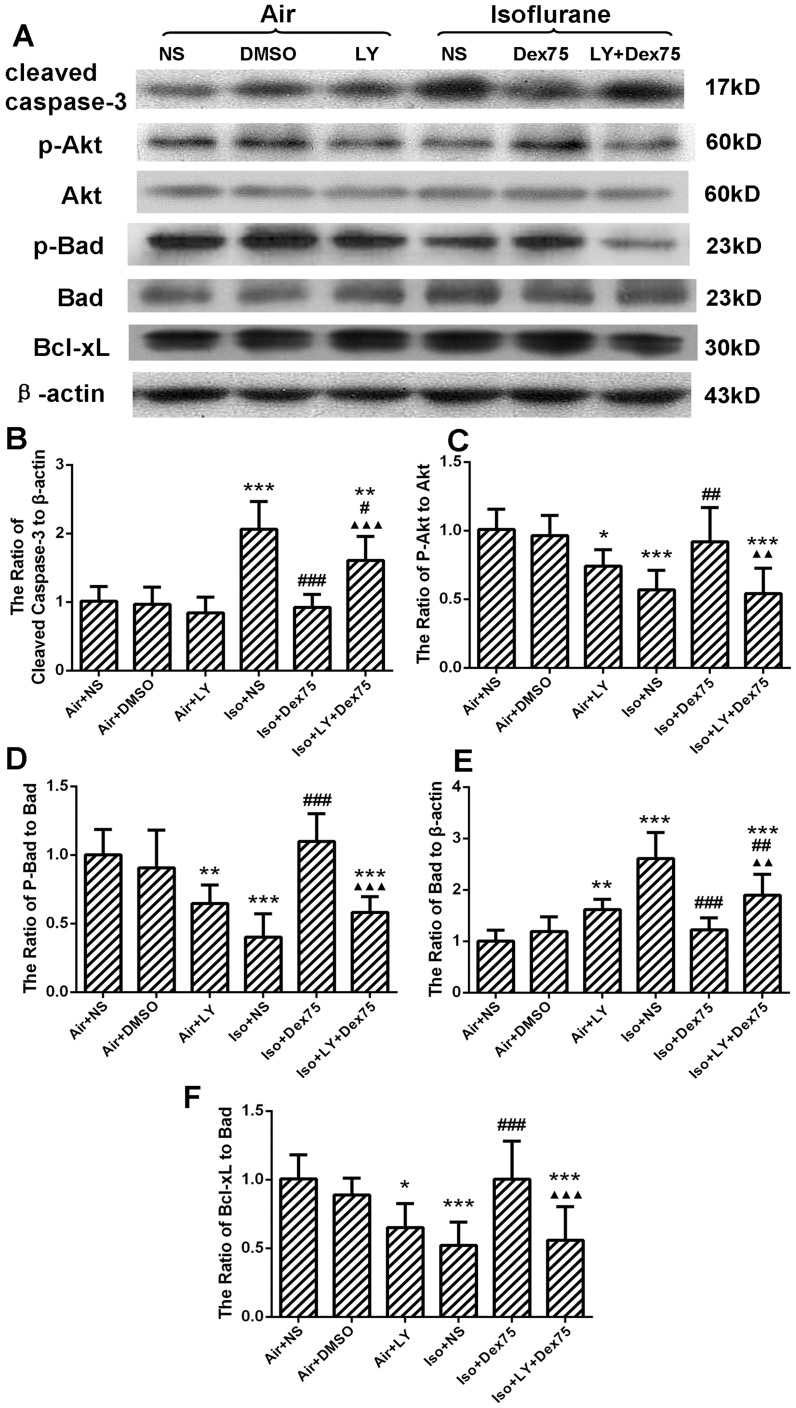
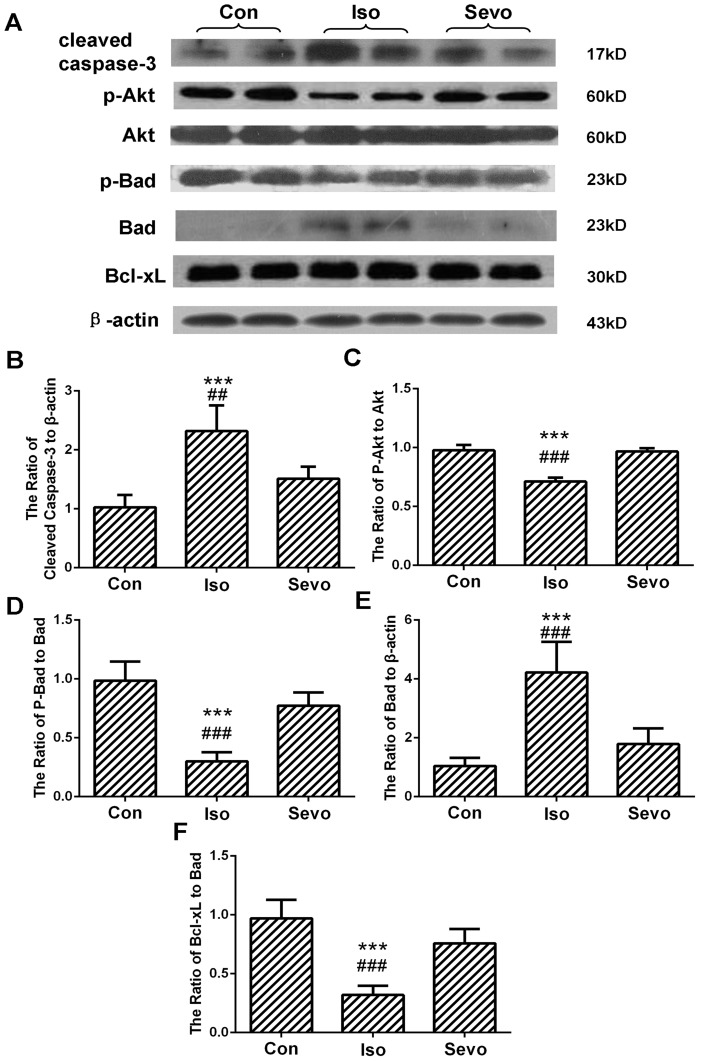
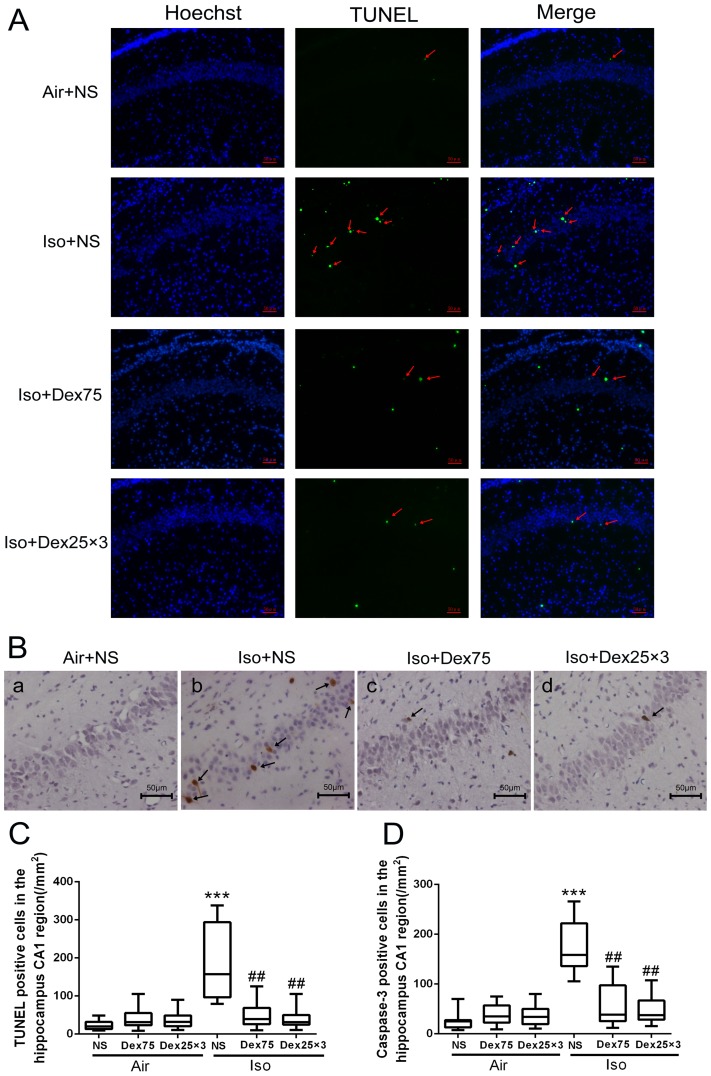
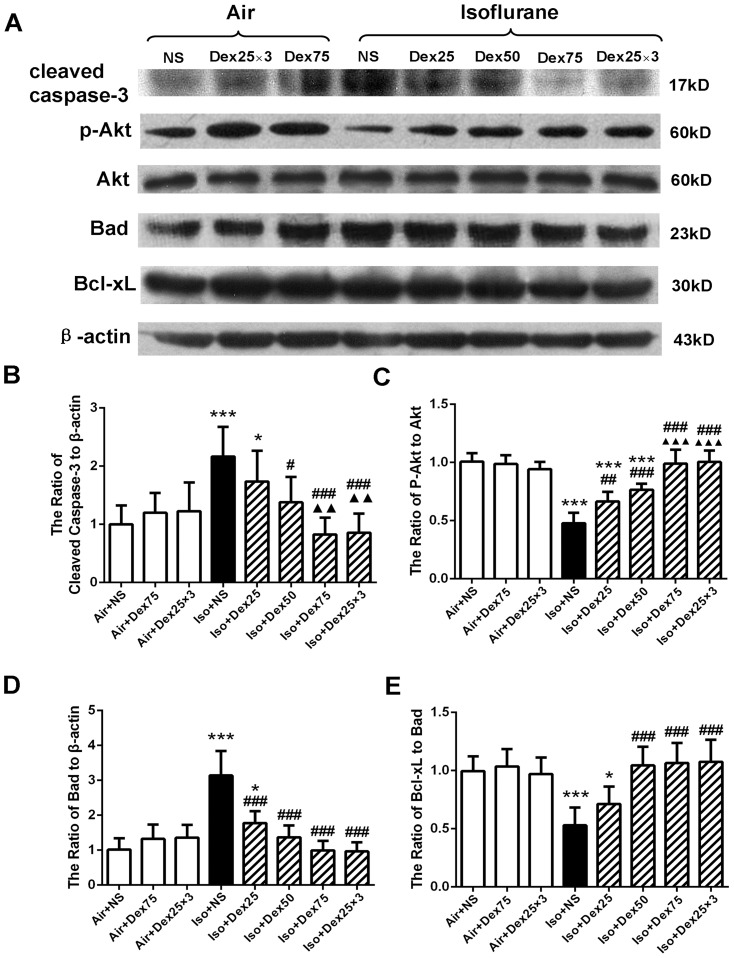
Prolonged exposure to volatile anesthetics, such as isoflurane and sevoflurane, causes neurodegeneration in the developing animal brains. Recent studies showed that dexmedetomidine, a selective α2-adrenergic agonist, reduced isoflurane-induced cognitive impairment and neuroapoptosis. However, the mechanisms for the effect are not completely clear. Thus, we investigated whether exposure to isoflurane or sevoflurane at an equivalent dose for anesthesia during brain development causes different degrees of neuroapoptosis and whether this neuroapoptosis is reduced by dexmedetomidine via effects on PI3K/Akt pathway that can regulate cell survival. Seven-day-old (P7) neonatal Sprague-Dawley rats were randomly exposed to 0.75% isoflurane, 1.2% sevoflurane or air for 6 h. Activated caspase-3 was detected by immunohistochemistry and Western blotting. Phospho-Akt, phospho-Bad, Akt, Bad and Bcl-xL proteins were detected by Western blotting in the hippocampus at the end of exposure. Also, P7 rats were pretreated with various concentrations of dexmedetomidine alone or together with PI3K inhibitor LY294002, and then exposed to 0.75% isoflurane. Terminal deoxyribonucleotide transferase-mediated dUTP nick end labeling (TUNEL) and activated caspase-3 were used to detect neuronal apoptosis in their hippocampus. Isoflurane, not sevoflurane at the equivalent dose, induced significant neuroapoptosis, decreased the levels of phospho-Akt and phospho-Bad proteins, increased the expression of Bad protein and reduced the ratio of Bcl-xL/Bad in the hippocampus. Dexmedetomidine pretreatment dose-dependently inhibited isoflurane-induced neuroapoptosis and restored protein expression of phospho-Akt and Bad as well as the Bcl-xL/Bad ratio induced by isoflurane. Pretreatment with single dose of 75 µg/kg dexmedetomidine provided a protective effect similar to that with three doses of 25 µg/kg dexmedetomidine. Moreover, LY294002, partly inhibited neuroprotection of dexmedetomidine. Our results suggest that dexmedetomidine pretreatment provides neuroprotection against isoflurane-induced neuroapoptosis in the hippocampus of neonatal rats by preserving PI3K/Akt pathway activity.
长时间暴露于挥发性麻醉剂,如异氟烷和七氟烷,会导致发育中的动物大脑发生神经退行性变。最近的研究表明,右美托咪定,一种选择性α2-肾上腺素能激动剂,可减轻异氟烷诱导的认知障碍和神经细胞凋亡。然而,其作用机制尚不完全清楚。因此,我们研究了在大脑发育过程中,以等效剂量暴露于异氟烷或七氟烷进行麻醉是否会导致不同程度的神经细胞凋亡,以及右美托咪定是否通过影响可调节细胞存活的PI3K/Akt信号通路来减少这种神经细胞凋亡。将7日龄(P7)的新生Sprague-Dawley大鼠随机暴露于0.75%异氟烷、1.2%七氟烷或空气中6小时。通过免疫组织化学和蛋白质印迹法检测活化的半胱天冬酶-3。在暴露结束时,通过蛋白质印迹法检测海马中磷酸化Akt、磷酸化Bad、Akt、Bad和Bcl-xL蛋白。此外,P7大鼠单独或与PI3K抑制剂LY294002一起用不同浓度的右美托咪定预处理,然后暴露于0.75%异氟烷。采用末端脱氧核苷酸转移酶介导的dUTP缺口末端标记法(TUNEL)和活化的半胱天冬酶-3检测其海马中的神经元凋亡。等效剂量下,异氟烷而非七氟烷诱导了显著的神经细胞凋亡,降低了磷酸化Akt和磷酸化Bad蛋白水平,增加了Bad蛋白表达,并降低了海马中Bcl-xL/Bad比值。右美托咪定预处理剂量依赖性地抑制异氟烷诱导的神经细胞凋亡,并恢复了异氟烷诱导的磷酸化Akt和Bad蛋白表达以及Bcl-xL/Bad比值。单剂量75μg/kg右美托咪定预处理提供的保护作用与三剂量25μg/kg右美托咪定相似。此外,LY294002部分抑制了右美托咪定的神经保护作用。我们的结果表明,右美托咪定预处理通过保留PI3K/Akt信号通路活性,对新生大鼠海马中异氟烷诱导的神经细胞凋亡提供神经保护作用。