Katsi Vasiliki, Katsimichas Themistoklis, Kallistratos Manolis S, Tsekoura Dora, Makris Thomas, Manolis Athanasios J, Tousoulis Dimitris, Stefanadis Christodoulos, Kallikazaros Ioannis
Department of Cardiology, Hippokration Hospital, Athens, Greece.
First University Department of Cardiology, Hippokration Hospital, Athens, Greece.
Med Sci Monit. 2014 Apr 21;20:654-9. doi: 10.12659/MSM.890252.
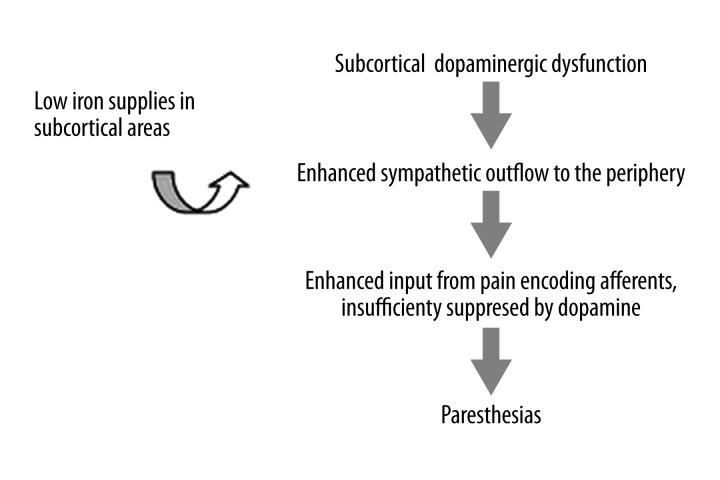
Restless Legs Syndrome (RLS), is a sensory-motor neurological disorder that appears to be surprisingly common in the community. Periodic limb movements in sleep are typically encountered in more than 80% of RLS patients and comprise involuntary muscular jerks in the lower limbs, such as flexion of the knees or ankles. Iron deficiency and dopaminergic neuronal dysfunction in the central nervous system are currently thought to be the likely pathophysiological culprits. There is evidence linking RLS to hypertension and cardiovascular disease. This short review will first present a synopsis of epidemiological, clinical and pathophysiological data concerning the syndrome, and then information on the possible links between RLS and cardiovascular disorders.
不宁腿综合征(RLS)是一种感觉运动性神经障碍,在人群中似乎出奇地常见。超过80%的RLS患者通常会出现睡眠期周期性肢体运动,包括下肢的不自主肌肉抽搐,如膝盖或脚踝的屈曲。目前认为缺铁和中枢神经系统多巴胺能神经元功能障碍可能是病理生理原因。有证据表明RLS与高血压和心血管疾病有关。这篇简短的综述将首先概述有关该综合征的流行病学、临床和病理生理学数据,然后介绍RLS与心血管疾病之间可能的联系。