Division of Exposure Science, Environmental and Occupational Health Sciences Institute, Rutgers University, Piscataway, New Jersey, United States of America.
College of Geosciences, China University of Petroleum, Beijing, People's Republic of China.
PLoS One. 2014 Apr 22;9(4):e95734. doi: 10.1371/journal.pone.0095734. eCollection 2014.
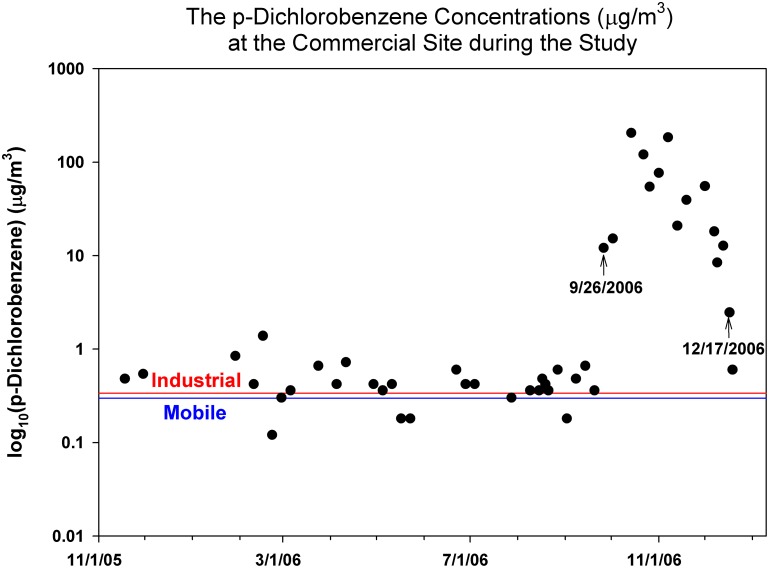
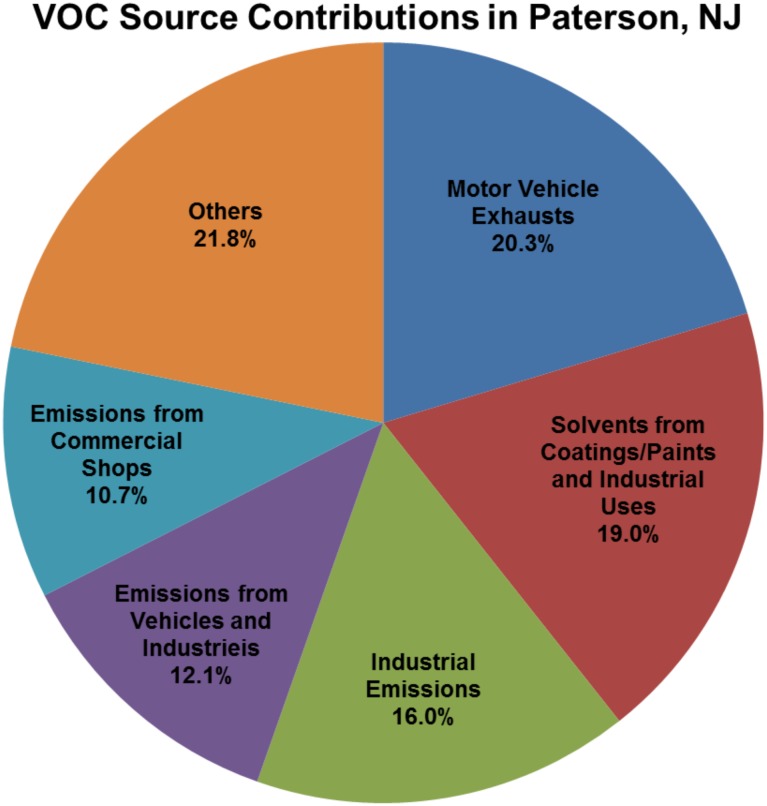
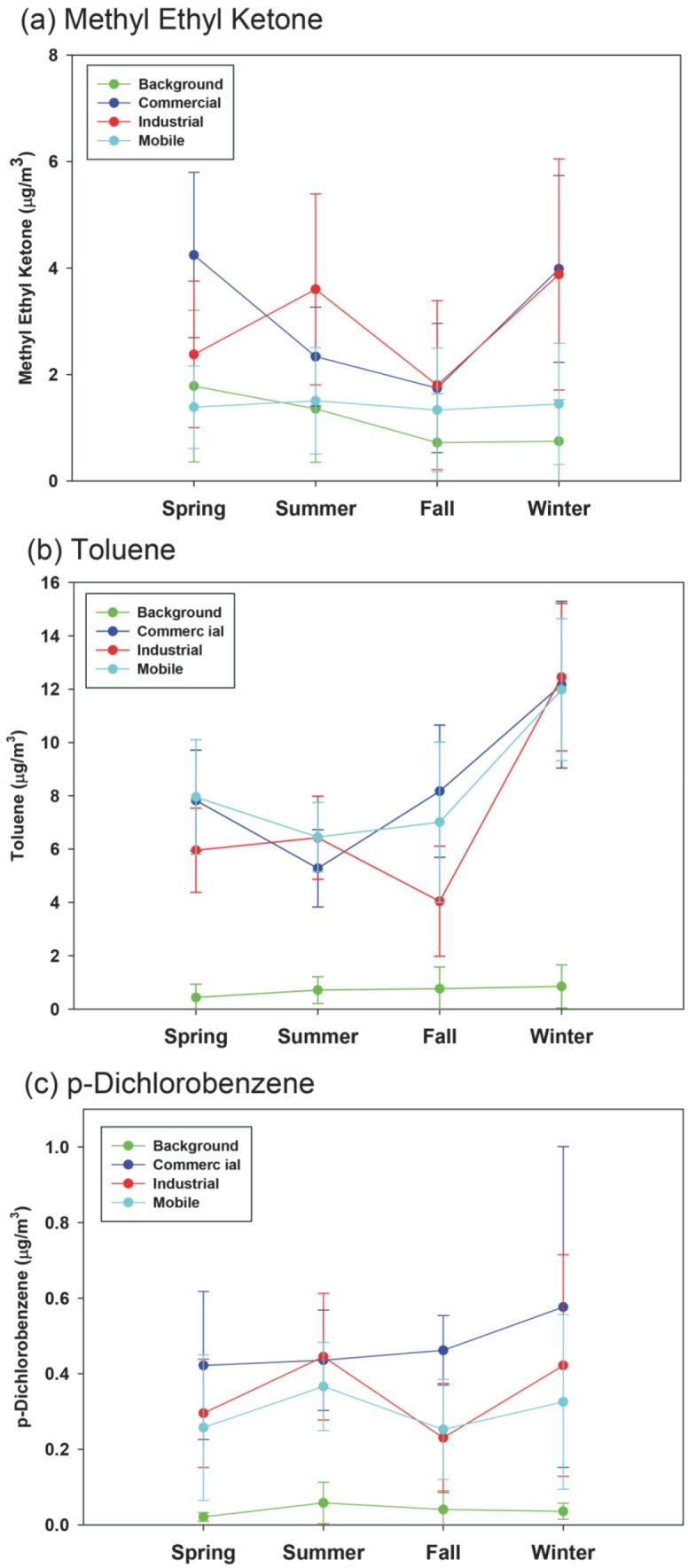
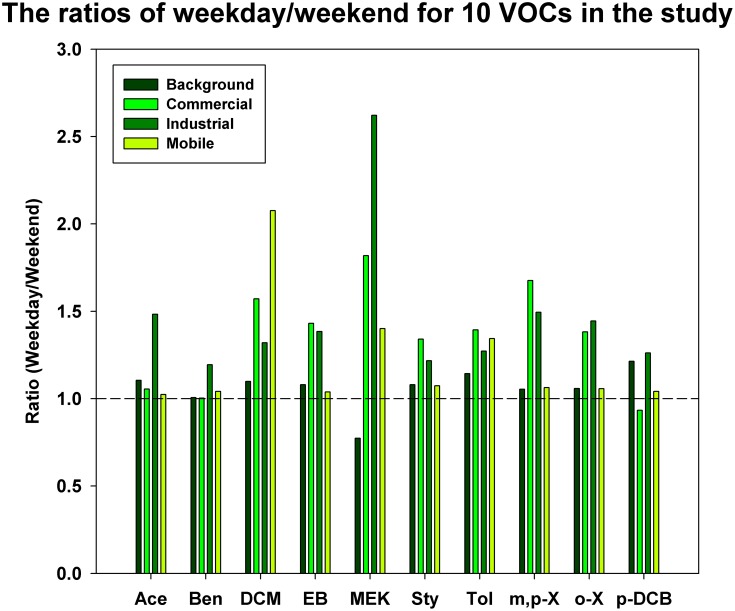
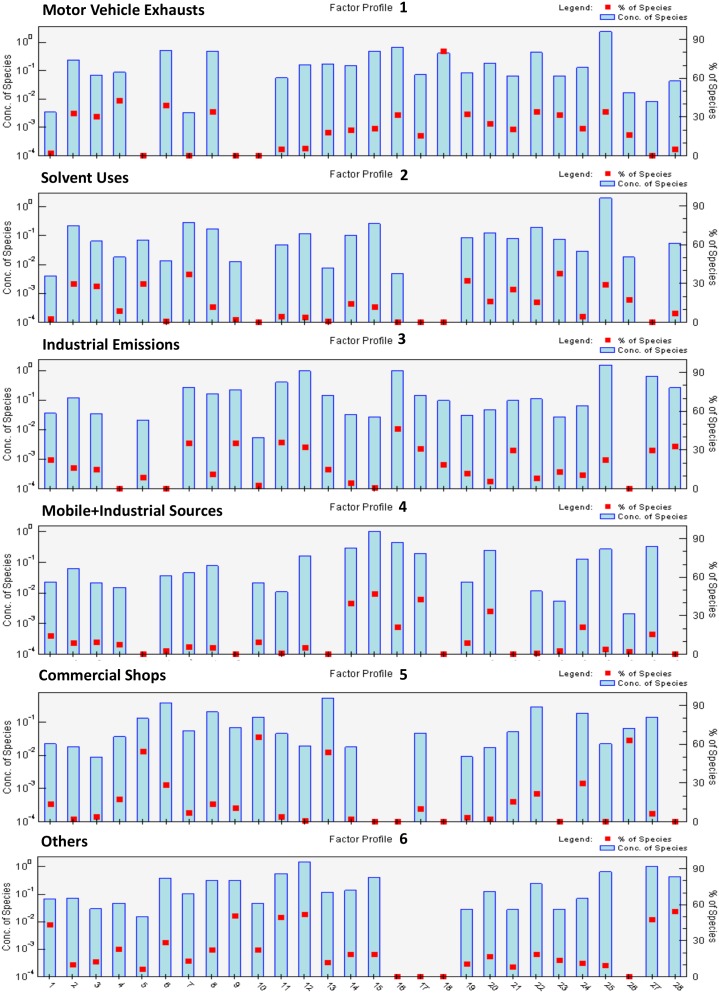
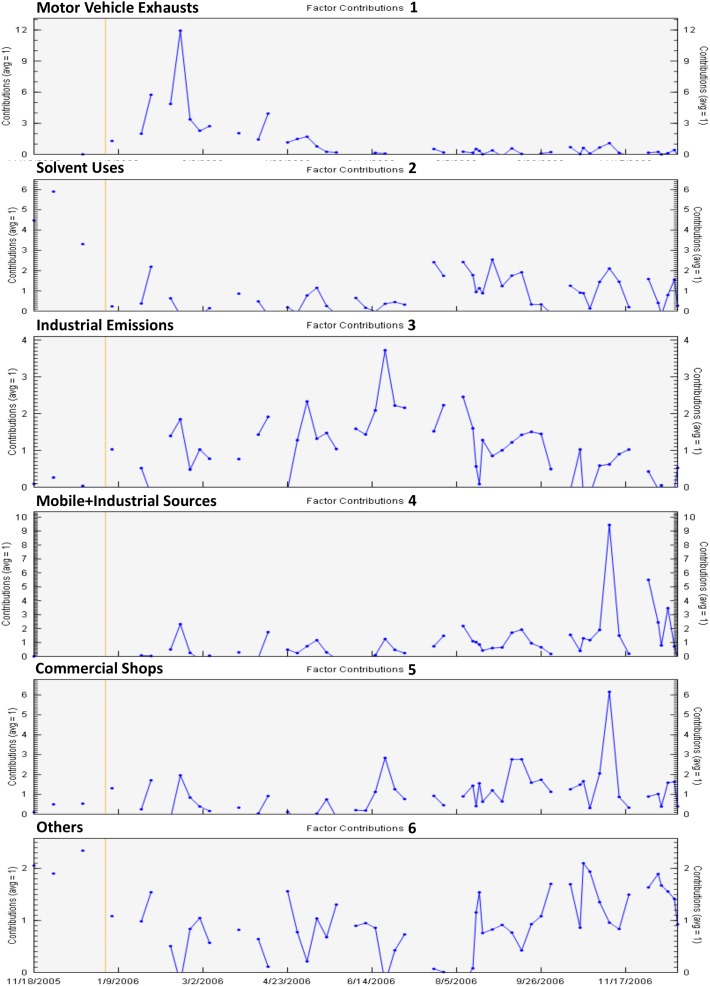
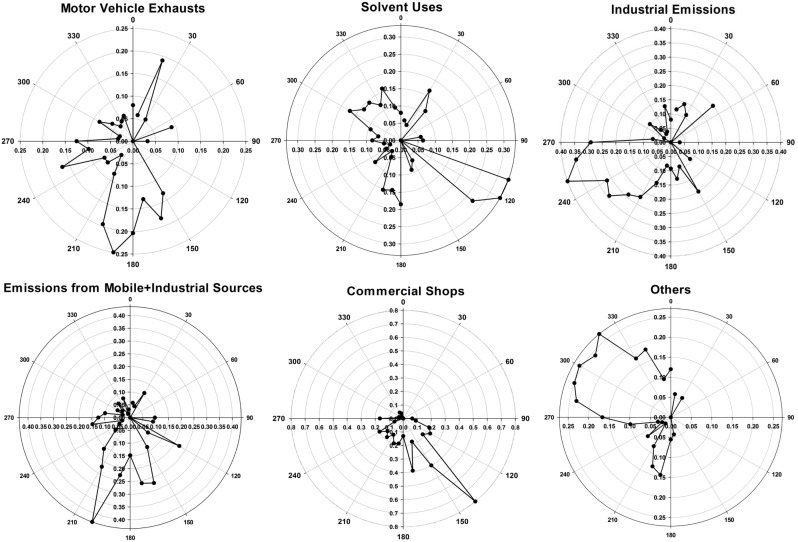
This study aimed to characterize spatial/temporal variations of ambient volatile organic compounds (VOCs) using a community-scale monitoring approach and identify the main sources of concern in Paterson, NJ, an urban area with mixed sources of VOCs. VOC samples were simultaneously collected from three local source-dominated (i.e., commercial, industrial, and mobile) sites in Paterson and one background site in Chester, NJ (located ∼58 km southwest of Paterson). Samples were collected using the EPA TO-15 method from midnight to midnight, one in every sixth day over one year. Among the 60 analyzed VOCs, ten VOCs (acetylene, benzene, dichloromethane, ethylbenzene, methyl ethyl ketone, styrene, toluene, m,p-xylene, o-xylene, and p-dichlorobenzene) were selected to examine their spatial/temporal variations. All of the 10 VOCs in Paterson were significantly higher than the background site (p<0.01). Ethylbenzene, m,p-xylene, o-xylene, and p-dichlorobenzene measured at the commercial site were significantly higher than the industrial/mobile sites (p<0.01). Seven VOCs (acetylene, benzene, dichloromethane, methyl ethyl ketone, styrene, toluene, and p-dichlorobenzene) were significantly different by season (p<0.05), that is, higher in cold seasons than in warm seasons. In addition, dichloromethane, methyl ethyl ketone, and toluene were significantly higher on weekdays than weekend days (p<0.05). These results are consistent with literature data, indicating the impact of anthropogenic VOC sources on air pollution in Paterson. Positive Matrix Factorization (PMF) analysis was applied for 24-hour integrated VOC measurements in Paterson over one year and identified six contributing factors, including motor vehicle exhausts (20%), solvents uses (19%), industrial emissions (16%), mobile+stationery sources (12%), small shop emissions (11%), and others (22%). Additional locational analysis confirmed the identified sources were well matched with point sources located upwind in Paterson. The study demonstrated the community-scale monitoring approach can capture spatial variation of VOCs in an urban community with mixed VOC sources. It also provided robust data to identify major sources of concern in the community.
本研究旨在采用社区规模监测方法来描述环境挥发性有机化合物 (VOC) 的时空变化,并确定新泽西南部混合 VOC 源城市帕特森的主要关注源。从帕特森的三个本地源主导(即商业、工业和移动)站点和新泽西切斯特的一个背景站点(位于帕特森西南约 58 公里处)同时采集 VOC 样品。使用 EPA TO-15 方法,在一年中的每一天午夜到午夜之间,每隔一天采集一次样品。在所分析的 60 种 VOC 中,选择了十种 VOC(乙炔、苯、二氯甲烷、乙苯、甲基乙基酮、苯乙烯、甲苯、间二甲苯、对二甲苯和对二氯苯)来检查它们的时空变化。在帕特森的所有 10 种 VOC 均显著高于背景站点(p<0.01)。商业站点测量的乙苯、间二甲苯、对二甲苯和对二氯苯明显高于工业/移动站点(p<0.01)。七种 VOC(乙炔、苯、二氯甲烷、甲基乙基酮、苯乙烯、甲苯和对二氯苯)因季节而异(p<0.05),即寒冷季节高于温暖季节。此外,二氯甲烷、甲基乙基酮和甲苯在工作日显著高于周末(p<0.05)。这些结果与文献数据一致,表明人为 VOC 源对帕特森空气污染的影响。对一年中帕特森 24 小时积分 VOC 测量进行了正矩阵因子化(PMF)分析,确定了六个贡献因素,包括机动车尾气(20%)、溶剂使用(19%)、工业排放(16%)、移动+固定源(12%)、小商店排放(11%)和其他(22%)。额外的位置分析证实,确定的来源与帕特森上风处的点源很好地匹配。该研究表明,社区规模监测方法可以捕捉到具有混合 VOC 源的城市社区中 VOC 的空间变化。它还提供了识别社区主要关注源的可靠数据。