MRC-Arthritis Research UK Centre for Integrated Research into Musculoskeletal Ageing and Newcastle University, Newcastle upon Tyne, UK.
Arthritis Rheumatol. 2014 Apr;66(4):979-89. doi: 10.1002/art.38297.
To use a novel computational approach to examine the molecular pathways involved in cartilage breakdown and to use computer simulation to test possible interventions for reducing collagen release.
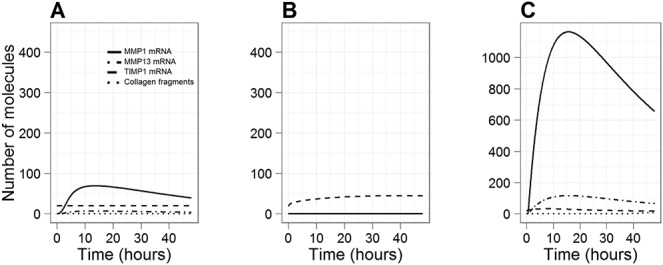
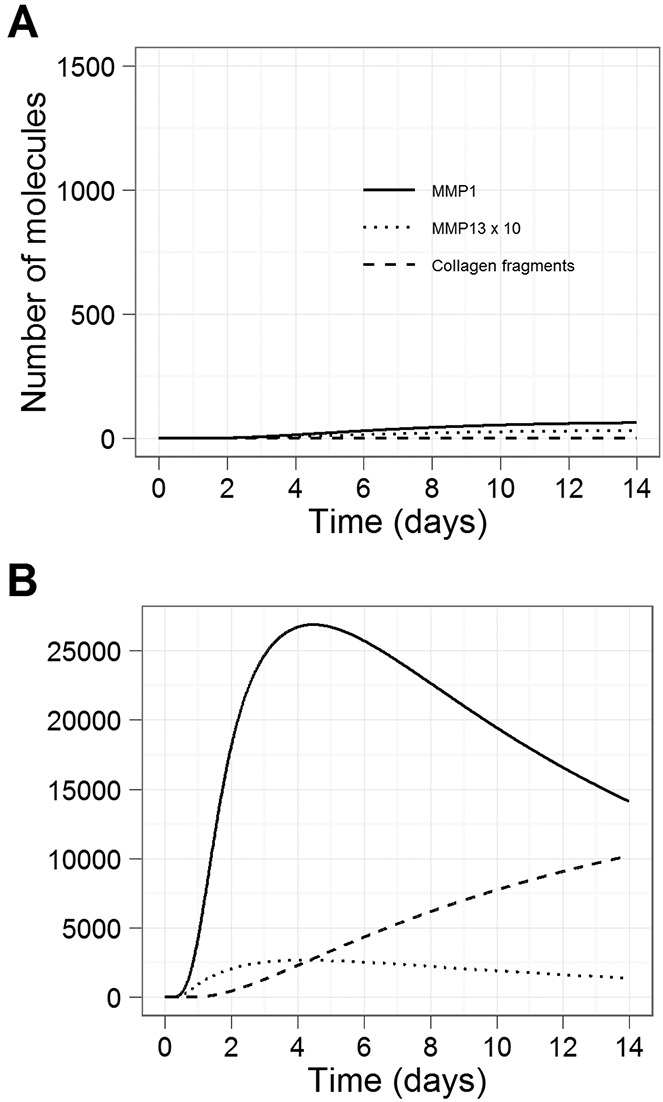
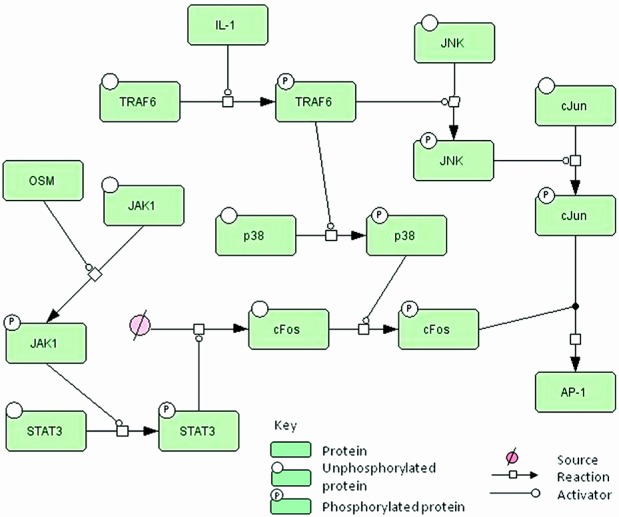
We constructed a computational model of the relevant molecular pathways using the Systems Biology Markup Language, a computer-readable format of a biochemical network. The model was constructed using our experimental data showing that interleukin-1 (IL-1) and oncostatin M (OSM) act synergistically to up-regulate collagenase protein levels and activity and initiate cartilage collagen breakdown. Simulations were performed using the COPASI software package.
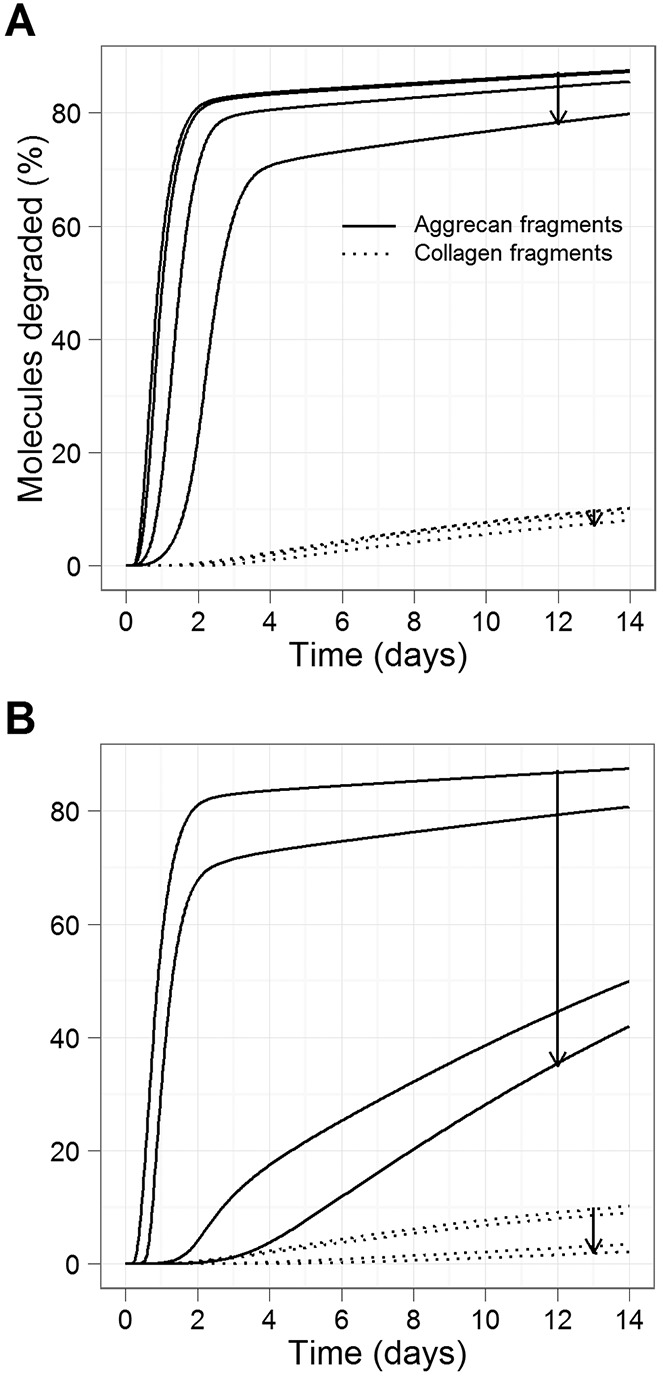
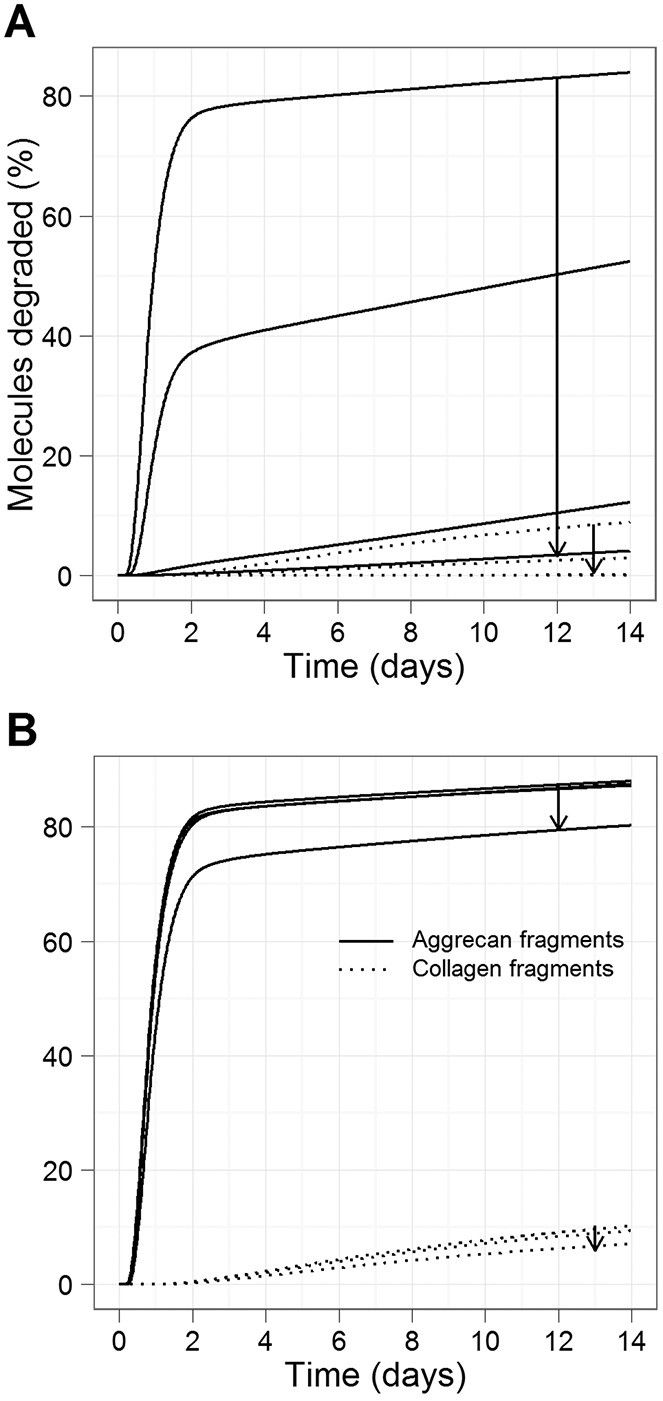
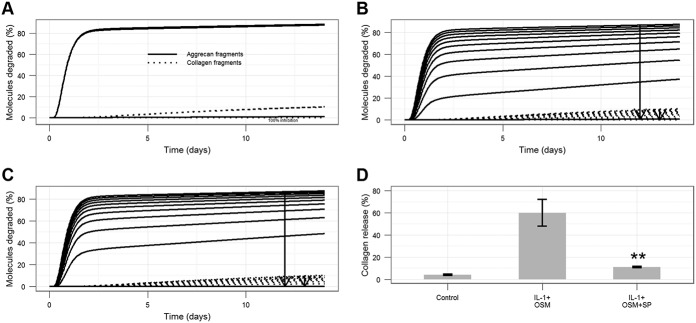
The model predicted that simulated inhibition of JNK or p38 MAPK, and overexpression of tissue inhibitor of metalloproteinases 3 (TIMP-3) led to a reduction in collagen release. Overexpression of TIMP-1 was much less effective than that of TIMP-3 and led to a delay, rather than a reduction, in collagen release. Simulated interventions of receptor antagonists and inhibition of JAK-1, the first kinase in the OSM pathway, were ineffective. So, importantly, the model predicts that it is more effective to intervene at targets that are downstream, such as the JNK pathway, rather than those that are close to the cytokine signal. In vitro experiments confirmed the effectiveness of JNK inhibition.
Our study shows the value of computer modeling as a tool for examining possible interventions by which to reduce cartilage collagen breakdown. The model predicts that interventions that either prevent transcription or inhibit the activity of collagenases are promising strategies and should be investigated further in an experimental setting.
利用一种新的计算方法研究软骨分解涉及的分子途径,并通过计算机模拟来测试减少胶原释放的可能干预措施。
我们使用系统生物学标记语言(一种生化网络的计算机可读格式)构建了相关分子途径的计算模型。该模型是使用我们的实验数据构建的,这些数据表明白细胞介素-1(IL-1)和肿瘤坏死因子(OSM)协同作用上调胶原酶蛋白水平和活性,并引发软骨胶原分解。使用 COPASI 软件包进行模拟。
该模型预测,模拟抑制 JNK 或 p38MAPK,以及过度表达组织金属蛋白酶抑制剂 3(TIMP-3),可减少胶原释放。TIMP-1 的过度表达不如 TIMP-3 有效,并且导致胶原释放延迟而不是减少。模拟的受体拮抗剂干预和 OSM 途径中第一个激酶 JAK-1 的抑制均无效。因此,重要的是,该模型预测,干预位于下游的靶点(如 JNK 途径)比靠近细胞因子信号的靶点更有效。体外实验证实了 JNK 抑制的有效性。
我们的研究表明,计算机建模作为一种研究减少软骨胶原分解的可能干预措施的工具具有价值。该模型预测,预防转录或抑制胶原酶活性的干预措施是有前途的策略,应在实验环境中进一步研究。