Schutsky Keith, Portocarrero Carla, Hooper D Craig, Dietzschold Bernhard, Faber Milosz
Department of Microbiology and Immunology, Thomas Jefferson University, Philadelphia, Pennsylvania, United States of America.
Department of Cancer Biology, Thomas Jefferson University, Philadelphia, Pennsylvania, United States of America.
PLoS One. 2014 Apr 24;9(4):e87180. doi: 10.1371/journal.pone.0087180. eCollection 2014.
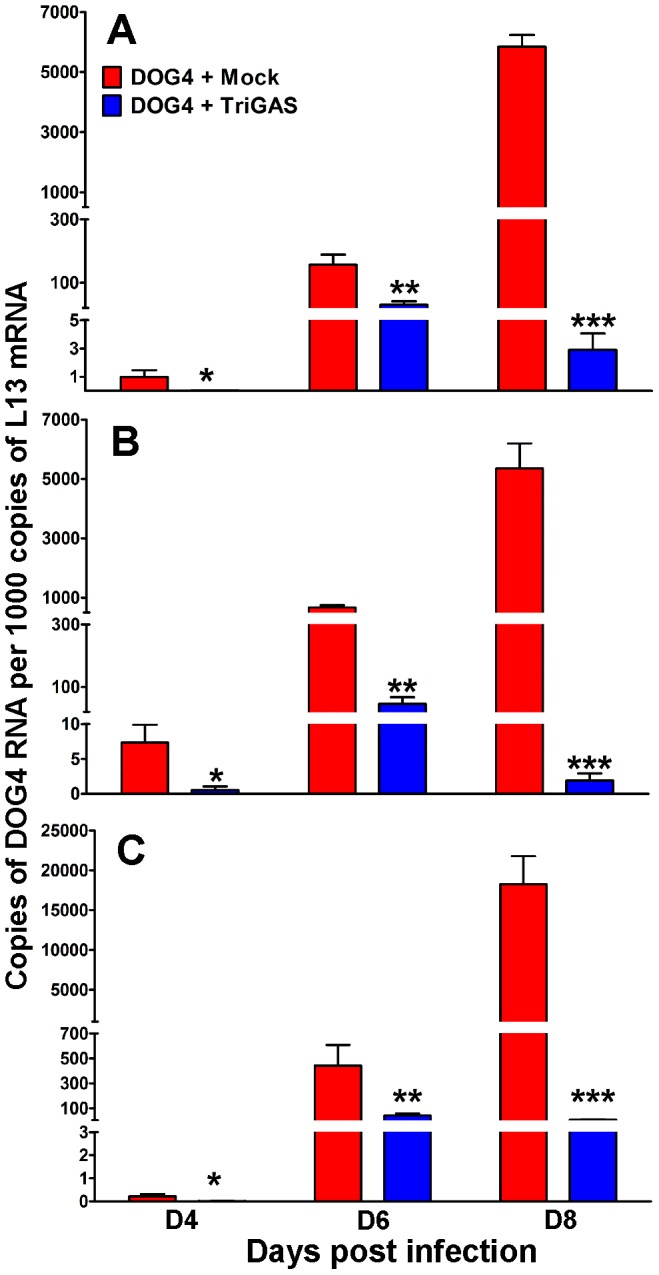
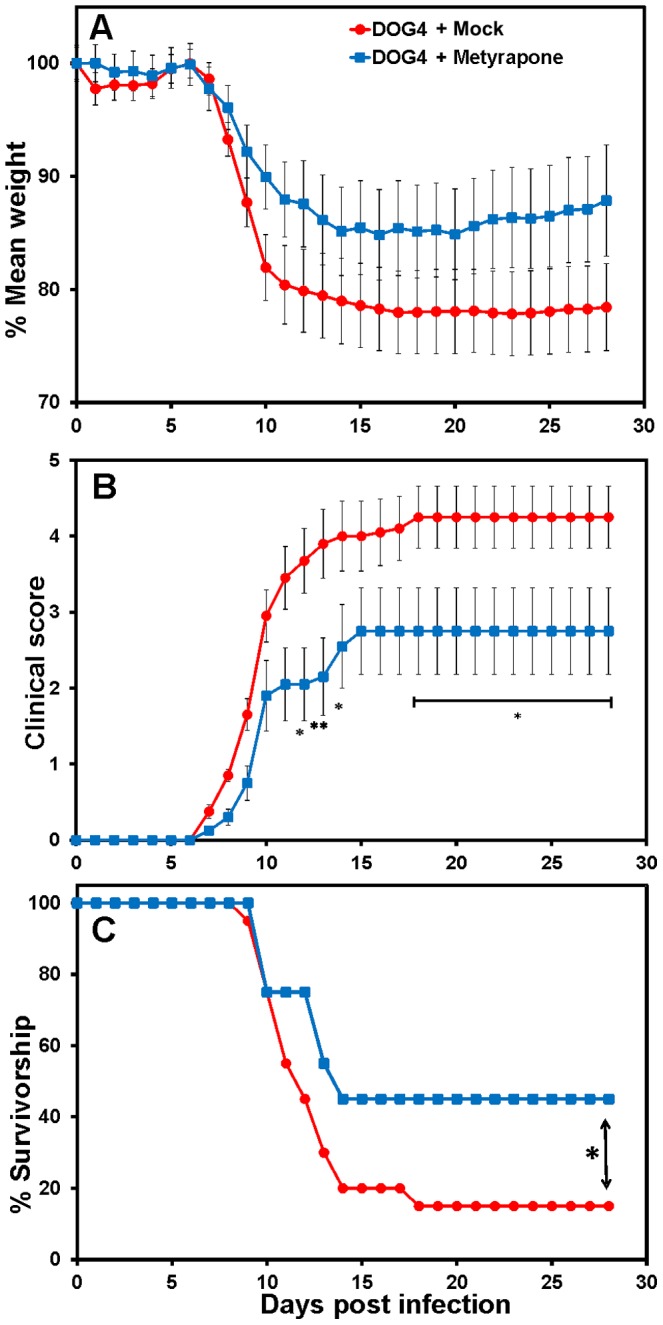
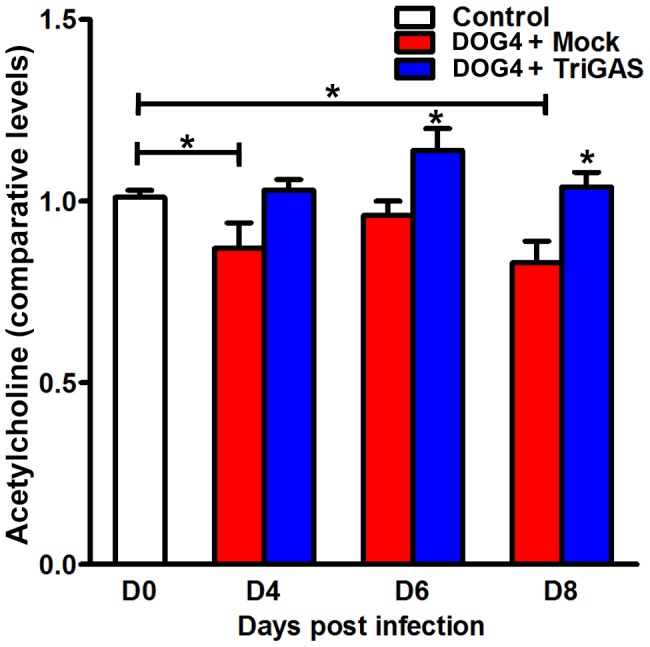
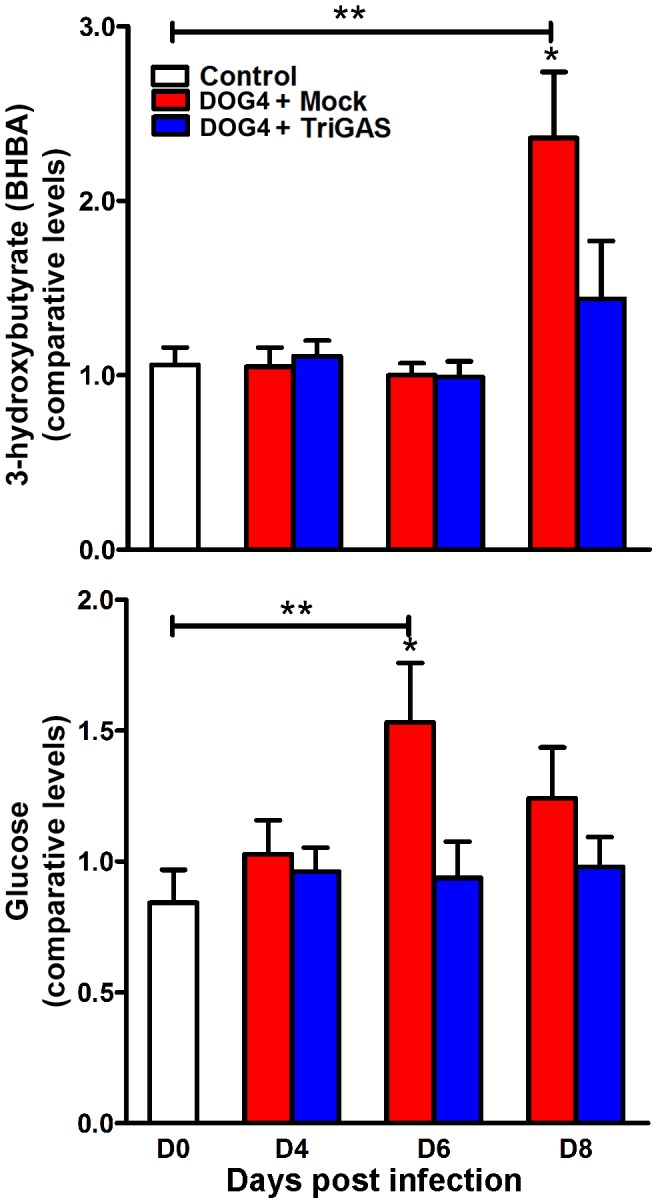
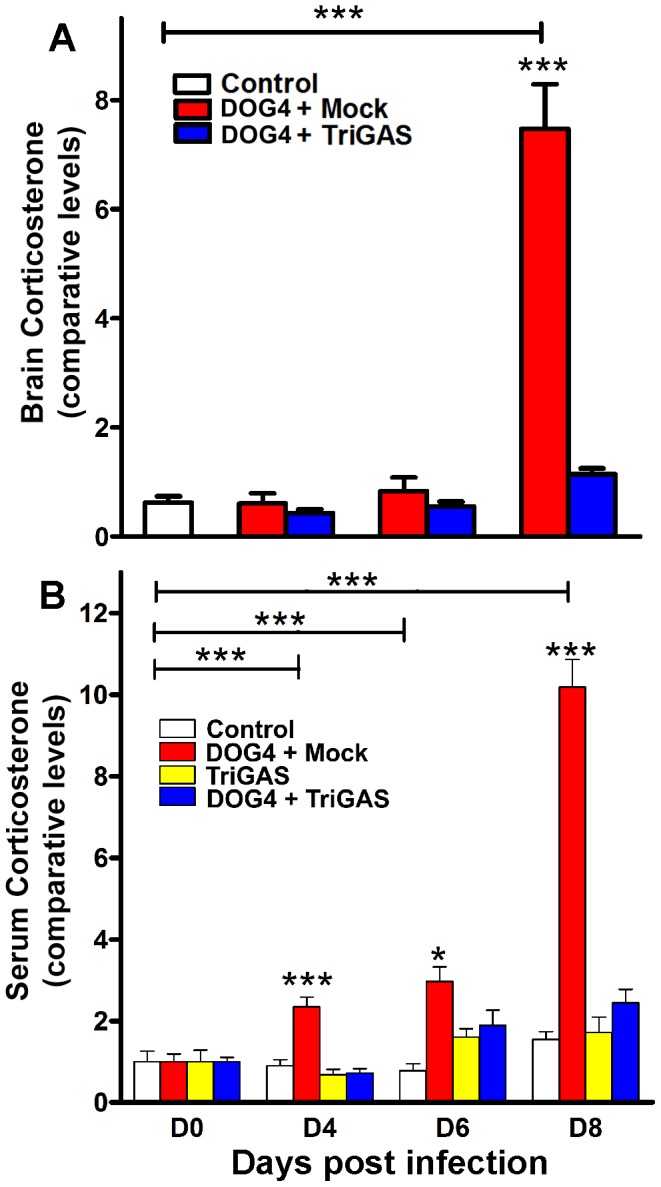
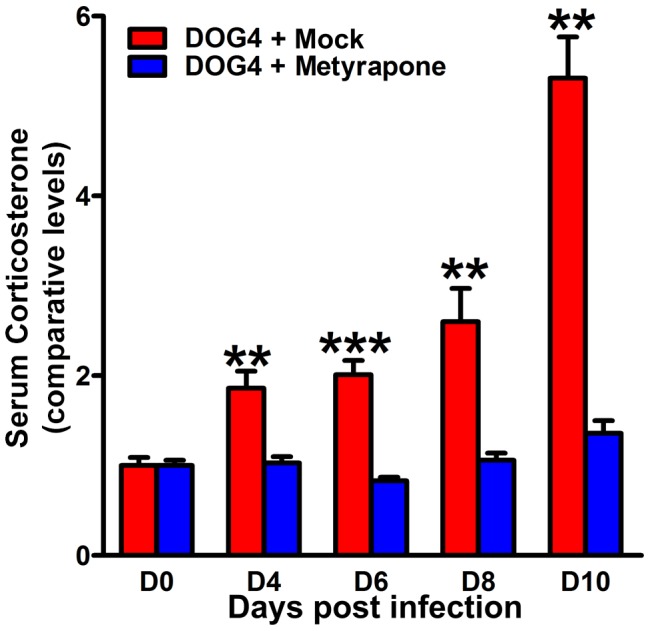
Central nervous system (CNS) metabolic profiles were examined from rabies virus (RABV)-infected mice that were either mock-treated or received post-exposure treatment (PET) with a single dose of the live recombinant RABV vaccine TriGAS. CNS tissue harvested from mock-treated mice at middle and late stage infection revealed numerous changes in energy metabolites, neurotransmitters and stress hormones that correlated with replication levels of viral RNA. Although the large majority of these metabolic changes were completely absent in the brains of TriGAS-treated mice most likely due to the strong reduction in virus spread, TriGAS treatment resulted in the up-regulation of the expression of carnitine and several acylcarnitines, suggesting that these compounds are neuroprotective. The most striking change seen in mock-treated RABV-infected mice was a dramatic increase in brain and serum corticosterone levels, with the later becoming elevated before clinical signs or loss of body weight occurred. We speculate that the rise in corticosterone is part of a strategy of RABV to block the induction of immune responses that would otherwise interfere with its spread. In support of this concept, we show that pharmacological intervention to inhibit corticosterone biosynthesis, in the absence of vaccine treatment, significantly reduces the pathogenicity of RABV. Our results suggest that widespread metabolic changes, including hypothalamic-pituitary-adrenal axis activation, contribute to the pathogenesis of RABV and that preventing these alterations early in infection with PET or pharmacological blockade helps protect brain homeostasis, thereby reducing disease mortality.
对感染狂犬病病毒(RABV)的小鼠进行中枢神经系统(CNS)代谢谱分析,这些小鼠要么接受假处理,要么在暴露后接受单剂量活重组RABV疫苗TriGAS的治疗(PET)。在感染中期和后期从假处理小鼠收获的中枢神经系统组织显示,能量代谢物、神经递质和应激激素发生了许多变化,这些变化与病毒RNA的复制水平相关。尽管这些代谢变化中的绝大多数在接受TriGAS治疗的小鼠大脑中完全不存在,这很可能是由于病毒传播的大幅减少,但TriGAS治疗导致肉碱和几种酰基肉碱的表达上调,表明这些化合物具有神经保护作用。在假处理的RABV感染小鼠中观察到的最显著变化是大脑和血清皮质酮水平急剧升高,血清皮质酮水平在出现临床症状或体重减轻之前就升高了。我们推测,皮质酮的升高是RABV阻止诱导免疫反应策略的一部分,否则免疫反应会干扰其传播。为支持这一概念,我们表明在没有疫苗治疗的情况下,抑制皮质酮生物合成的药物干预可显著降低RABV的致病性。我们的结果表明,包括下丘脑-垂体-肾上腺轴激活在内的广泛代谢变化有助于RABV的发病机制,并且在感染早期用PET或药物阻断预防这些改变有助于保护脑稳态,从而降低疾病死亡率。