Faculty of Public Health & Policy, London School of Hygiene & Tropical Medicine, 15-17 Tavistock Place, London WC1H 9SH, UK.
Centre for Clinical Epidemiology and Biostatistics, School of Medicine and Public Health, University of Newcastle, HMRI Building, Callaghan NSW 2308, Australia.
J Clin Epidemiol. 2014 Aug;67(8):845-9. doi: 10.1016/j.jclinepi.2014.03.002. Epub 2014 Apr 22.
There have been concerns about impacts of various aspects of taking part in research studies for a century. The concerns have not, however, been sufficiently well conceptualized to form traditions of study capable of defining and elaborating the nature of these problems. In this article we present a new way of thinking about a set of issues attracting long-standing attention.
We briefly review existing concepts and empirical work on well-known biases in surveys and cohort studies and propose that they are connected.
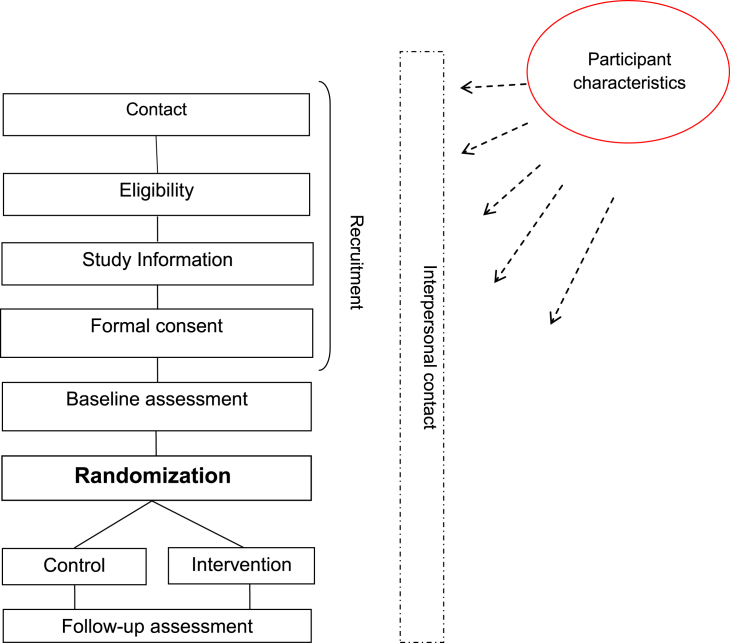
We offer the construct of "research participation effects" (RPE) as a vehicle for advancing multi-disciplinary understanding of biases. Empirical studies are needed to identify conditions in which RPE may be sufficiently large to warrant modifications of study design, analytic methods, or interpretation. We consider the value of adopting a more participant-centred view of the research process as a way of thinking about these issues, which may also have benefits in relation to research methodology more broadly.
Researchers may too readily overlook the extent to which research studies are unusual contexts, and that people may react in unexpected ways to what we invite them to do, introducing a range of biases.
参与研究的各个方面可能产生影响,这一担忧已经存在一个世纪之久。然而,这些担忧尚未得到充分的概念化,无法形成能够定义和阐述这些问题性质的研究传统。在本文中,我们提出了一种思考一系列长期受到关注的问题的新方法。
我们简要回顾了现有关于调查和队列研究中常见偏差的概念和实证工作,并提出它们是相关的。
我们提出了“研究参与效应”(RPE)这一概念,作为推进对偏差的多学科理解的工具。需要进行实证研究来确定 RPE 可能大到足以需要修改研究设计、分析方法或解释的条件。我们考虑采用更以参与者为中心的研究过程观点来思考这些问题的价值,这也可能对更广泛的研究方法有好处。
研究人员可能过于轻易地忽视了研究本身就是一种特殊情境的程度,人们可能会对我们邀请他们做的事情做出意想不到的反应,从而引入一系列偏差。