1] Department of Animal and Plant Sciences, The University of Sheffield, Sheffield, UK. [2] Rothamsted Research, Harpenden, UK.
Department of Biology, Utrecht University, Utrecht, The Netherlands.
Nat Chem Biol. 2014 Jun;10(6):450-6. doi: 10.1038/nchembio.1520. Epub 2014 Apr 28.
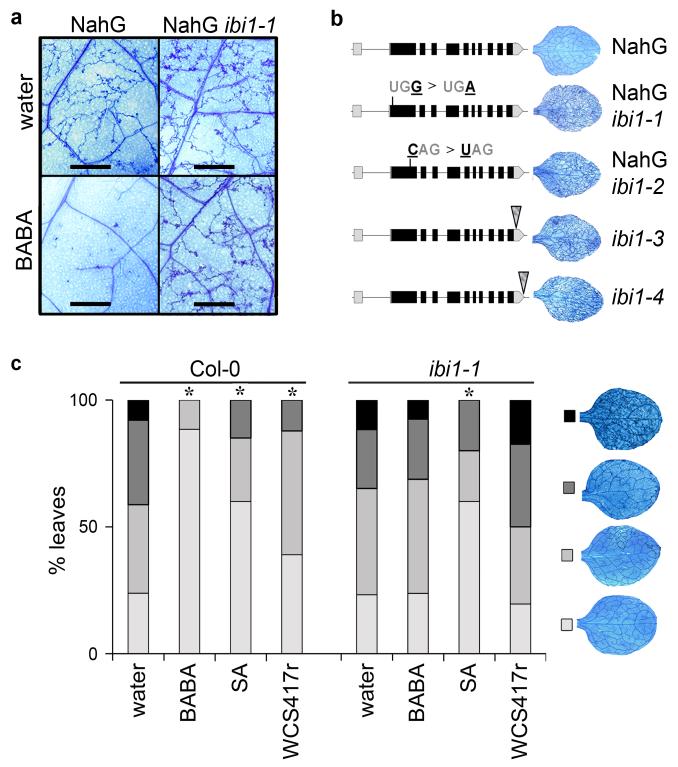
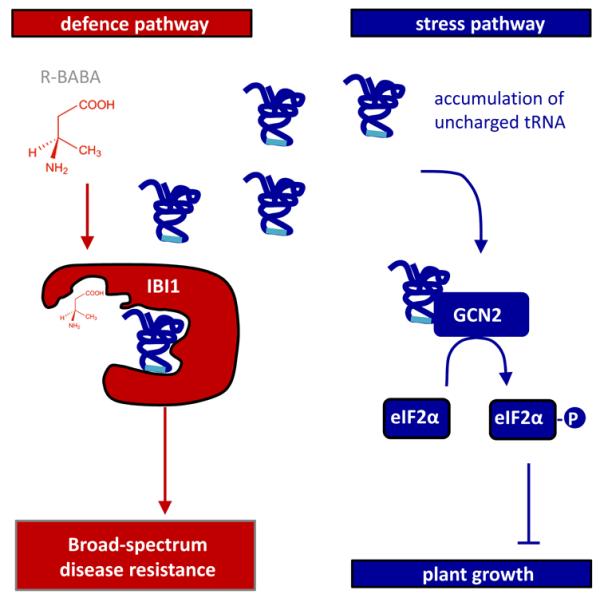
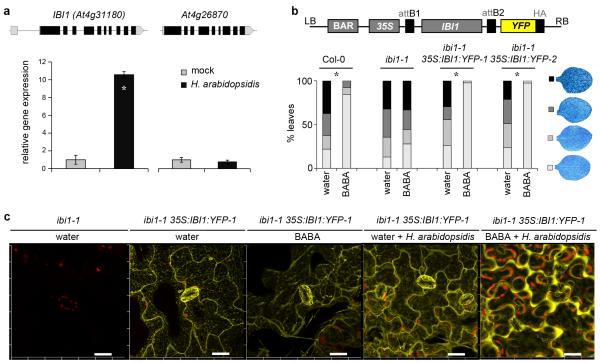
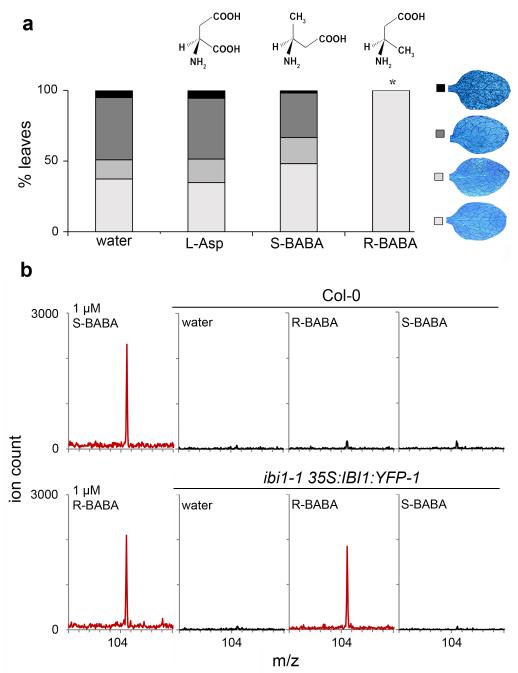
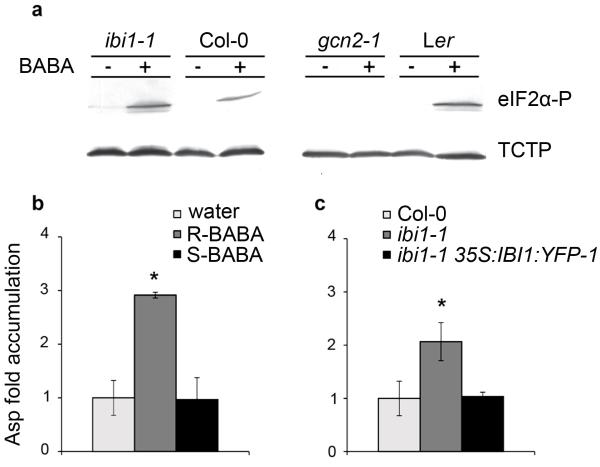
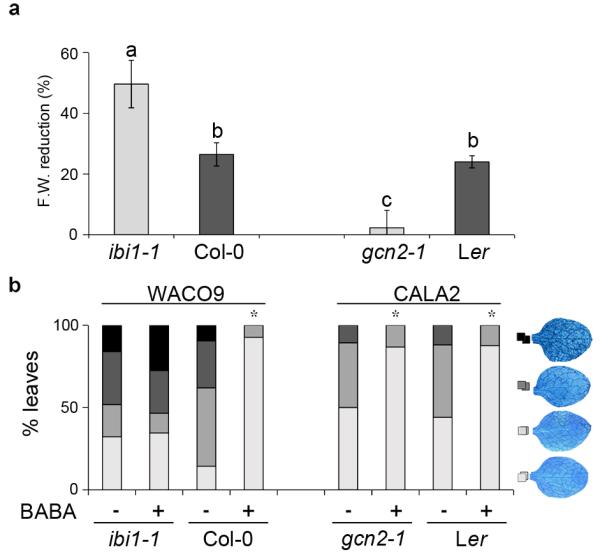
Specific chemicals can prime the plant immune system for augmented defense. β-aminobutyric acid (BABA) is a priming agent that provides broad-spectrum disease protection. However, BABA also suppresses plant growth when applied in high doses, which has hampered its application as a crop defense activator. Here we describe a mutant of Arabidopsis thaliana that is impaired in BABA-induced disease immunity (ibi1) but is hypersensitive to BABA-induced growth repression. IBI1 encodes an aspartyl-tRNA synthetase. Enantiomer-specific binding of the R enantiomer of BABA to IBI1 primed the protein for noncanonical defense signaling in the cytoplasm after pathogen attack. This priming was associated with aspartic acid accumulation and tRNA-induced phosphorylation of translation initiation factor eIF2α. However, mutation of eIF2α-phosphorylating GCN2 kinase did not affect BABA-induced immunity but relieved BABA-induced growth repression. Hence, BABA-activated IBI1 controls plant immunity and growth via separate pathways. Our results open new opportunities to separate broad-spectrum disease resistance from the associated costs on plant growth.
特定的化学物质可以激活植物免疫系统,增强防御能力。β-氨基丁酸(BABA)是一种引发剂,可提供广谱的疾病保护。然而,当高剂量使用 BABA 时,它也会抑制植物生长,这阻碍了它作为作物防御激活剂的应用。在这里,我们描述了拟南芥(Arabidopsis thaliana)的一个突变体,该突变体在 BABA 诱导的疾病免疫(ibi1)中受损,但对 BABA 诱导的生长抑制敏感。IBI1 编码天冬氨酰-tRNA 合成酶。BABA 的 R 对映体与 IBI1 的对映体特异性结合,在病原体攻击后,在细胞质中为非典型防御信号提供了启动子。这种启动与天冬氨酸积累和翻译起始因子 eIF2α的 tRNA 诱导磷酸化有关。然而,eIF2α 磷酸化 GCN2 激酶的突变不影响 BABA 诱导的免疫,但缓解了 BABA 诱导的生长抑制。因此,BABA 激活的 IBI1 通过独立的途径控制植物的免疫和生长。我们的研究结果为从与植物生长相关的成本中分离广谱疾病抗性提供了新的机会。