Mnich K, Carleton L A, Kavanagh E T, Doyle K M, Samali A, Gorman A M
1] Apoptosis Research Centre, School of Natural Sciences, National University of Ireland, Galway, Ireland [2] Nencki Institute of Experimental Biology, Polish Academy of Sciences, Warsaw, Poland.
Apoptosis Research Centre, School of Natural Sciences, National University of Ireland, Galway, Ireland.
Cell Death Dis. 2014 May 1;5(5):e1202. doi: 10.1038/cddis.2014.173.
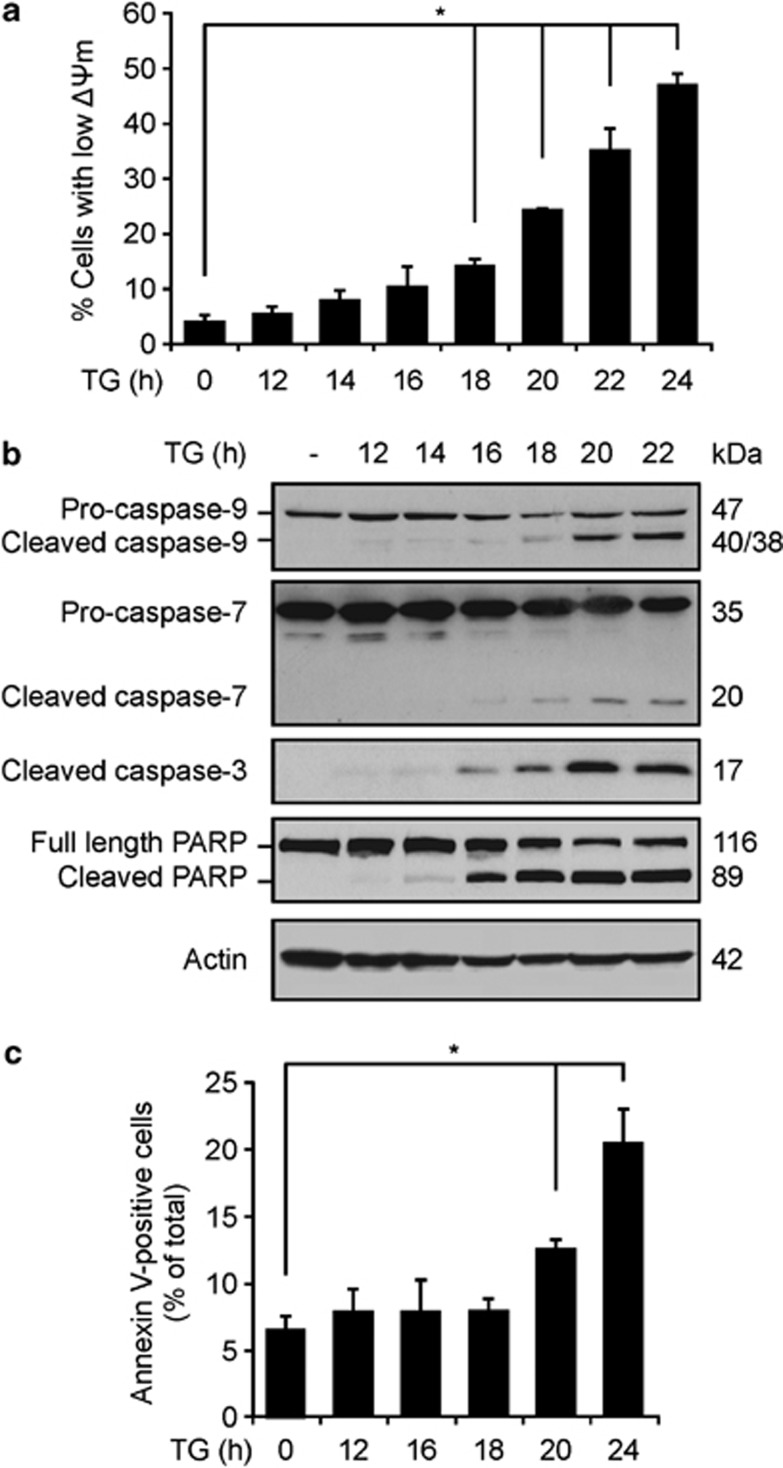
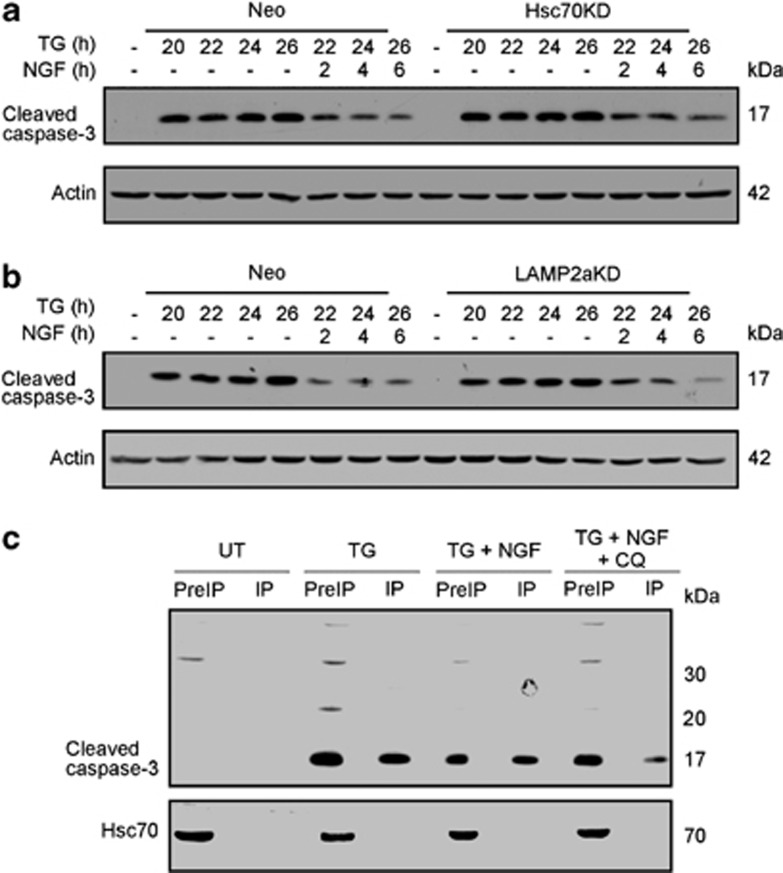
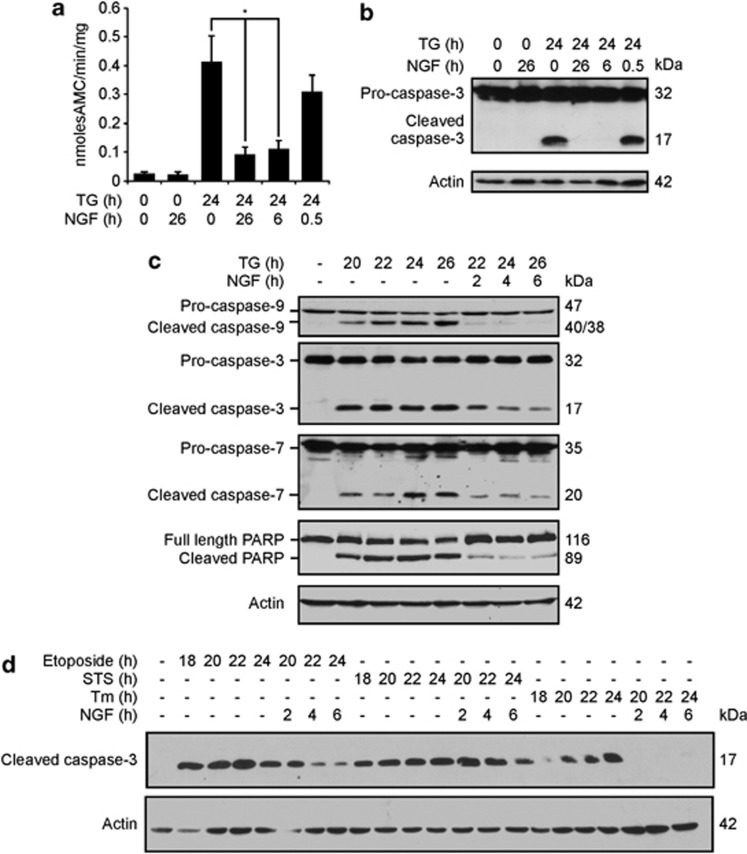
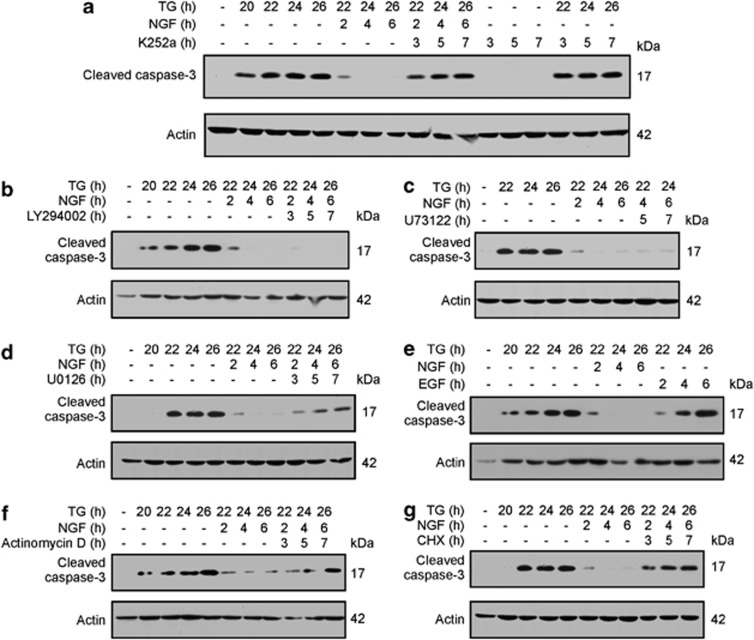
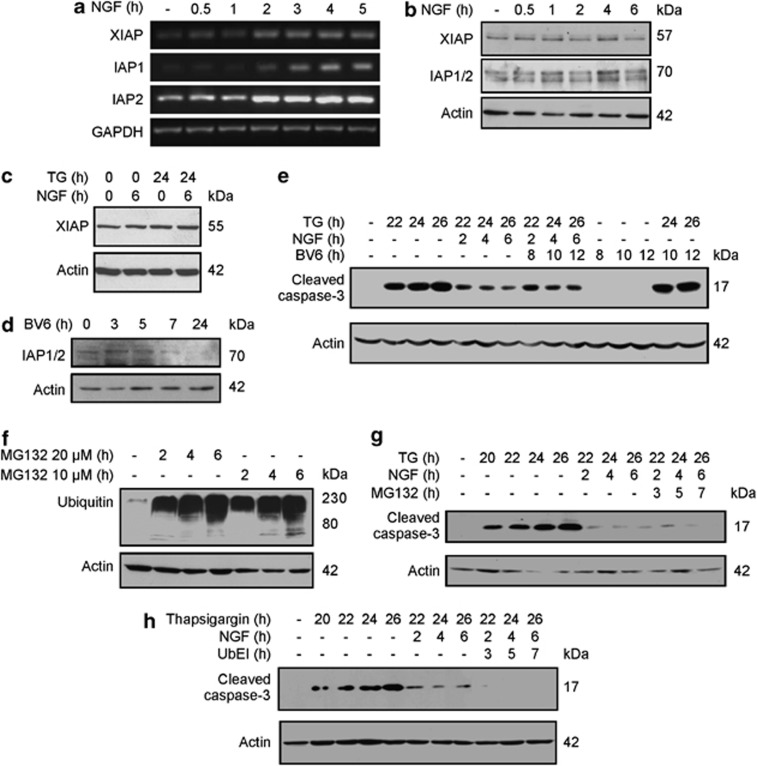
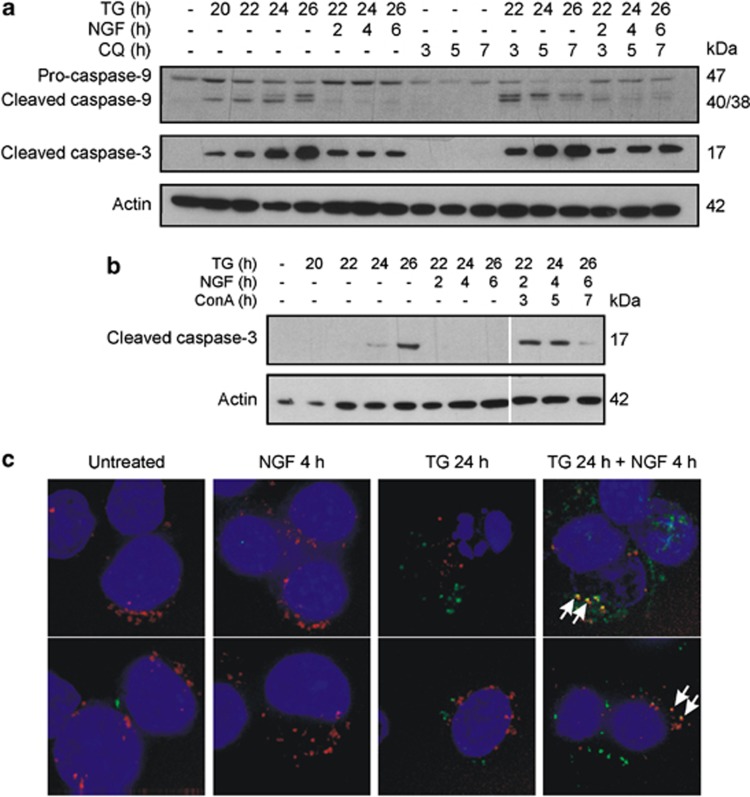
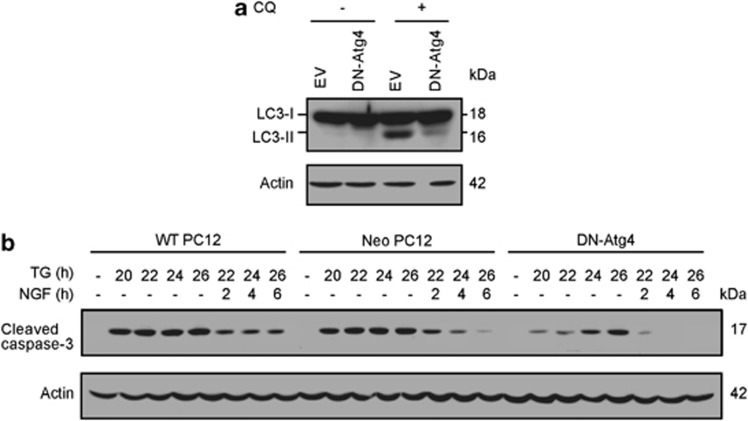
Nerve growth factor (NGF) is well characterised as an important pro-survival factor in neuronal cells that can inhibit apoptotic cell death upstream of mitochondrial outer membrane permeabilisation. Here we addressed the question of whether NGF can also protect against apoptosis downstream of caspase activation. NGF treatment promoted a rapid reduction in the level of the p17 subunit of active caspase-3 in PC12 cells that had been induced to undergo apoptosis by various cytotoxins. The mechanism involved TrkA-dependent activation of extracellular signal-regulated kinase (ERK1/2) but not phosphatidylinositol 3-kinase (PI3K)/Akt, and de novo protein synthesis. Involvement of inhibitor of apoptosis proteins (IAPs) and proteasomal degradation were ruled out. In contrast, inhibition of lysosome function using chloroquine and concanamycin A reversed NGF-induced removal of p17. Moreover, in NGF-treated cells, active caspases were found to be localised to lysosomes. The involvement of macroautophagy and chaperone-mediated autophagy were ruled out. Taken together, these findings suggest an anti-apoptotic mechanism by which NGF induces removal of active caspase-3 in a lysosome-dependent manner.
神经生长因子(NGF)作为神经元细胞中一种重要的促存活因子已被充分表征,它能够在线粒体外膜通透性改变的上游抑制凋亡性细胞死亡。在此,我们探讨了NGF是否也能在半胱天冬酶激活的下游发挥抗凋亡作用这一问题。NGF处理促使因各种细胞毒素诱导发生凋亡的PC12细胞中活性半胱天冬酶-3的p17亚基水平迅速降低。其机制涉及细胞外信号调节激酶(ERK1/2)的TrkA依赖性激活,而非磷脂酰肌醇3激酶(PI3K)/Akt,且涉及从头蛋白质合成。凋亡抑制蛋白(IAPs)的参与及蛋白酶体降解被排除。相反,使用氯喹和 concanamycin A抑制溶酶体功能可逆转NGF诱导的p17清除。此外,在经NGF处理的细胞中,发现活性半胱天冬酶定位于溶酶体。巨自噬和伴侣介导的自噬的参与被排除。综上所述,这些发现提示了一种抗凋亡机制,即NGF以溶酶体依赖性方式诱导活性半胱天冬酶-3的清除。