Institute of Pathology, Medical University of Graz, Graz, Austria.
Department of Paediatric and Adolescent Surgery, Medical University of Graz, Graz, Austria.
Semin Oncol. 2014 Apr;41(2):281-95. doi: 10.1053/j.seminoncol.2014.02.005. Epub 2014 Mar 1.
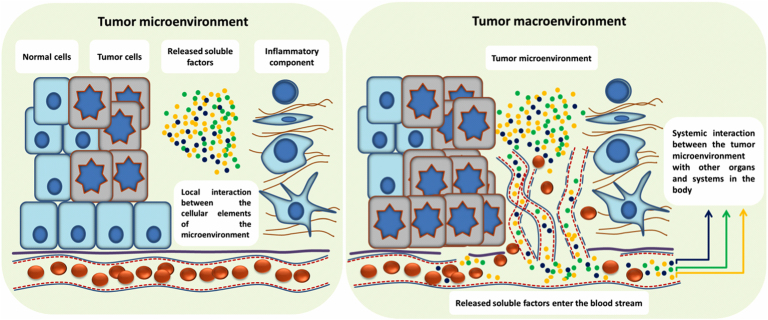
In this review we introduce the concept of the tumor macroenvironment and explore it in the context of metabolism. Tumor cells interact with the tumor microenvironment including immune cells. Blood and lymph vessels are the critical components that deliver nutrients to the tumor and also connect the tumor to the macroenvironment. Several factors are then released from the tumor itself but potentially also from the tumor microenvironment, influencing the metabolism of distant tissues and organs. Amino acids, and distinct lipid and lipoprotein species can be essential for further tumor growth. The role of glucose in tumor metabolism has been studied extensively. Cancer-associated cachexia is the most important tumor-associated systemic syndrome and not only affects the quality of life of patients with various malignancies but is estimated to be the cause of death in 15%-20% of all cancer patients. On the other hand, systemic metabolic diseases such as obesity and diabetes are known to influence tumor development. Furthermore, the clinical implications of the tumor macroenvironment are explored in the context of the patient's outcome with special consideration for pediatric tumors. Finally, ways to target the tumor macroenvironment that will provide new approaches for therapeutic concepts are described.
在这篇综述中,我们介绍了肿瘤宏观环境的概念,并探讨了它在代谢背景下的作用。肿瘤细胞与肿瘤微环境相互作用,包括免疫细胞。血液和淋巴管是为肿瘤输送营养物质的关键组成部分,也将肿瘤与宏观环境联系起来。然后,肿瘤本身以及肿瘤微环境中可能会释放出几种因素,影响远处组织和器官的代谢。氨基酸以及独特的脂质和脂蛋白种类对于肿瘤的进一步生长可能至关重要。葡萄糖在肿瘤代谢中的作用已被广泛研究。癌症相关性恶病质是最重要的肿瘤相关全身综合征,不仅影响各种恶性肿瘤患者的生活质量,据估计,在所有癌症患者中,有 15%-20%的死亡是由其导致的。另一方面,肥胖和糖尿病等系统性代谢疾病已被证实会影响肿瘤的发展。此外,还探讨了肿瘤宏观环境在考虑儿科肿瘤时对患者预后的临床意义。最后,描述了针对肿瘤宏观环境的靶向方法,为治疗概念提供了新的途径。