Zhang Chunyan, Zhen Yong-Zhan, Lin Ya-Jun, Liu Jiang, Wei Jie, Xu Rong, Hu Gang
Radiologic Department, Beijing Shijitan Hospital Affiliated of Capital Medical University, Beijing 100038, P.R. China.
Department of Histology and Embryology, Basic Medical College of Hebei United University, Tangshan, Hebei 063000, P.R. China.
Mol Med Rep. 2014 Jul;10(1):82-8. doi: 10.3892/mmr.2014.2201. Epub 2014 Apr 30.
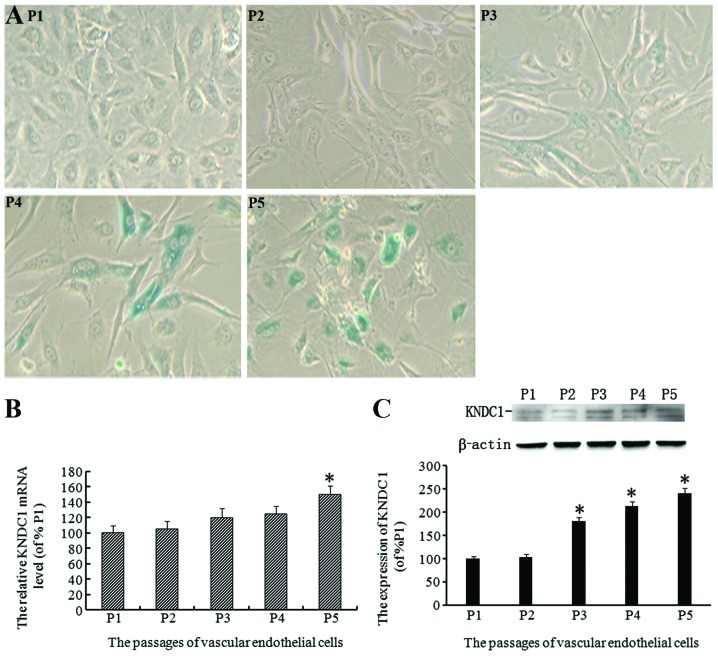
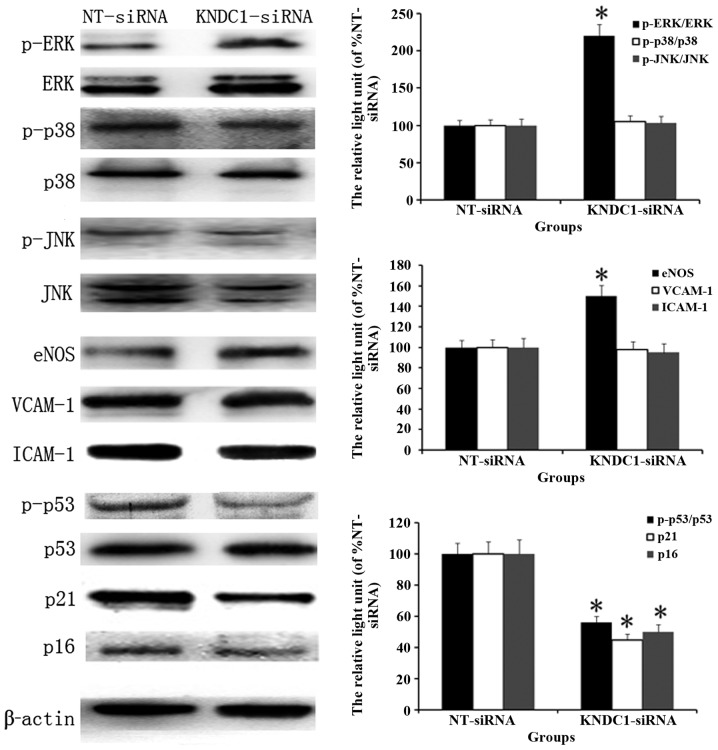
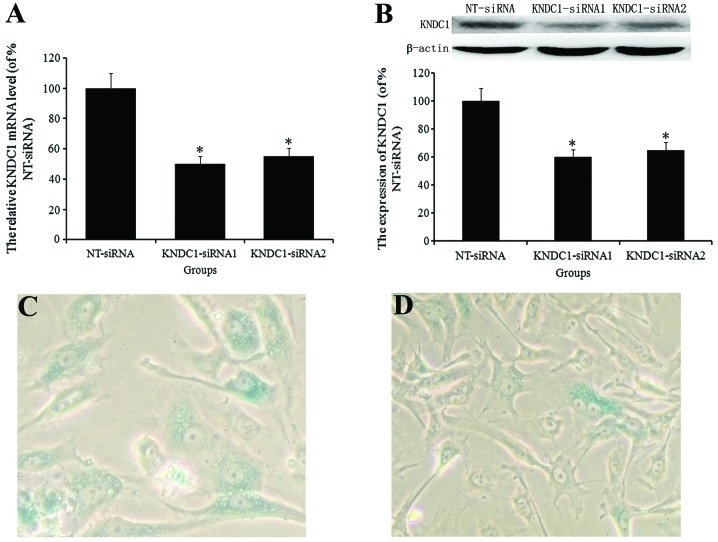
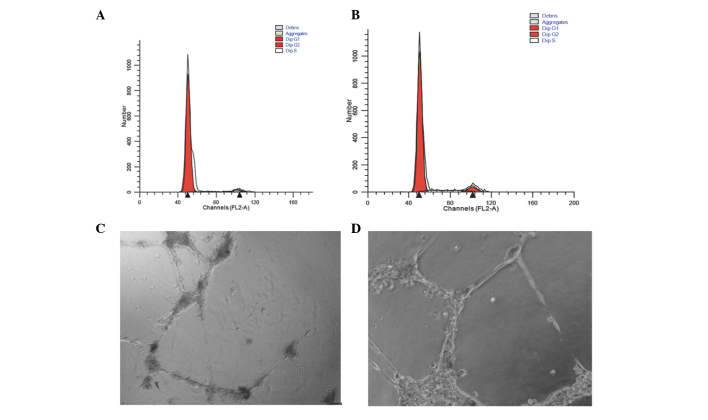
KNDC1 (kinase noncatalytic C-lobe domain containing 1), a brain-specific Ras guanine nucleotide exchange factor, controls the negative regulation of neuronal dendrite growth. However, the effect of KNDC1 on cellular senescence remains to be elucidated. The present study investigated the impact of KNDC1 knockdown on human endothelial cell senescence and the mechanisms underlying this effect. Human umbilical vein endothelial cells (HUVECs) cultured in vitro were used as a model of biological aging. Senescence‑associated β-galactosidase staining was used to detect cellular senescence and flow cytometry was employed to determine cell cycle progression. Quantitative polymerase chain reaction (qPCR) and western blot analysis were utilized to investigate mRNA transcription and protein expression. In the HUVECs, a senescence-like phenotypes developed with increasing passage number in vitro, which were associated with a progressive increase in the transcription and expression of KNDC1. KNDC1 knockdown promoted cell proliferation and partially reversed cellular senescence and cell cycle arrest in the G0/G1 phase in aging HUVECs. Investigations into the mechanism underlying this effect demonstrated that KNDC1 knockdown promoted HUVEC proliferation via the extracellular signal-regulated kinase signaling pathway and delayed HUVEC senescence by inhibiting the p53-p21-p16 transduction cascade. In addition, the promotion of the capillary tube network formation and the increased expression of endothelial nitric oxide synthase revealed that the activity and function of endothelial cells were enhanced. In conclusion, KNDC1 knockdown delayed endothelial cell senescence and promoted HUVEC activity and function. These results demonstrated that KNDC1 may be a novel therapeutic target for the development of agents to extend human life.
激酶非催化C叶结构域包含蛋白1(KNDC1)是一种大脑特异性Ras鸟嘌呤核苷酸交换因子,可控制神经元树突生长的负调节。然而,KNDC1对细胞衰老的影响仍有待阐明。本研究调查了敲低KNDC1对人内皮细胞衰老的影响及其潜在机制。体外培养的人脐静脉内皮细胞(HUVECs)被用作生物衰老模型。采用衰老相关β-半乳糖苷酶染色检测细胞衰老,并用流式细胞术测定细胞周期进程。利用定量聚合酶链反应(qPCR)和蛋白质印迹分析来研究mRNA转录和蛋白质表达。在HUVECs中,随着体外传代次数的增加出现了类似衰老的表型,这与KNDC1转录和表达的逐渐增加有关。敲低KNDC1可促进细胞增殖,并部分逆转衰老HUVECs的细胞衰老和G0/G1期细胞周期阻滞。对这种作用机制的研究表明,敲低KNDC1通过细胞外信号调节激酶信号通路促进HUVEC增殖,并通过抑制p53-p21-p16转导级联反应延缓HUVEC衰老。此外,毛细血管管网形成的促进和内皮型一氧化氮合酶表达的增加表明内皮细胞的活性和功能得到增强。总之,敲低KNDC1可延缓内皮细胞衰老,促进HUVEC活性和功能。这些结果表明,KNDC1可能是开发延长人类寿命药物的新治疗靶点。