Al-Sheikh Yazeed A, K Gowda Lakshmana, Mohammed Ali M Marie, John James, Khaled Homoud Mohammed Dabwan, Chikkabidare Shashidhar Pradeep
Clinical Laboratory Sciences Department, College of Applied Medical Sciences, King Saud University, Riyadh, Saudi Arabia.
Department of Zoology and Biotechnology, Loyola College, Chennai, India. ; Department of Clinical Microbiology, Christian Medical College, Vellore, India.
Ann Lab Med. 2014 May;34(3):210-5. doi: 10.3343/alm.2014.34.3.210. Epub 2014 Apr 8.
Streptococcus pneumoniae causes life-threatening infections such as meningitis, pneumonia, and febrile bacteremia, particularly in young children. The increasing number of drug-resistant isolates has highlighted the necessity for intervening and controlling disease. To achieve this, information is needed on serotype distribution and patterns of antibiotic resistance in children.
All cases of invasive pneumococcal disease (IPD) in children aged less than 15 yr recorded at King Khalid University Hospital, King Saud University, Riyadh, Saudi Arabia, were reviewed for serotyping and antibiotic susceptibility. Isolates were collected from 78 consecutive patients with IPD between 2009 and 2012. All collected isolates were subjected to serotyping by co-agglutination, sequential multiplex PCR, and single PCR sequetyping as previously described.
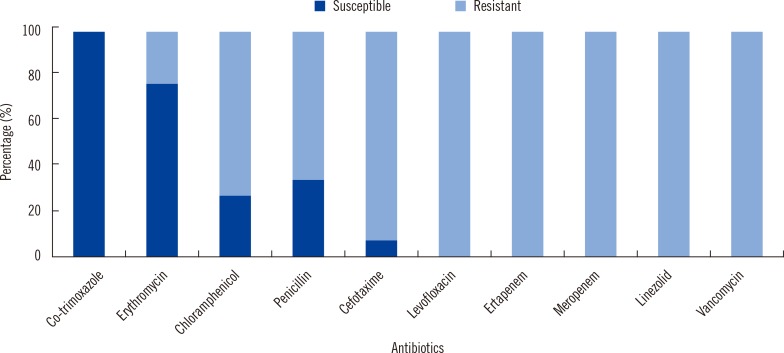
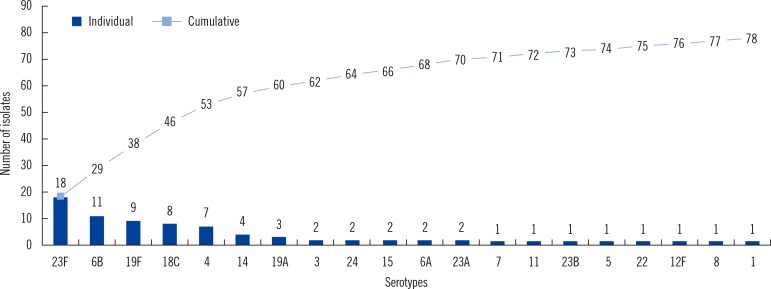
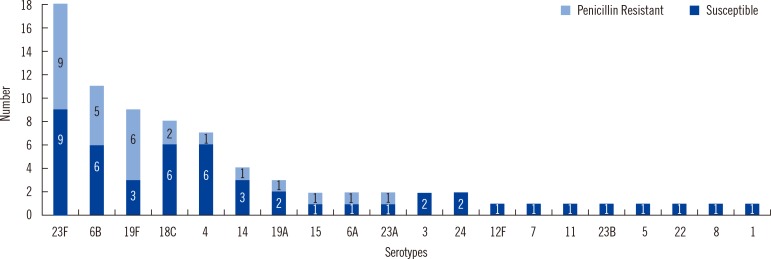
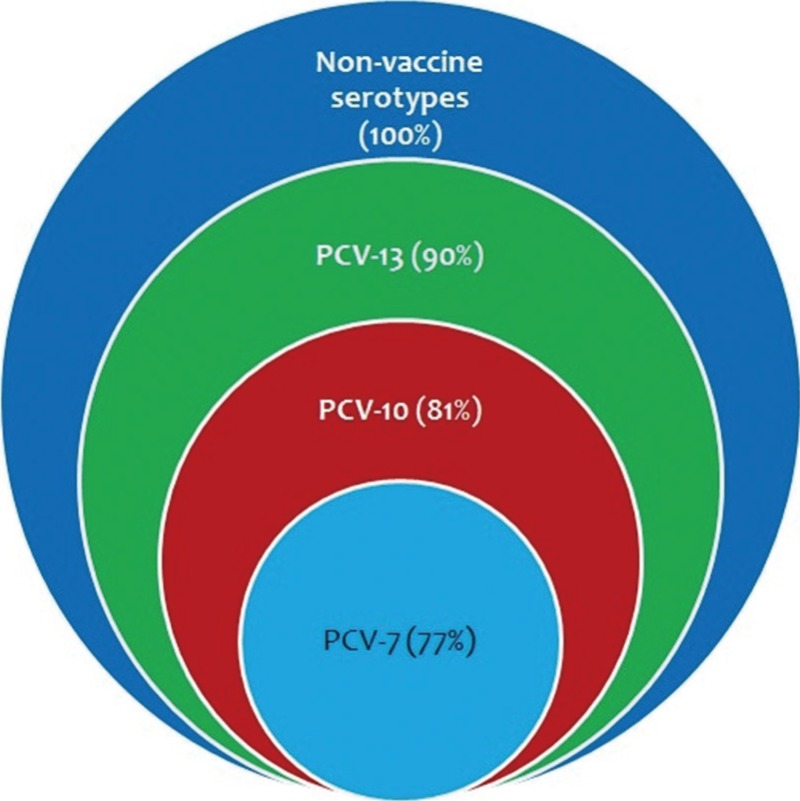
The most frequently isolated IPD serotypes were 23F, 6B, 19F, 18C, 4, 14, and 19A, which are listed in decreasing order and cover 77% of total isolates. The serotype coverage for the pneumococcal conjugate vaccine (PCV)7, PCV10, and PCV13 was 77%, 81%, and 90%, respectively. Results from sequential multiplex PCR agreed with co-agglutination results. All serotypes could not be correctly identified using single PCR sequetyping. Minimum inhibitory concentration showed that 50 (64%) isolates were susceptible to penicillin, whereas 70 (90%) isolates were susceptible to cefotaxime.
The most common pneumococcal serotypes occur with frequencies similar to those found in countries where the PCV has been introduced. The most common serotypes in this study are included in the PCVs. Addition of 23A and 15 to the vaccine would improve the PCV performance in IPD prevention.
肺炎链球菌可引发危及生命的感染,如脑膜炎、肺炎和发热性菌血症,尤其在幼儿中。耐药菌株数量的增加凸显了干预和控制该疾病的必要性。为此,需要了解儿童肺炎链球菌的血清型分布及抗生素耐药模式。
回顾沙特阿拉伯利雅得国王沙特大学国王哈立德大学医院记录的所有15岁以下儿童侵袭性肺炎球菌病(IPD)病例,进行血清分型和抗生素敏感性检测。2009年至2012年间,从78例连续的IPD患者中收集分离株。所有收集的分离株均按照先前描述的方法,通过协同凝集、序列多重PCR和单PCR序列分型进行血清分型。
最常分离出的IPD血清型为23F、6B、19F、18C、4、14和19A,按降序排列,占分离株总数的77%。肺炎球菌结合疫苗(PCV)7、PCV10和PCV13的血清型覆盖率分别为77%、81%和90%。序列多重PCR结果与协同凝集结果一致。使用单PCR序列分型无法正确鉴定所有血清型。最低抑菌浓度显示,50株(64%)分离株对青霉素敏感,而70株(90%)分离株对头孢噻肟敏感。
最常见的肺炎球菌血清型出现频率与引入PCV的国家相似。本研究中最常见的血清型包含在PCV中。在疫苗中添加23A和15将提高PCV预防IPD的效果。