Pigott Elizabeth, DuHadaway James B, Muller Alexander J, Gilmour Susan, Prendergast George C, Mandik-Nayak Laura
The Lankenau Institute for Medical Research , Wynnewood, PA , USA .
Autoimmunity. 2014 Sep;47(6):409-18. doi: 10.3109/08916934.2014.914507. Epub 2014 May 6.
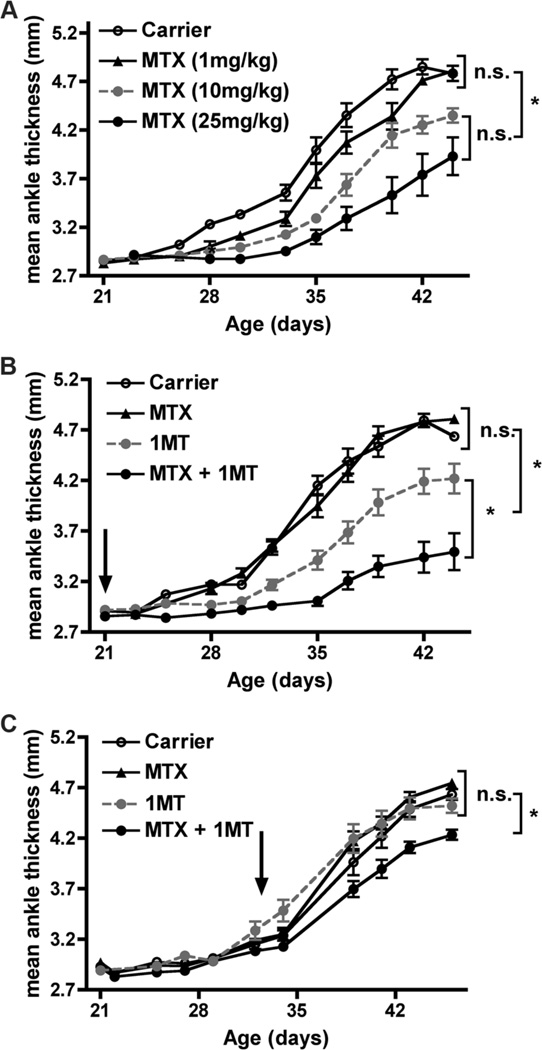
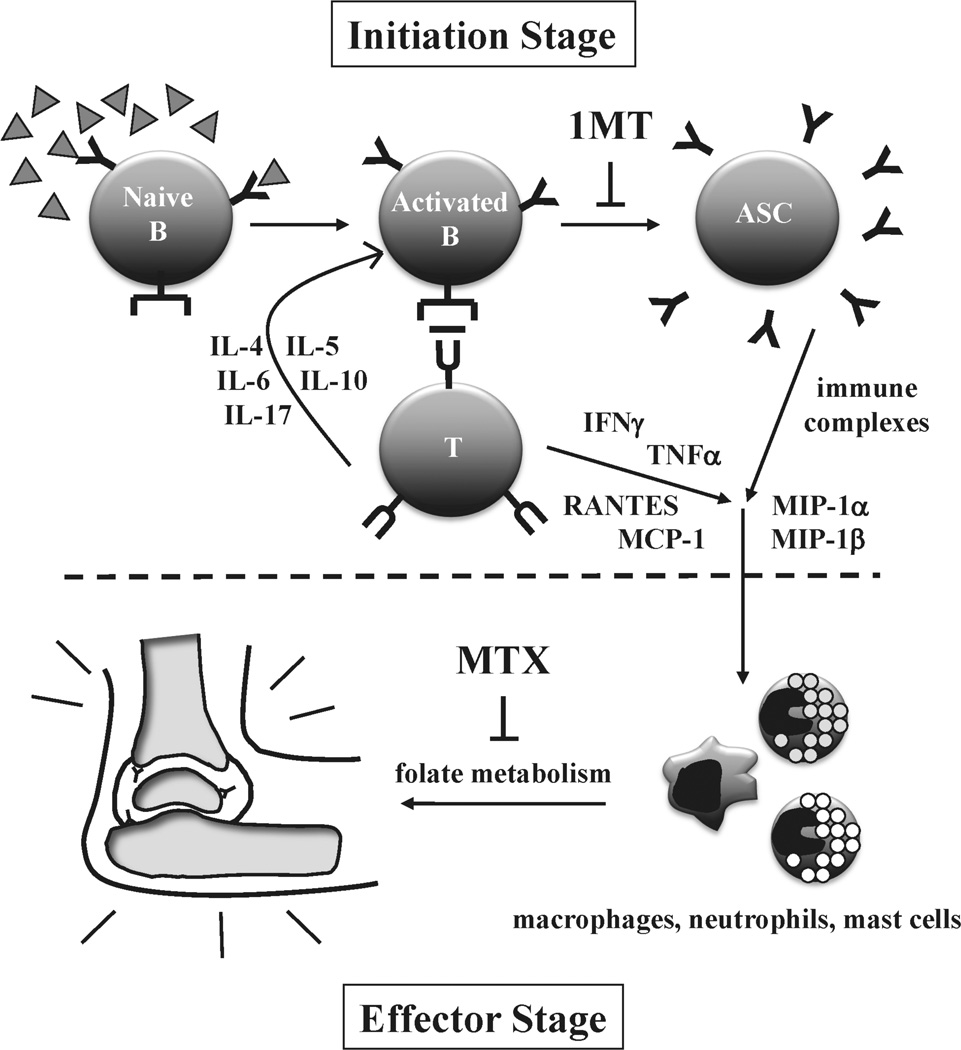
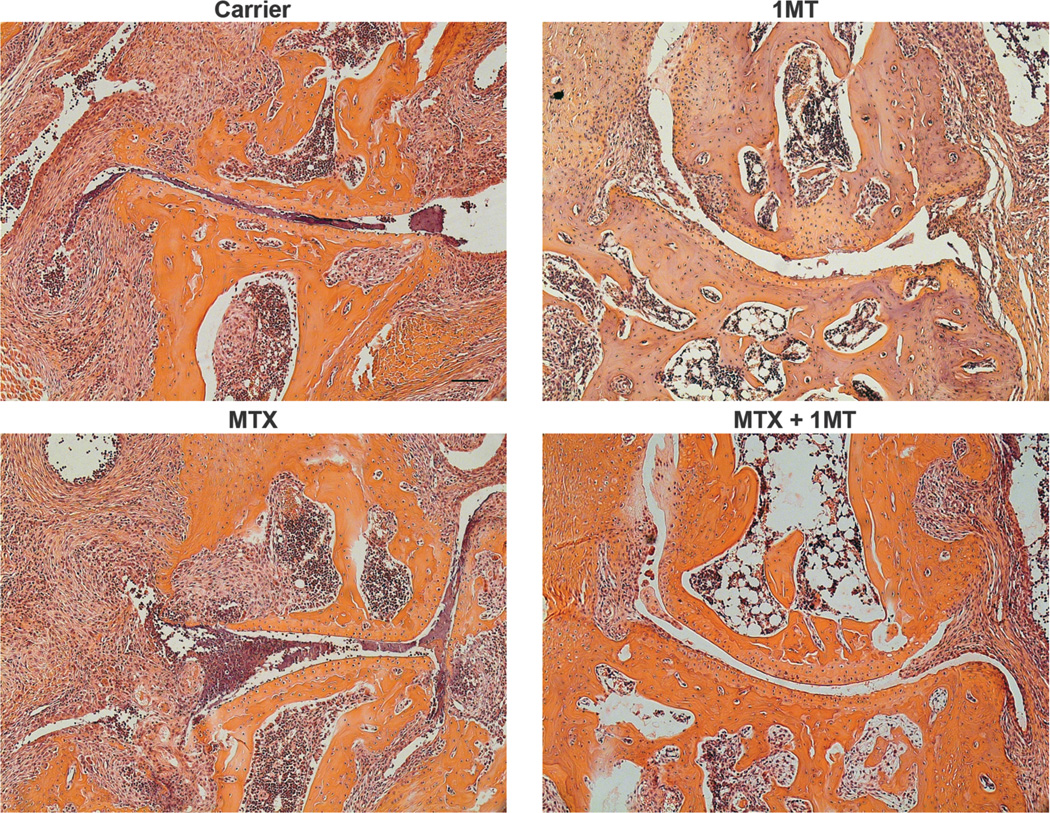
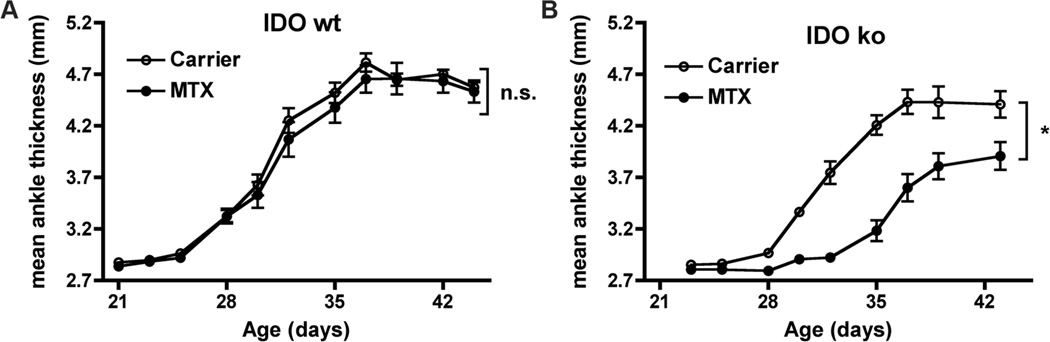
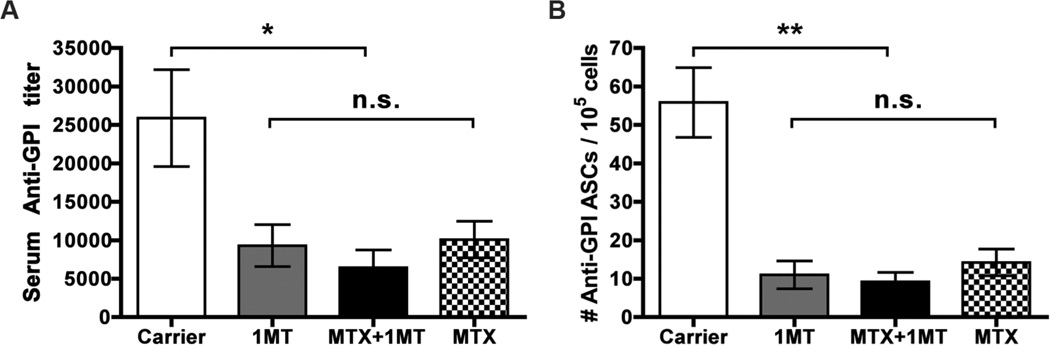
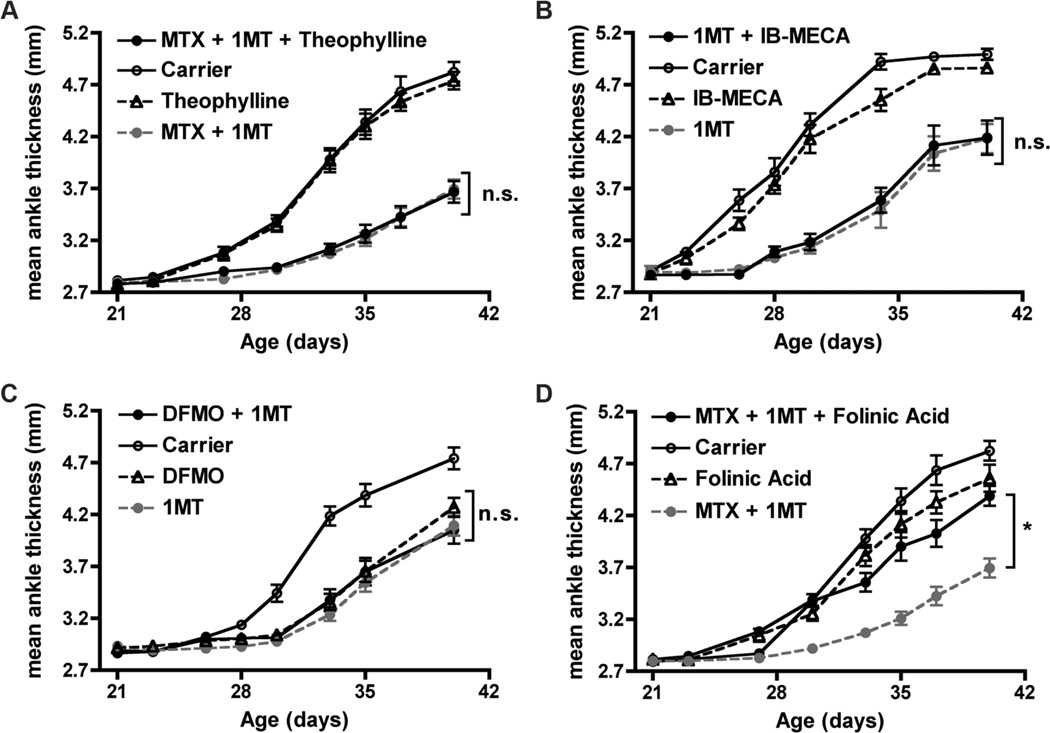
Rheumatoid arthritis (RA) is an inflammatory autoimmune disease with no known cure. Current strategies to treat RA, including methotrexate (MTX), target the later inflammatory stage of disease. Recently, we showed that inhibiting indoleamine-2,3-dioxygenase (IDO) with 1-methyl-tryptophan (1MT) targets autoantibodies and cytokines that drive the initiation of the autoimmune response. Therefore, we hypothesized that combining 1MT with MTX would target both the initiation and chronic inflammatory phases of the autoimmune response and be an effective co-therapeutic strategy for arthritis. To test this, we used K/BxN mice, a pre-clinical model of arthritis that develops joint-specific inflammation with many characteristics of human RA. Mice were treated with 1MT, MTX, alone or in combination, and followed for arthritis, autoantibodies, and inflammatory cytokines. Both 1MT and MTX were able to partially inhibit arthritis when used individually; however, combining MTX + 1MT was significantly more effective than either treatment alone at delaying the onset and alleviating the severity of joint inflammation. We went on to show that combination of MTX + 1MT did not lower inflammatory cytokine or autoantibody levels, nor could the synergistic co-therapeutic effect be reversed by the adenosine receptor antagonist theophylline or be mimicked by inhibition of polyamine synthesis. However, supplementation with folinic acid did reverse the synergistic co-therapeutic effect, demonstrating that, in the K/BxN model, MTX synergizes with 1MT by blocking folate metabolism. These data suggest that pharmacological inhibition of IDO with 1MT is a potential candidate for use in combination with MTX to increase its efficacy in the treatment of RA.
类风湿性关节炎(RA)是一种无法治愈的炎症性自身免疫疾病。目前治疗RA的策略,包括甲氨蝶呤(MTX),针对的是疾病后期的炎症阶段。最近,我们发现用1-甲基色氨酸(1MT)抑制吲哚胺-2,3-双加氧酶(IDO)可针对驱动自身免疫反应起始的自身抗体和细胞因子。因此,我们推测将1MT与MTX联合使用可针对自身免疫反应的起始阶段和慢性炎症阶段,是一种有效的关节炎联合治疗策略。为了验证这一点,我们使用了K/BxN小鼠,这是一种关节炎临床前模型,可发生具有许多人类RA特征的关节特异性炎症。小鼠分别接受1MT、MTX单独治疗或联合治疗,并监测关节炎、自身抗体和炎性细胞因子情况。单独使用1MT和MTX时均能部分抑制关节炎;然而,联合使用MTX + 1MT在延迟发病和减轻关节炎症严重程度方面比单独使用任何一种治疗方法都显著更有效。我们进一步发现,MTX + 1MT联合治疗并未降低炎性细胞因子或自身抗体水平,腺苷受体拮抗剂茶碱也无法逆转这种协同联合治疗效果,抑制多胺合成也不能模拟这种效果。然而,补充亚叶酸确实逆转了协同联合治疗效果,表明在K/BxN模型中,MTX通过阻断叶酸代谢与1MT协同作用。这些数据表明,用1MT对IDO进行药理学抑制是与MTX联合使用以提高其治疗RA疗效的潜在候选方法。