Kim Min Young, Park Jungyun, Lee Jong Joo, Ha Dae Hyun, Kim Jonghwan, Kim Chan Gil, Hwang Jungwook, Kim Chul Geun
Department of Life Science and Research Institute for Natural Sciences, College of Natural Sciences.
Graduate School for Biomedical Science and Engineering, Hanyang University, Seoul 133-791, Korea.
Nucleic Acids Res. 2014 Jun;42(11):6999-7011. doi: 10.1093/nar/gku388. Epub 2014 May 5.
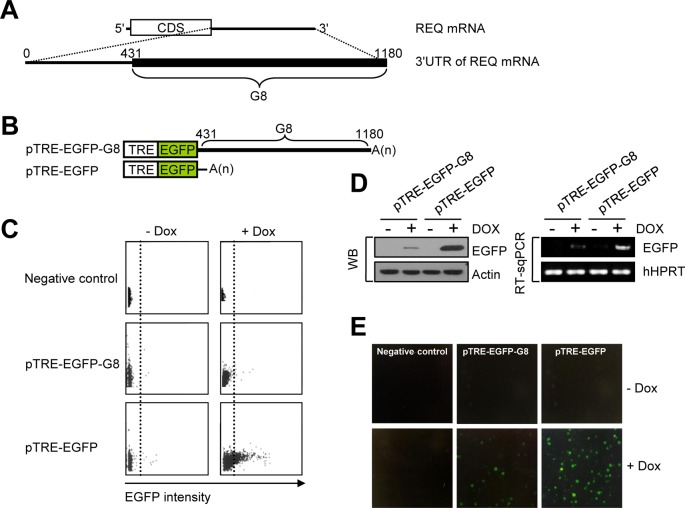
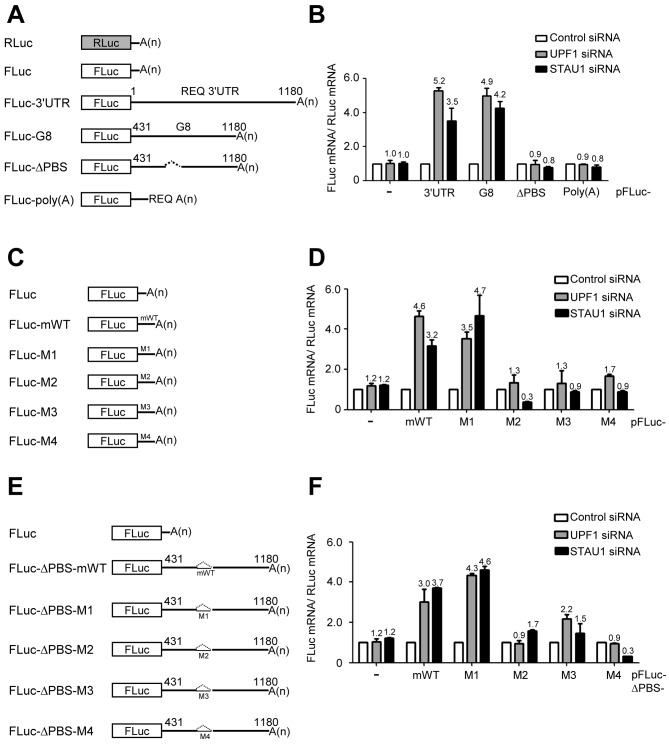
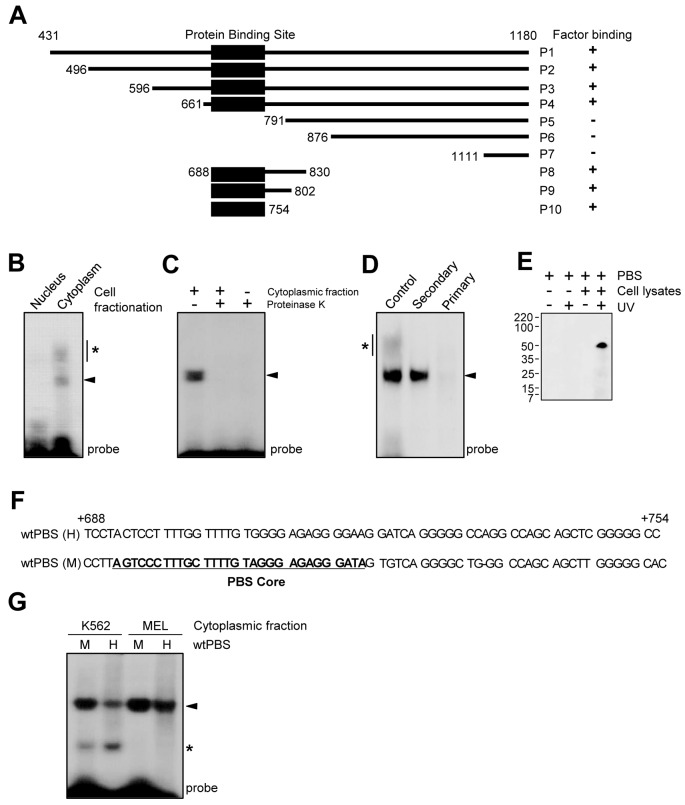
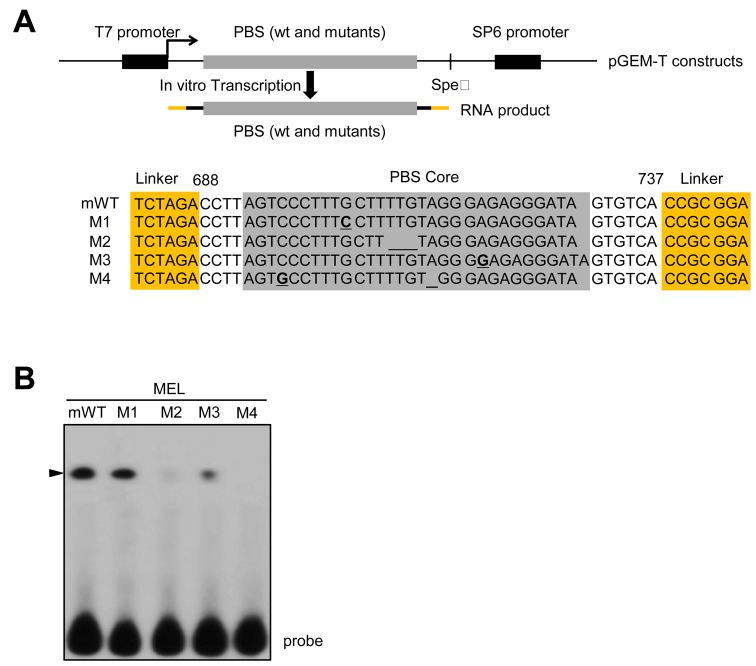
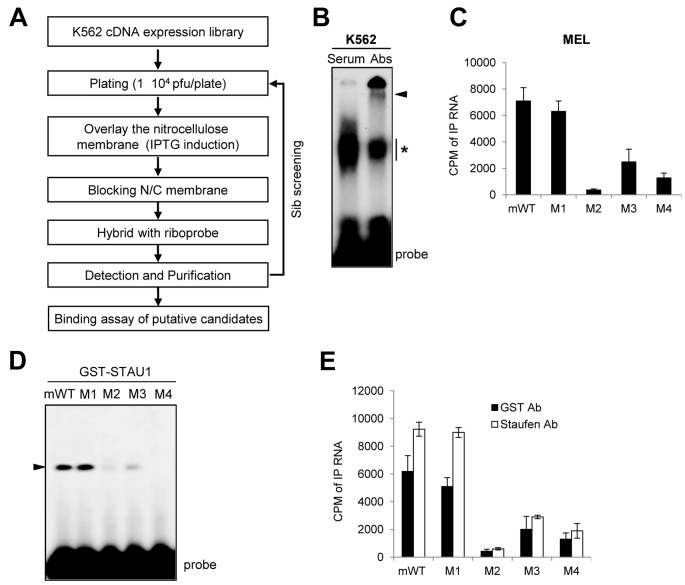
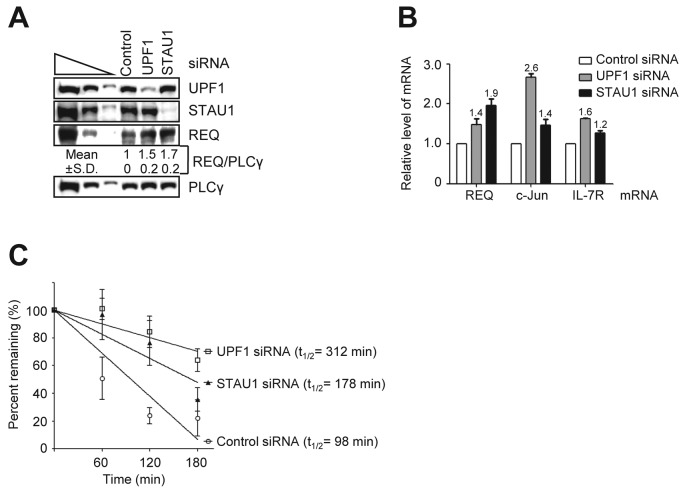
Requiem (REQ/DPF2) was originally identified as an apoptosis-inducing protein in mouse myeloid cells and belongs to the novel Krüppel-type zinc finger d4-protein family of proteins, which includes neuro-d4 (DPF1) and cer-d4 (DPF3). Interestingly, when a portion of the REQ messenger ribonucleic acid (mRNA) 3' untranslated region (3'UTR), referred to as G8, was overexpressed in K562 cells, β-globin expression was induced, suggesting that the 3'UTR of REQ mRNA plays a physiological role. Here, we present evidence that the REQ mRNA 3'UTR, along with its trans-acting factor, Staufen1 (STAU1), is able to reduce the level of REQ mRNA via STAU1-mediated mRNA decay (SMD). By screening a complementary deoxyribonucleic acid (cDNA) expression library with an RNA-ligand binding assay, we identified STAU1 as an interactor of the REQ mRNA 3'UTR. Specifically, we provide evidence that STAU1 binds to putative 30-nucleotide stem-loop-structured RNA sequences within the G8 region, which we term the protein binding site core; this binding triggers the degradation of REQ mRNA and thus regulates translation. Furthermore, we demonstrate that siRNA-mediated silencing of either STAU1 or UPF1 increases the abundance of cellular REQ mRNA and, consequently, the REQ protein, indicating that REQ mRNA is a target of SMD.
安魂曲(REQ/DPF2)最初被鉴定为小鼠髓样细胞中的一种凋亡诱导蛋白,属于新型的Krüppel型锌指d4蛋白家族,该家族包括神经d4(DPF1)和cer d4(DPF3)。有趣的是,当REQ信使核糖核酸(mRNA)3'非翻译区(3'UTR)的一部分(称为G8)在K562细胞中过表达时,β-珠蛋白表达被诱导,这表明REQ mRNA的3'UTR发挥生理作用。在此,我们提供证据表明,REQ mRNA 3'UTR与其反式作用因子Staufen1(STAU1)能够通过STAU1介导的mRNA降解(SMD)降低REQ mRNA水平。通过用RNA-配体结合试验筛选互补脱氧核糖核酸(cDNA)表达文库,我们鉴定出STAU1是REQ mRNA 3'UTR的相互作用分子。具体而言,我们提供证据表明,STAU1与G8区域内假定的30个核苷酸的茎环结构RNA序列结合,我们将其称为蛋白结合位点核心;这种结合触发REQ mRNA的降解,从而调节翻译。此外,我们证明,siRNA介导的STAU1或UPF1沉默增加了细胞内REQ mRNA的丰度,进而增加了REQ蛋白的丰度,表明REQ mRNA是SMD的靶标。