Laboratoire de Génétique; Immunologie et Pathologies Humaines; Département de Biologie; Faculté des Sciences de Tunis; Campus Universitaire; Université Tunis-el Manar; El Manar-Tunis, Tunisia.
Service d'histopathologie; Hôpital Charles Nicolle; Tunis, Tunisia.
Oncoimmunology. 2014 Jan 1;3(1):e27810. doi: 10.4161/onci.27810. Epub 2014 Jan 16.
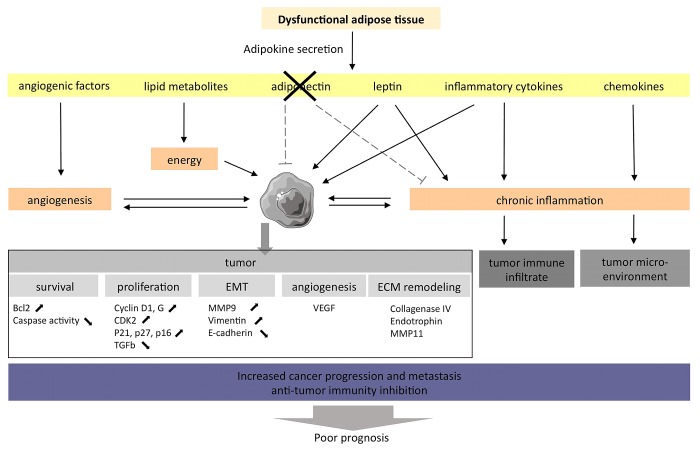
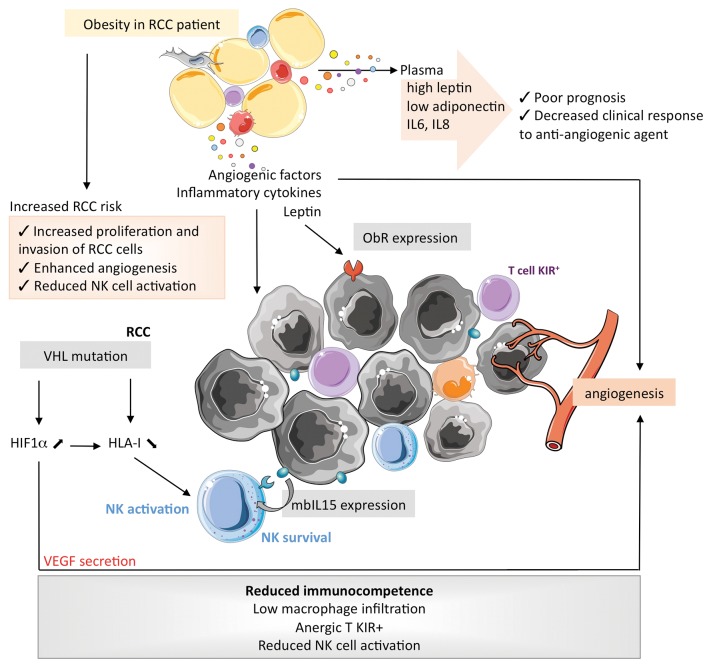
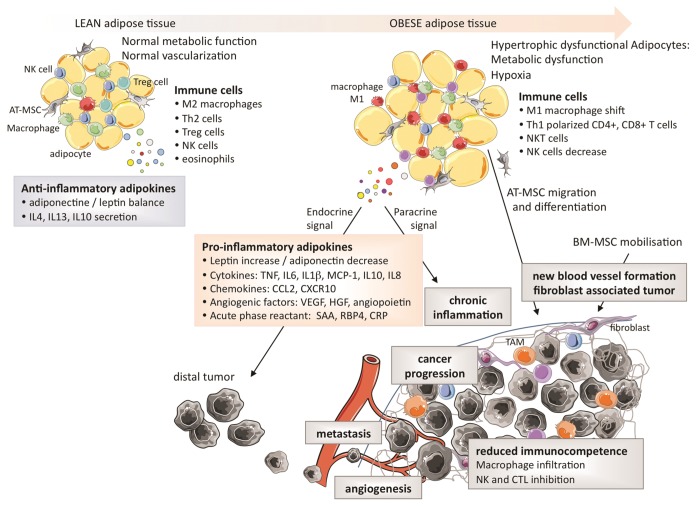
Epidemiological studies link obesity, as measured by increased body mass index (BMI) to the incidence of renal cell carcinoma (RCC) as well as to the cancer-related mortality of RCC patients. RCC is the third cancer most robustly associated with increased BMI. Understanding the role of the adipose tissue in renal carcinogenesis is therefore of major importance for the development of novel paradigms of RCC prevention and treatment. Here, we discuss the current knowledge on the impact of obesity on the development and progression of RCC as well as the role of adipose tissue-derived hormones (adipokines) in the conflict between growing tumors and the immune system.
流行病学研究将肥胖(通过体重指数增加来衡量)与肾细胞癌(RCC)的发病率以及 RCC 患者的癌症相关死亡率联系起来。RCC 是与 BMI 增加相关性最强的第三大癌症。因此,了解脂肪组织在肾癌发生中的作用对于开发 RCC 预防和治疗的新范式至关重要。在这里,我们讨论了肥胖对 RCC 发展和进展的影响以及脂肪组织来源的激素( adipokines )在不断增长的肿瘤和免疫系统之间的冲突中的作用的现有知识。