MMWR Morb Mortal Wkly Rep. 2014 May 9;63(18):402-6.
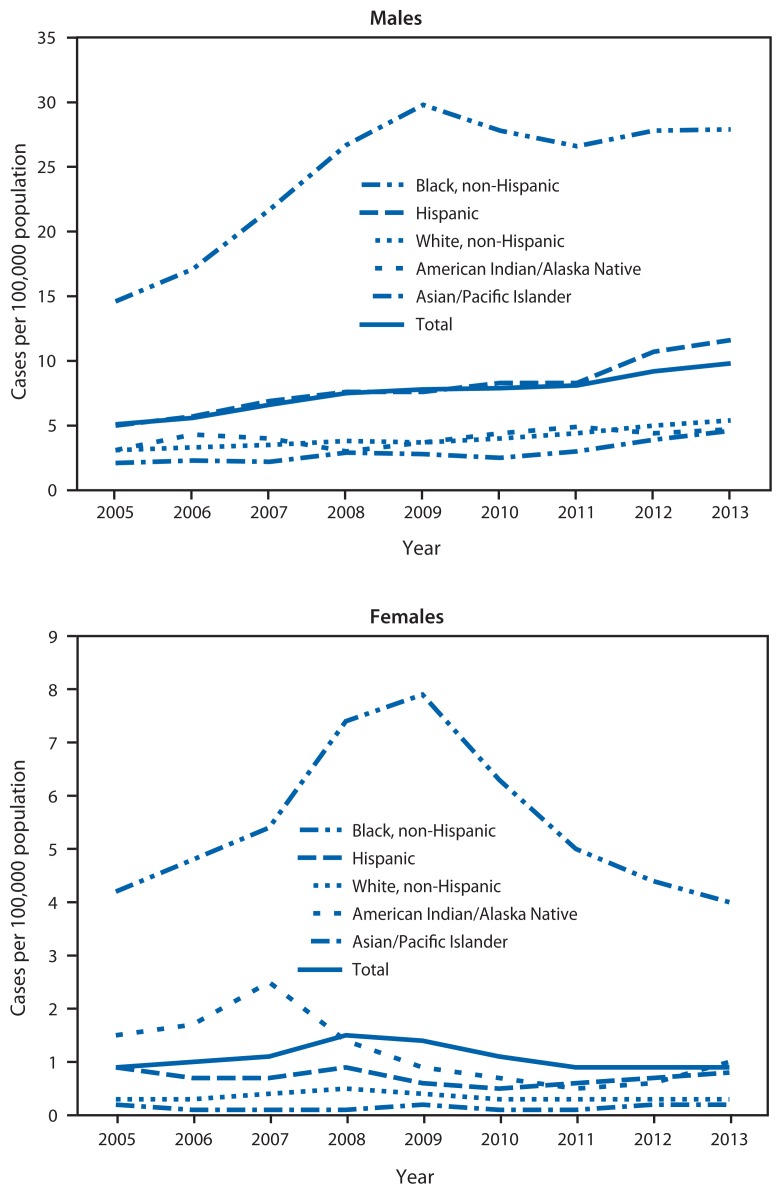
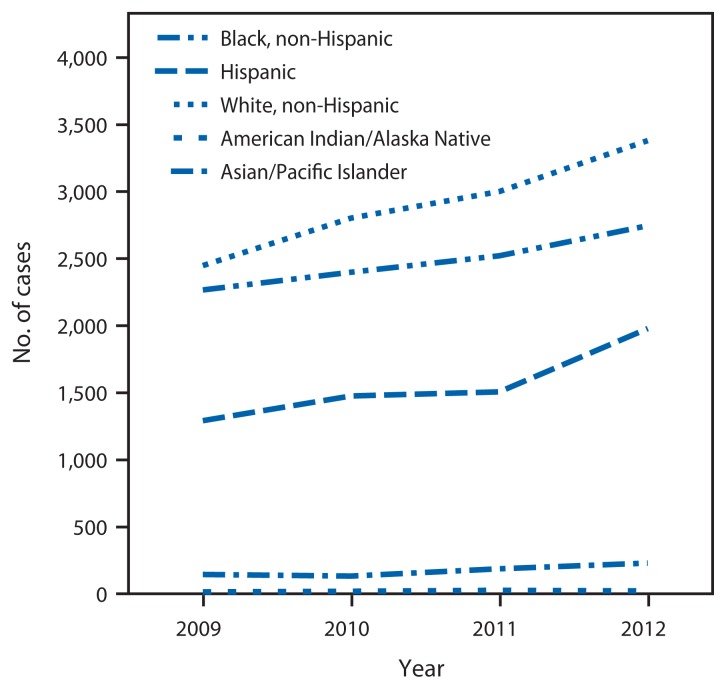
In 2013, based on data reported as of April 28, 2014, the rate of reported primary and secondary syphilis in the United States was 5.3 cases per 100,000 population, more than double the lowest-ever rate of 2.1 in 2000. To characterize the recent epidemiology of syphilis in the United States, CDC analyzed data from the National Notifiable Diseases Surveillance System (NNDSS) for cases of primary and secondary syphilis diagnosed during 2005-2013 with a focus on states that reported the sex of sex partners during 2009-2012 to describe reported syphilis among gay, bisexual, and other men who have sex with men (collectively referred to as MSM). During 2005-2013, primary and secondary syphilis rates increased among men of all ages and races/ethnicities across all regions of the United States. Recent years have shown an accelerated increase in the number of cases, with the largest increases occurring among MSM. Among women, rates increased during 2005-2008 and decreased during 2009-2013, with different trends among different racial/ethnic groups. Racial/ethnic disparities in reported syphilis persisted during 2005-2013, likely reflecting social determinants of health, such as socioeconomic status, that might contribute to the burden of syphilis in a community. These findings underscore the need for continued syphilis prevention measures among MSM.
2013 年,根据截至 2014 年 4 月 28 日报告的数据,美国报告的一期和二期梅毒发病率为每 10 万人 5.3 例,是 2000 年 2.1 例的两倍多。为了描述美国近期梅毒的流行病学特征,CDC 分析了国家传染病监测系统(NNDSS)2005-2013 年期间诊断的一期和二期梅毒病例数据,重点关注了 2009-2012 年报告性伴侣性别的州,以描述男同性恋、双性恋和其他与男性发生性关系的男性(统称 MSM)中的报告梅毒病例。2005-2013 年,美国所有地区所有年龄段和种族/族裔的男性一期和二期梅毒发病率均有所上升。近年来,病例数量呈加速上升趋势,其中 MSM 增幅最大。在女性中,发病率在 2005-2008 年期间上升,在 2009-2013 年期间下降,不同种族/族裔群体的趋势不同。2005-2013 年期间,报告梅毒的种族/族裔差异持续存在,这可能反映了健康的社会决定因素,例如社会经济地位,这些因素可能导致社区梅毒负担加重。这些发现强调了需要继续为 MSM 采取梅毒预防措施。