Sahai Vaibhav, Kumar Krishan, Knab Lawrence M, Chow Christina R, Raza Sania S, Bentrem David J, Ebine Kazumi, Munshi Hidayatullah G
Authors' Affiliations: Divisions of Hematology/Oncology and.
Authors' Affiliations: Divisions of Hematology/Oncology and Jesse Brown VA Medical Center; and.
Mol Cancer Ther. 2014 Jul;13(7):1907-17. doi: 10.1158/1535-7163.MCT-13-0925. Epub 2014 May 7.
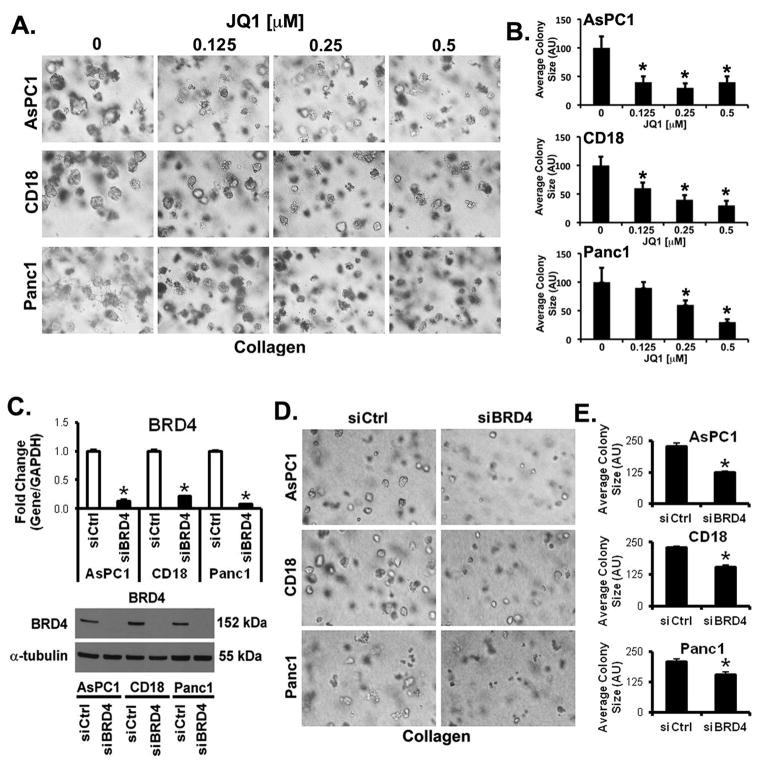
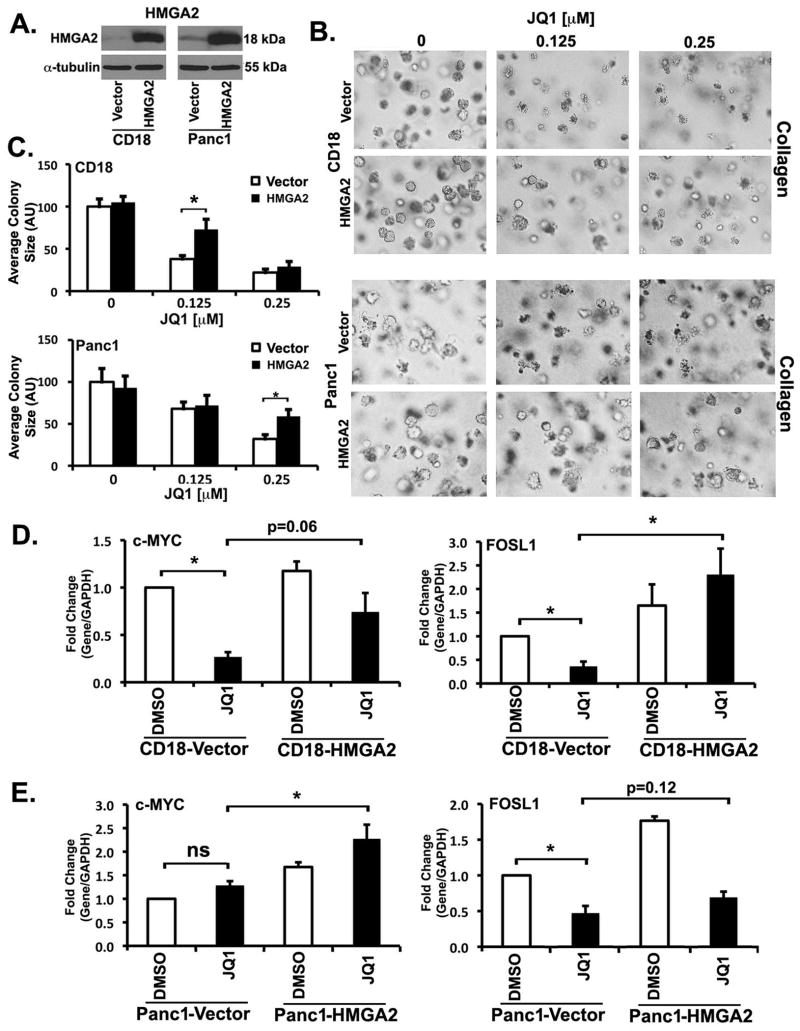
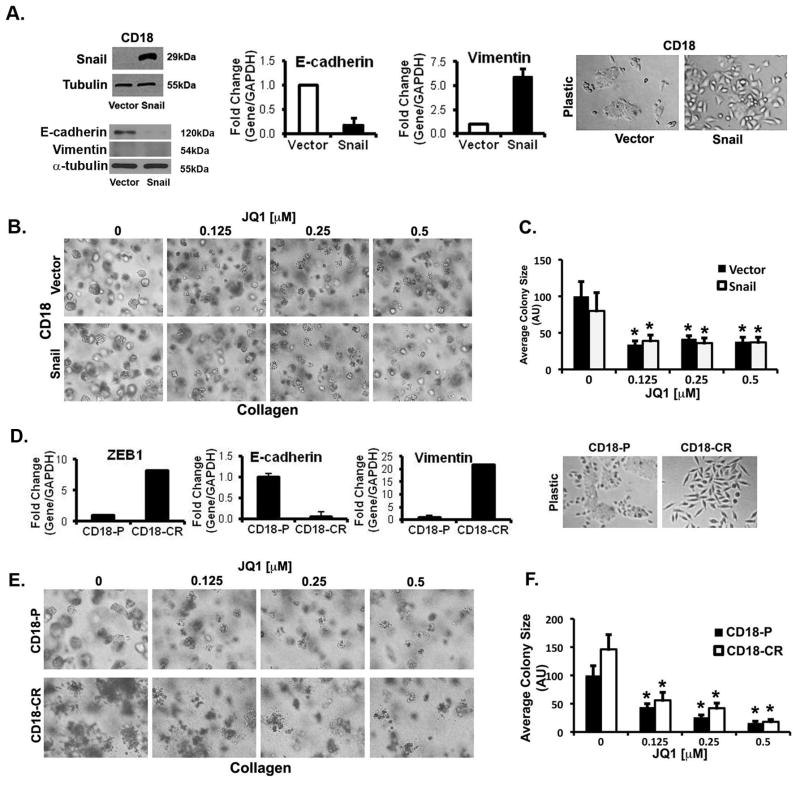
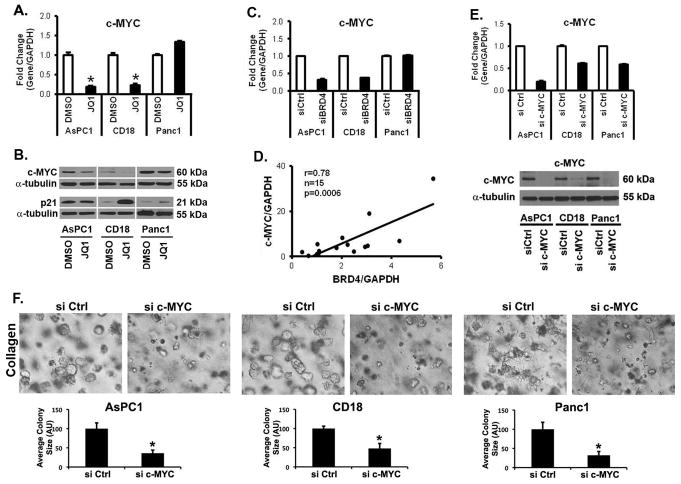
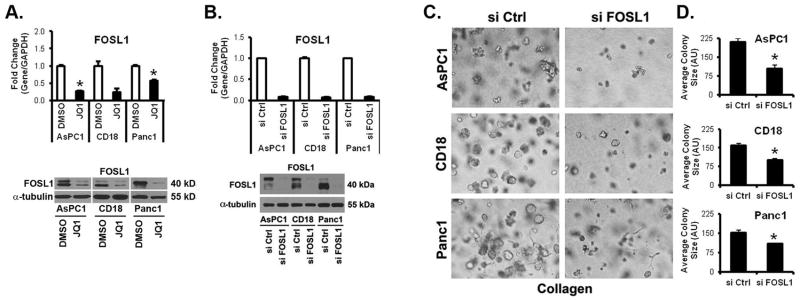
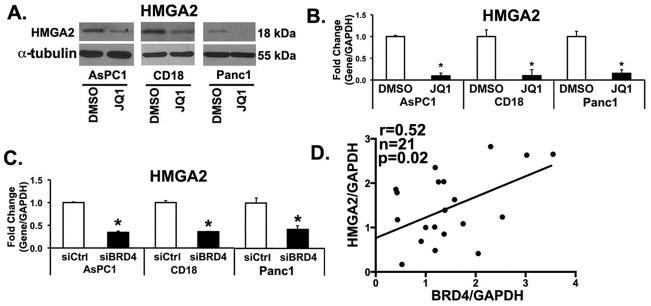
Pancreatic ductal adenocarcinoma (PDAC) is associated with pronounced fibrosis that contributes to chemoresistance, in part, through increased histone acetylation. Because bromodomain (BRD) and extra terminal domain (BET) proteins are "readers" of histone acetylation marks, we targeted BET proteins in PDAC cells grown in three-dimensional collagen. We show that treatment with BET inhibitors decreases growth of PDAC cells (AsPC1, CD18, and Panc1) in collagen. Transfection with siRNA against BRD4, which is increased in human PDAC tumors, also decreases growth of PDAC cells. BET inhibitors additionally decrease growth in collagen of PDAC cells that have undergone epithelial-to-mesenchymal transition or have become resistant to chemotherapy. Although BET inhibitors and BRD4 siRNA repress c-MYC only in AsPC1 and CD18 cells, downregulating c-MYC decreases growth of all three PDAC cell lines in collagen. FOSL1, which is also targeted by BET inhibitors and BRD4 siRNA in AsPC1, CD18, and Panc1 cells, additionally regulates growth of all three PDAC cell lines in collagen. BET inhibitors and BRD4 siRNA repress HMGA2, an architectural protein that modulates chromatin state and also contributes to chemoresistance, in PDAC cells grown in collagen. Importantly, we show that there is a statistically significant correlation between BRD4 and HMGA2 in human PDAC tumors. Significantly, overexpression of HMGA2 partially mitigates the effect of BET inhibitors on growth and c-MYC and/or FOSL1 expression in collagen. Overall, these results demonstrate that BET inhibitors block growth of PDAC cells in collagen and that BET proteins may be potential targets for the treatment of pancreatic cancer.
胰腺导管腺癌(PDAC)与显著的纤维化相关,这种纤维化部分通过增加组蛋白乙酰化导致化疗耐药。由于溴结构域(BRD)和额外末端结构域(BET)蛋白是组蛋白乙酰化标记的“读取器”,我们在三维胶原蛋白中生长的PDAC细胞中靶向BET蛋白。我们发现,用BET抑制剂处理可降低胶原蛋白中PDAC细胞(AsPC1、CD18和Panc1)的生长。用针对在人类PDAC肿瘤中表达增加的BRD4的小干扰RNA(siRNA)转染,也可降低PDAC细胞的生长。BET抑制剂还可降低经历上皮-间质转化或对化疗产生耐药的PDAC细胞在胶原蛋白中的生长。尽管BET抑制剂和BRD4 siRNA仅在AsPC1和CD18细胞中抑制c-MYC,但下调c-MYC可降低所有三种PDAC细胞系在胶原蛋白中的生长。FOSL1在AsPC1、CD18和Panc1细胞中也被BET抑制剂和BRD4 siRNA靶向,它还调节所有三种PDAC细胞系在胶原蛋白中的生长。BET抑制剂和BRD4 siRNA在胶原蛋白中生长的PDAC细胞中抑制HMGA2,HMGA2是一种调节染色质状态且也导致化疗耐药的结构蛋白。重要的是,我们发现在人类PDAC肿瘤中BRD4与HMGA2之间存在统计学上的显著相关性。显著的是,HMGA2的过表达部分减轻了BET抑制剂对胶原蛋白中生长以及c-MYC和/或FOSL1表达的影响。总体而言,这些结果表明BET抑制剂可阻断胶原蛋白中PDAC细胞的生长,并且BET蛋白可能是治疗胰腺癌的潜在靶点。