Department of Neurological Surgery, Vanderbilt University Medical Center, Nashville, TN 37232, USA.
Clin Cancer Res. 2013 Apr 1;19(7):1748-59. doi: 10.1158/1078-0432.CCR-12-3066. Epub 2013 Feb 12.
Glioblastoma is refractory to conventional therapies. The bromodomain and extraterminal domain (BET) proteins are epigenetic readers that selectively bind to acetylated lysine residues on histone tails. These proteins recently emerged as important therapeutic targets in NUT midline carcinoma and several types of hematopoietic cancers. In this study, the therapeutic potential of a novel BET bromodomain inhibitor, JQ1, was assessed in a panel of genetically heterogeneous glioblastoma samples.
The antineoplastic effects of JQ1 were shown using ex vivo cultures derived from primary glioblastoma xenograft lines and surgical specimens of different genetic background. The in vivo efficacy was assessed in orthotopic glioblastoma tumors.
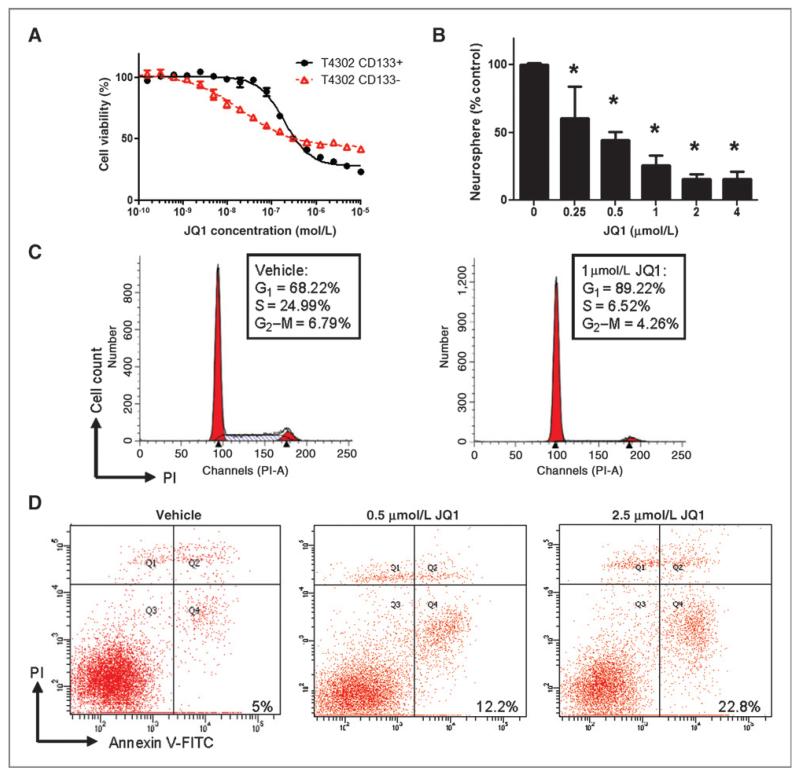
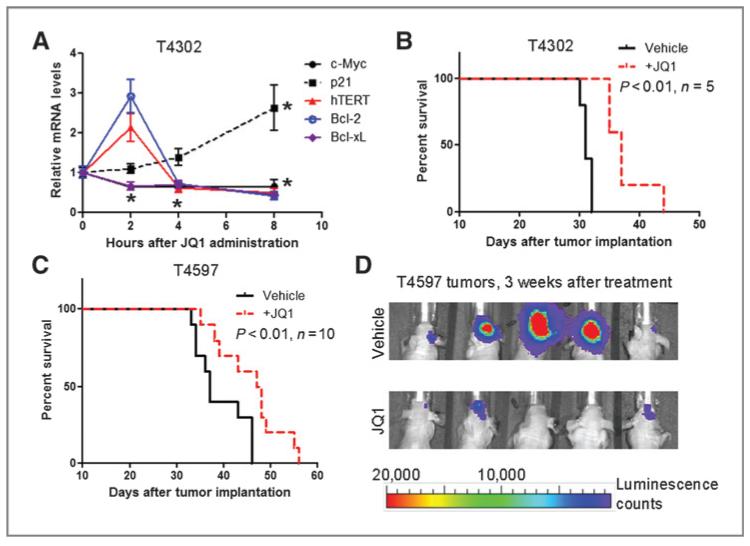
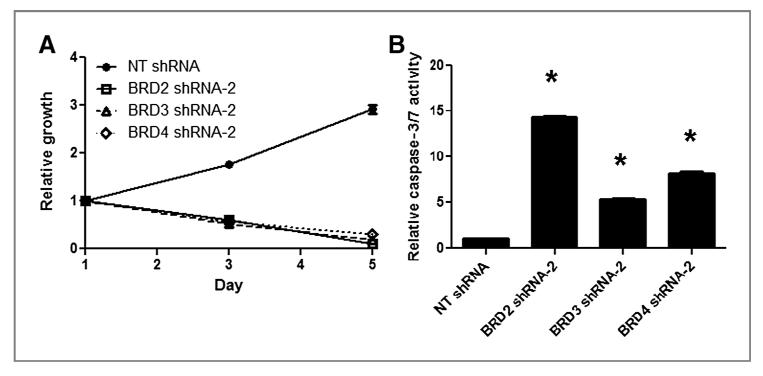
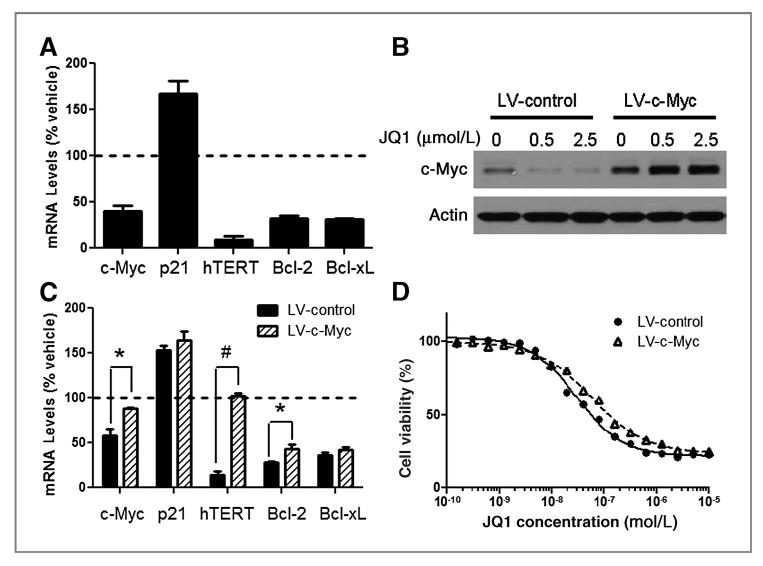
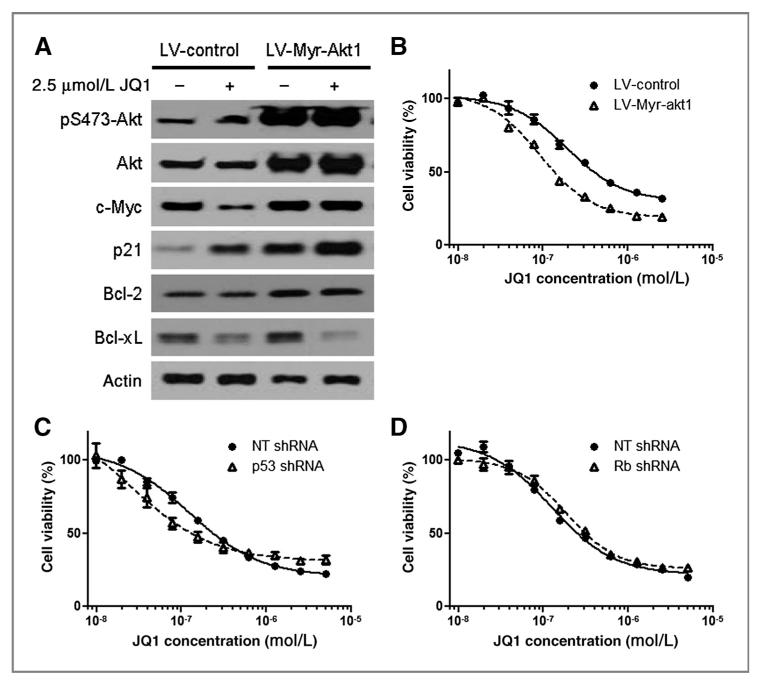
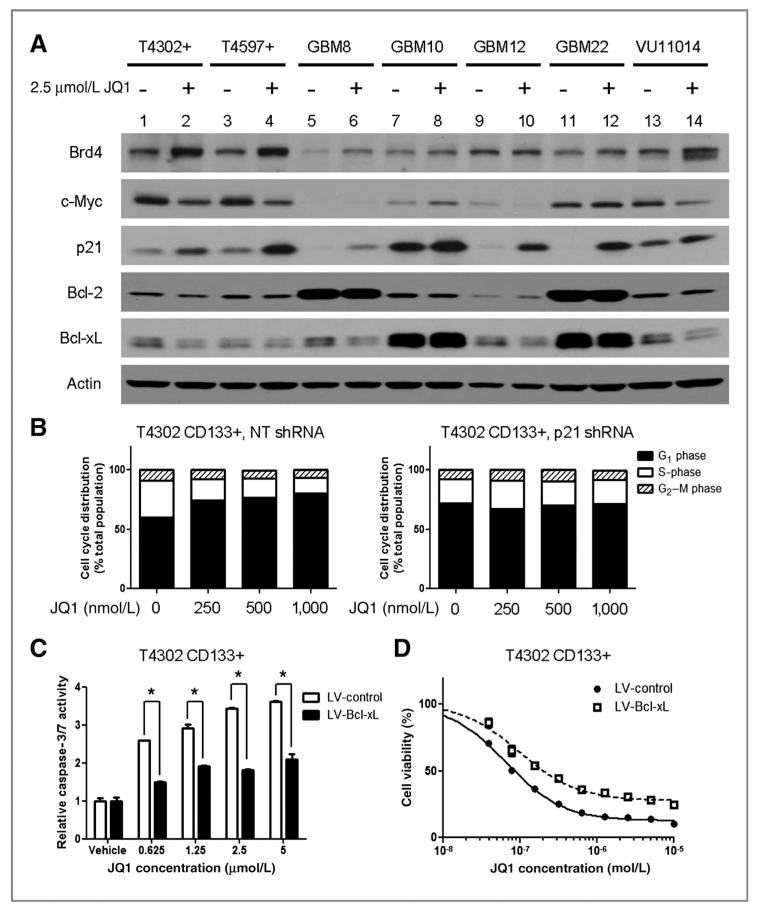
We showed that JQ1 induced marked G1 cell-cycle arrest and apoptosis, which was phenocopied by knockdown of individual BET family members. JQ1 treatment resulted in significant changes in expression of genes that play important roles in glioblastoma such as c-Myc, p21(CIP1/WAF1), hTERT, Bcl-2, and Bcl-xL. Unlike the observations in some hematopoietic cancer cell lines, exogenous c-Myc did not significantly protect glioblastoma cells against JQ1. In contrast, ectopically expressed Bcl-xL partially rescued cells from JQ1-induced apoptosis, and knockdown of p21(CIP1/WAF1) attenuated JQ1-induced cell-cycle arrest. Cells genetically engineered for Akt hyperactivation or p53/Rb inactivation did not compromise JQ1 efficacy, suggesting that these frequently mutated signaling pathways may not confer resistance to JQ1. Furthermore, JQ1 significantly repressed growth of orthotopic glioblastoma tumors.
Our results suggest potentially broad therapeutic use of BET bromodomain inhibitors for treating genetically diverse glioblastoma tumors.
胶质母细胞瘤对常规疗法具有抗药性。溴结构域和末端结构域(BET)蛋白是表观遗传读取器,它们选择性地结合组蛋白尾部上乙酰化的赖氨酸残基。这些蛋白最近成为 NUT 中线癌和几种类型的血液恶性肿瘤的重要治疗靶标。在这项研究中,评估了一种新型 BET 溴结构域抑制剂 JQ1 在一系列遗传异质性胶质母细胞瘤样本中的治疗潜力。
使用源自原发性胶质母细胞瘤异种移植系和不同遗传背景的手术标本的体外培养物来显示 JQ1 的抗肿瘤作用。在原位胶质母细胞瘤肿瘤中评估体内功效。
我们表明,JQ1 诱导了明显的 G1 细胞周期停滞和细胞凋亡,这可被单个 BET 家族成员的敲低所模拟。JQ1 治疗导致在胶质母细胞瘤中发挥重要作用的基因的表达发生显著变化,例如 c-Myc、p21(CIP1/WAF1)、hTERT、Bcl-2 和 Bcl-xL。与一些血液恶性肿瘤细胞系中的观察结果不同,外源性 c-Myc 不能显著保护胶质母细胞瘤细胞免受 JQ1 的影响。相反,过表达的 Bcl-xL 部分挽救了细胞免受 JQ1 诱导的细胞凋亡,而 p21(CIP1/WAF1)的敲低减弱了 JQ1 诱导的细胞周期停滞。对 Akt 过度激活或 p53/Rb 失活进行基因工程改造的细胞不会损害 JQ1 的功效,这表明这些经常突变的信号通路可能不会对 JQ1 产生抗性。此外,JQ1 显著抑制了原位胶质母细胞瘤肿瘤的生长。
我们的结果表明,BET 溴结构域抑制剂在治疗遗传多样性的胶质母细胞瘤肿瘤方面具有潜在的广泛治疗用途。