Department of Animal Science, Cornell University Ithaca, NY, USA ; Bovine Functional Genomics Laboratory, United States Department of Agriculture, Agricultural Research Services Beltsville, MD, USA.
Bovine Functional Genomics Laboratory, United States Department of Agriculture, Agricultural Research Services Beltsville, MD, USA ; Department of Animal Science, Iowa State University Ames, IA, USA.
Front Genet. 2014 Apr 29;5:101. doi: 10.3389/fgene.2014.00101. eCollection 2014.
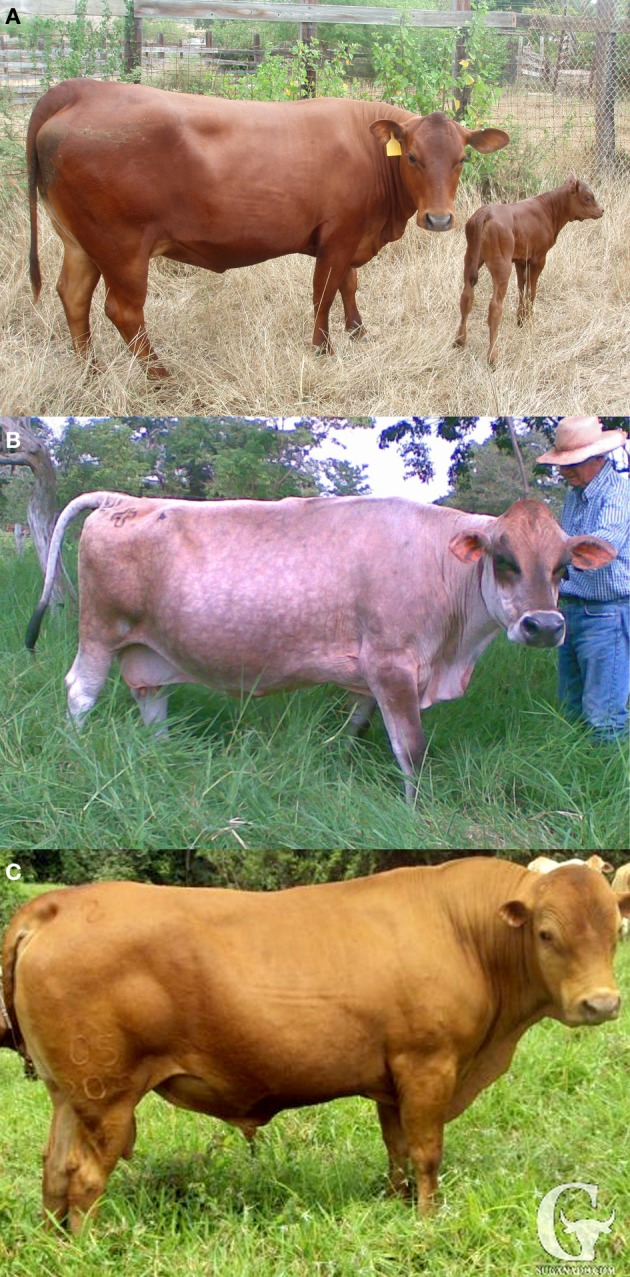
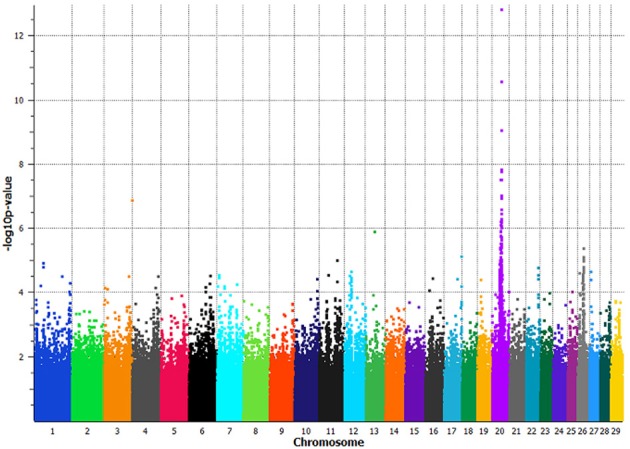
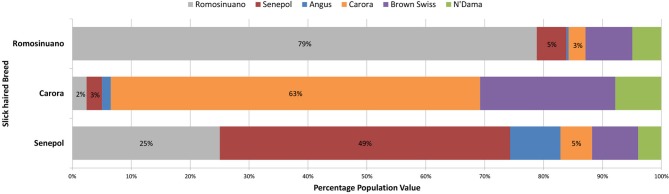
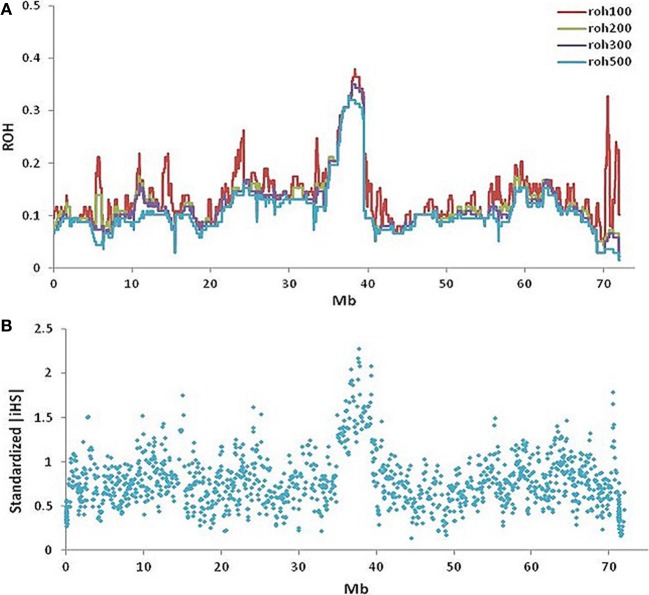
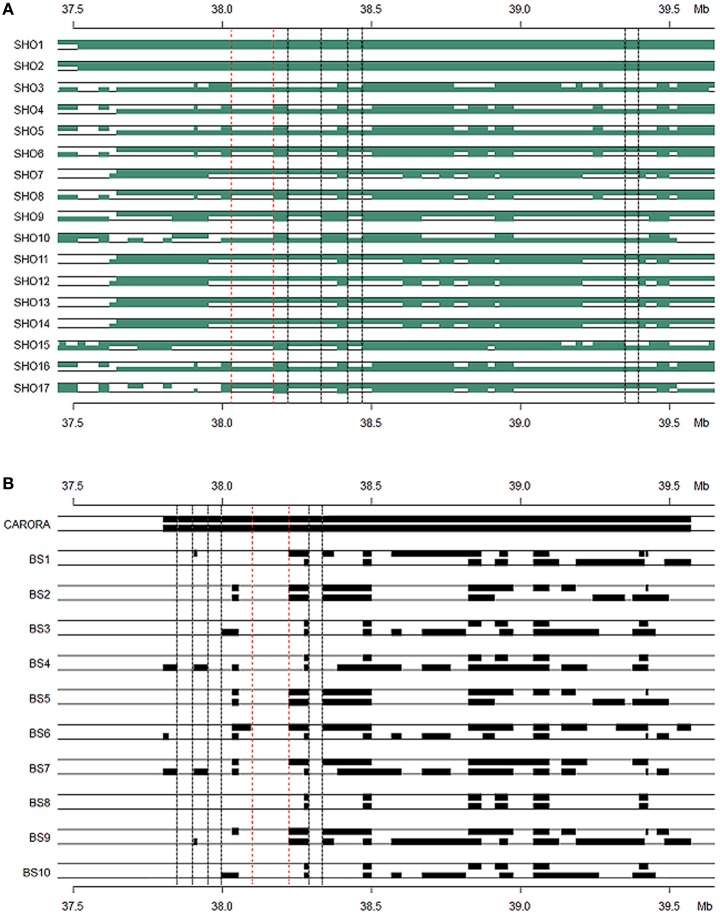
The slick hair coat (SLICK) is a dominantly inherited trait typically associated with tropically adapted cattle that are from Criollo descent through Spanish colonization of cattle into the New World. The trait is of interest relative to climate change, due to its association with improved thermo-tolerance and subsequent increased productivity. Previous studies localized the SLICK locus to a 4 cM region on chromosome (BTA) 20 and identified signatures of selection in this region derived from Senepol cattle. The current study compares three slick-haired Criollo-derived breeds including Senepol, Carora, and Romosinuano and three additional slick-haired cross-bred lineages to non-slick ancestral breeds. Genome-wide association (GWA), haplotype analysis, signatures of selection, runs of homozygosity (ROH), and identity by state (IBS) calculations were used to identify a 0.8 Mb (37.7-38.5 Mb) consensus region for the SLICK locus on BTA20 in which contains SKP2 and SPEF2 as possible candidate genes. Three specific haplotype patterns are identified in slick individuals, all with zero frequency in non-slick individuals. Admixture analysis identified common genetic patterns between the three slick breeds at the SLICK locus. Principal component analysis (PCA) and admixture results show Senepol and Romosinuano sharing a higher degree of genetic similarity to one another with a much lesser degree of similarity to Carora. Variation in GWA, haplotype analysis, and IBS calculations with accompanying population structure information supports potentially two mutations, one common to Senepol and Romosinuano and another in Carora, effecting genes contained within our refined location for the SLICK locus.
光滑毛 coat (SLICK) 是一种显性遗传特征,通常与热带适应性牛有关,这些牛是通过西班牙对牛的殖民化从克里奥尔牛传入新大陆的。由于与改善耐热性有关,因此该特征与气候变化有关,随后生产力提高。先前的研究将 SLICK 基因座定位到染色体 (BTA) 20 上的 4 cM 区域,并在该区域中鉴定出了 Senepol 牛衍生的选择标记。本研究比较了三种具有光滑毛的克里奥尔牛衍生品种,包括 Senepol、Carora 和 Romosinuano,以及三种其他具有光滑毛的杂交血统与非光滑的祖先品种。全基因组关联 (GWA)、单倍型分析、选择标记、纯合性 runs of homozygosity (ROH) 和状态同一性 (IBS) 计算用于鉴定 BTA20 上 SLICK 基因座的 0.8 Mb (37.7-38.5 Mb) 共识区域,其中包含 SKP2 和 SPEF2 作为可能的候选基因。在光滑个体中鉴定出三种特定的单倍型模式,在非光滑个体中均为零频率。混合分析确定了 SLICK 基因座上三种光滑品种之间的常见遗传模式。主成分分析 (PCA) 和混合结果表明,Senepol 和 Romosinuano 彼此之间具有更高的遗传相似性,而与 Carora 的相似性则小得多。GWAS、单倍型分析和 IBS 计算的变异以及伴随的群体结构信息支持潜在的两种突变,一种在 Senepol 和 Romosinuano 中常见,另一种在 Carora 中常见,影响我们对 SLICK 基因座精细定位中包含的基因。