Gwida Mayada M, Al-Ashmawy Maha A M
Department of Hygiene and Zoonoses, Faculty of Veterinary Medicine, Mansoura University, Mansoura 35516, Egypt.
Department of Food Hygiene and Control, Faculty of Veterinary Medicine, Mansoura University, Mansoura 35516, Egypt.
Vet Med Int. 2014;2014:502370. doi: 10.1155/2014/502370. Epub 2014 Apr 3.
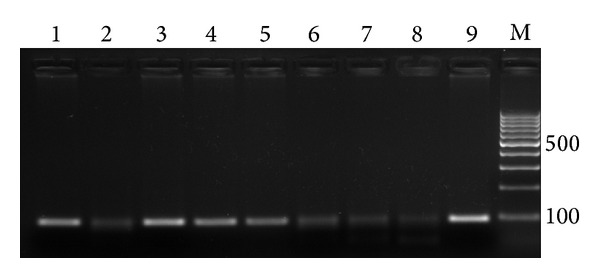
A total of 200 samples of milk and dairy products as well as 120 samples of dairy handlers were randomly collected from different dairy farms and supermarkets in Dakahlia Governorate, Egypt. The conventional cultural and serotyping methods for detection of Salmonella in dairy products were applied and the results were compared with those obtained by molecular screening assay using (ttr sequence). The obtained results revealed that 21% of milk and dairy products (42/200) were positive for Salmonella species using enrichment culture-based PCR method, while 12% of different dairy samples (24/200) were found to be positive for Salmonella species by using the conventional culture methods. Two stool specimens out of 40 apparently healthy dairy handlers were positive by the PCR method. Serotyping of Salmonella isolates revealed that 58.3% (14/24) from different dairy products were contaminated with Salmonella Typhimurium. We conclude that the enrichment culture-based PCR assay has high sensitivity and specificity for detection of Salmonella species in dairy products and handlers. High incidence of Salmonella Typhimurium in the examined dairy samples highlights the important role played by milk and dairy products as a vehicle in disease prevalence. Great effort should be applied for reducing foodborne risk for consumers.
从埃及达卡利亚省不同的奶牛场和超市中随机采集了200份牛奶和乳制品样本以及120份乳制品从业人员的样本。采用传统的培养和血清分型方法检测乳制品中的沙门氏菌,并将结果与使用(ttr序列)的分子筛查检测法所获结果进行比较。所得结果显示,采用基于富集培养的聚合酶链反应(PCR)方法时,21%的牛奶和乳制品(42/200)沙门氏菌检测呈阳性,而采用传统培养方法时,12%的不同乳制品样本(24/200)沙门氏菌检测呈阳性。40名表面健康的乳制品从业人员中有两份粪便样本经PCR方法检测呈阳性。对沙门氏菌分离株进行血清分型显示,不同乳制品中有58.3%(14/24)被鼠伤寒沙门氏菌污染。我们得出结论,基于富集培养的PCR检测法在检测乳制品和从业人员中的沙门氏菌时具有高灵敏度和特异性。在所检测的乳制品样本中鼠伤寒沙门氏菌的高发生率凸显了牛奶和乳制品作为疾病传播载体所起的重要作用。应付出巨大努力来降低消费者的食源性风险。