Graduate Program in Immunology, Faculty of Medicine Siriraj Hospital, Mahidol University, Bangkok 10700, Thailand.
Department of Molecular Tropical Medicine and Genetics, Faculty of Tropical Medicine, Mahidol University, Bangkok 10400, Thailand.
Toxins (Basel). 2014 May 13;6(5):1526-58. doi: 10.3390/toxins6051526.
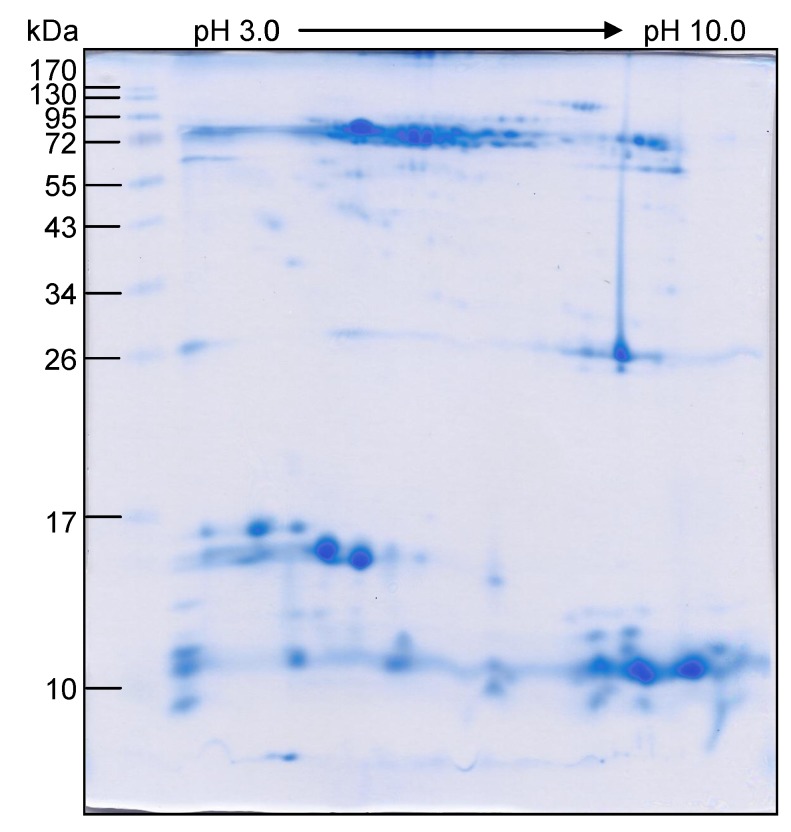
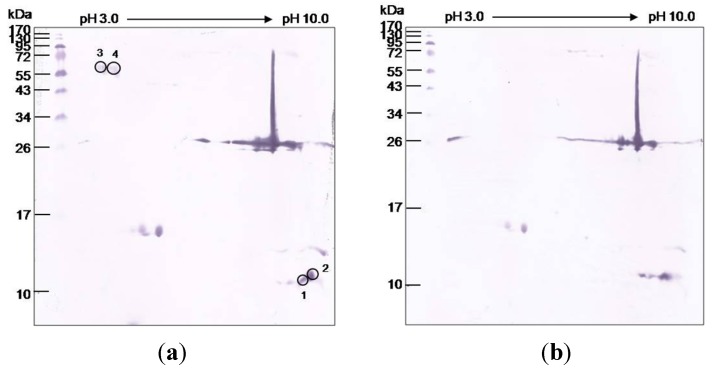
Venomous snakebites are an important health problem in tropical and subtropical countries. King cobra (Ophiophagus hannah) is the largest venomous snake found in South and Southeast Asia. In this study, the O. hannah venom proteome and the venom components cross-reactive to N. kaouthia monospecific antivenin were studied. O. hannah venom consisted of 14 different protein families, including three finger toxins, phospholipases, cysteine-rich secretory proteins, cobra venom factor, muscarinic toxin, L-amino acid oxidase, hypothetical proteins, low cysteine protein, phosphodiesterase, proteases, vespryn toxin, Kunitz, growth factor activators and others (coagulation factor, endonuclease, 5'-nucleotidase). N. kaouthia antivenin recognized several functionally different O. hannah venom proteins and mediated paratherapeutic efficacy by rescuing the O. hannah envenomed mice from lethality. An engineered human ScFv specific to N. kaouthia long neurotoxin (NkLN-HuScFv) cross-neutralized the O. hannah venom and extricated the O. hannah envenomed mice from death in a dose escalation manner. Homology modeling and molecular docking revealed that NkLN-HuScFv interacted with residues in loops 2 and 3 of the neurotoxins of both snake species, which are important for neuronal acetylcholine receptor binding. The data of this study are useful for snakebite treatment when and where the polyspecific antivenin is not available. Because the supply of horse-derived antivenin is limited and the preparation may cause some adverse effects in recipients, a cocktail of recombinant human ScFvs for various toxic venom components shared by different venomous snakes, exemplified by the in vitro produced NkLN-HuScFv in this study, should contribute to a possible future route for an improved alternative to the antivenins.
毒蛇咬伤是热带和亚热带国家的一个重要健康问题。眼镜王蛇(Ophiophagus hannah)是在南亚和东南亚发现的最大毒蛇。在这项研究中,研究了 O. hannah 毒液蛋白质组和与 N. kaouthia 单特异性抗蛇毒血清交叉反应的毒液成分。O. hannah 毒液由 14 种不同的蛋白质家族组成,包括三种手指毒素、磷脂酶、富含半胱氨酸的分泌蛋白、眼镜蛇毒素因子、毒蕈碱毒素、L-氨基酸氧化酶、假设蛋白、低半胱氨酸蛋白、磷酸二酯酶、蛋白酶、vespryn 毒素、Kunitz、生长因子激活剂等(凝血因子、核酸内切酶、5'-核苷酸酶)。N. kaouthia 抗蛇毒血清识别几种功能不同的 O. hannah 毒液蛋白,并通过挽救 O. hannah 中毒的小鼠免于致死,介导治疗效果。一种针对 N. kaouthia 长神经毒素的工程化人 ScFv(NkLN-HuScFv)特异性中和 O. hannah 毒液,并以剂量递增的方式将 O. hannah 中毒的小鼠从死亡中解救出来。同源建模和分子对接表明,NkLN-HuScFv 与两种蛇的神经毒素环 2 和 3 中的残基相互作用,这对于神经元乙酰胆碱受体结合很重要。这项研究的数据对于在没有多特异性抗蛇毒血清的情况下进行蛇伤治疗很有用。由于马源性抗蛇毒血清的供应有限,并且该制剂可能会在接受者中引起一些不良反应,因此,针对不同毒蛇共享的各种毒性毒液成分的重组人 ScFv 混合物,如本研究中体外产生的 NkLN-HuScFv,应该有助于为抗蛇毒血清提供一个可能的替代方案。