Xie Lei, Ge Xiaoxia, Tan Hepan, Xie Li, Zhang Yinliang, Hart Thomas, Yang Xiaowei, Bourne Philip E
Department of Computer Science, Hunter College, The City University of New York, New York, New York, United States of America; Ph.D. Program in Computer Science, Biology, and Biochemistry, The Graduate Center, The City University of New York, New York, New York, United States of America.
Department of Computer Science, Hunter College, The City University of New York, New York, New York, United States of America.
PLoS Comput Biol. 2014 May 15;10(5):e1003554. doi: 10.1371/journal.pcbi.1003554. eCollection 2014 May.
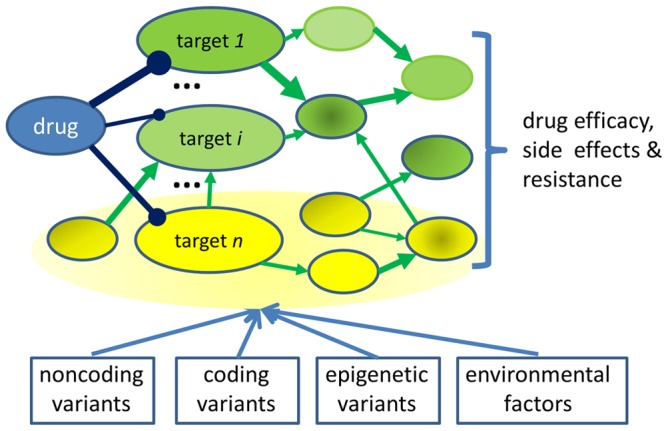
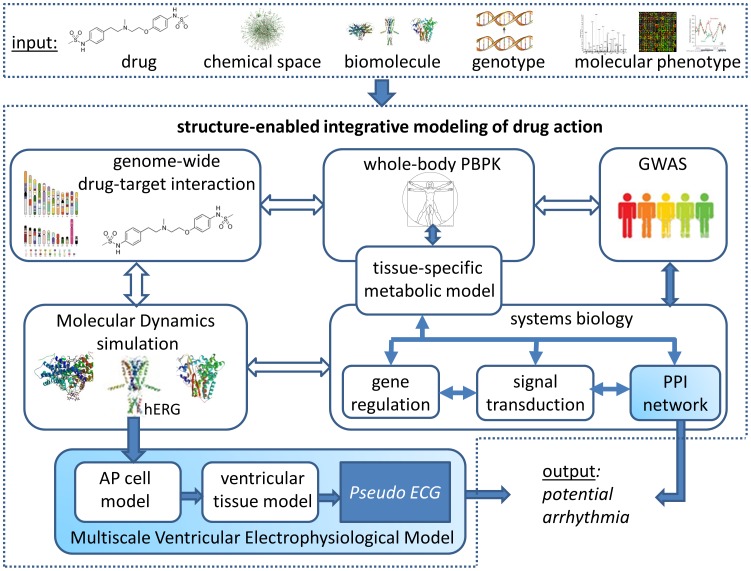
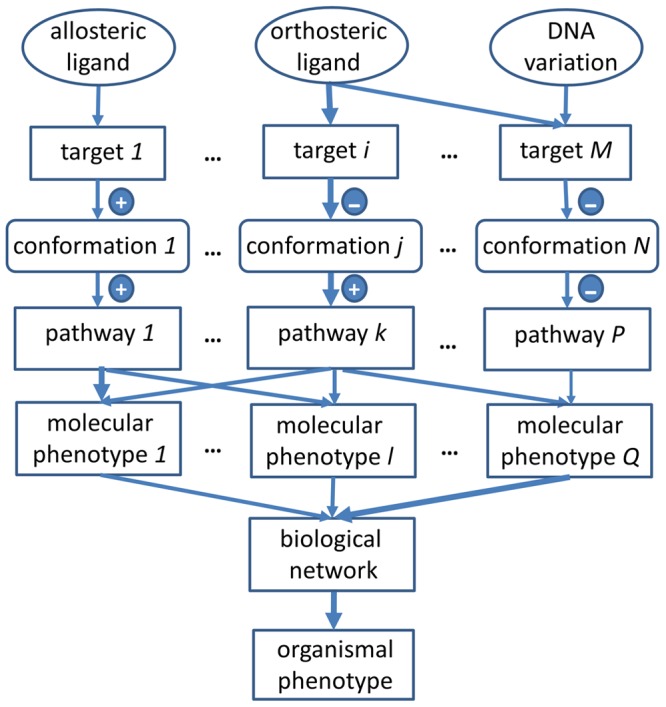
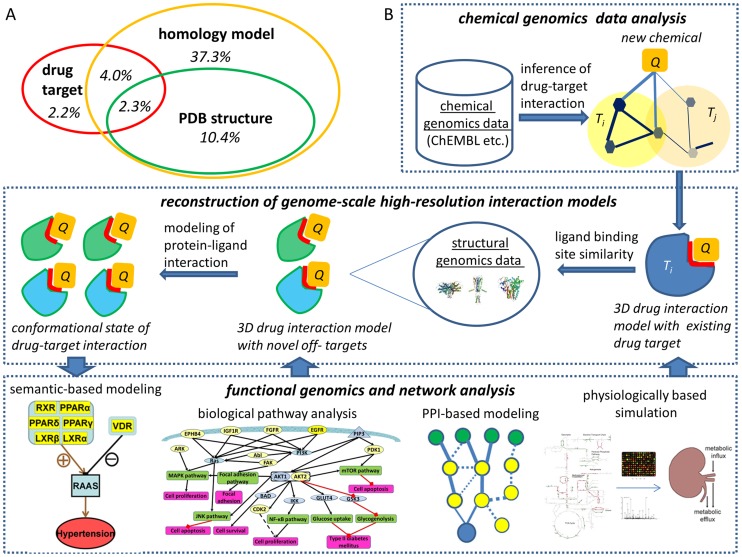
Genome-Wide Association Studies (GWAS), whole genome sequencing, and high-throughput omics techniques have generated vast amounts of genotypic and molecular phenotypic data. However, these data have not yet been fully explored to improve the effectiveness and efficiency of drug discovery, which continues along a one-drug-one-target-one-disease paradigm. As a partial consequence, both the cost to launch a new drug and the attrition rate are increasing. Systems pharmacology and pharmacogenomics are emerging to exploit the available data and potentially reverse this trend, but, as we argue here, more is needed. To understand the impact of genetic, epigenetic, and environmental factors on drug action, we must study the structural energetics and dynamics of molecular interactions in the context of the whole human genome and interactome. Such an approach requires an integrative modeling framework for drug action that leverages advances in data-driven statistical modeling and mechanism-based multiscale modeling and transforms heterogeneous data from GWAS, high-throughput sequencing, structural genomics, functional genomics, and chemical genomics into unified knowledge. This is not a small task, but, as reviewed here, progress is being made towards the final goal of personalized medicines for the treatment of complex diseases.
全基因组关联研究(GWAS)、全基因组测序和高通量组学技术已经产生了大量的基因型和分子表型数据。然而,这些数据尚未得到充分探索,以提高药物发现的有效性和效率,药物发现仍沿着一种药物-一个靶点-一种疾病的模式进行。部分结果是,新药上市成本和淘汰率都在上升。系统药理学和药物基因组学正在兴起,以利用现有数据并有可能扭转这一趋势,但正如我们在此所主张的,还需要更多努力。为了理解遗传、表观遗传和环境因素对药物作用的影响,我们必须在整个人类基因组和相互作用组的背景下研究分子相互作用的结构能量学和动力学。这种方法需要一个药物作用的综合建模框架,该框架利用数据驱动的统计建模和基于机制的多尺度建模的进展,并将来自GWAS、高通量测序、结构基因组学、功能基因组学和化学基因组学的异构数据转化为统一的知识。这并非一项小任务,但正如本文所综述的,在实现治疗复杂疾病的个性化药物这一最终目标方面正在取得进展。