Center for Proteomics and Metabolomics, Leiden University Medical Center, P.O. Box 9600, RC Leiden 2300, The Netherlands.
Structural & Molecular Microbiology, VIB Department of Structural Biology, Brussels 1050, Belgium.
Biology (Basel). 2013 Jul 1;2(3):894-917. doi: 10.3390/biology2030894.
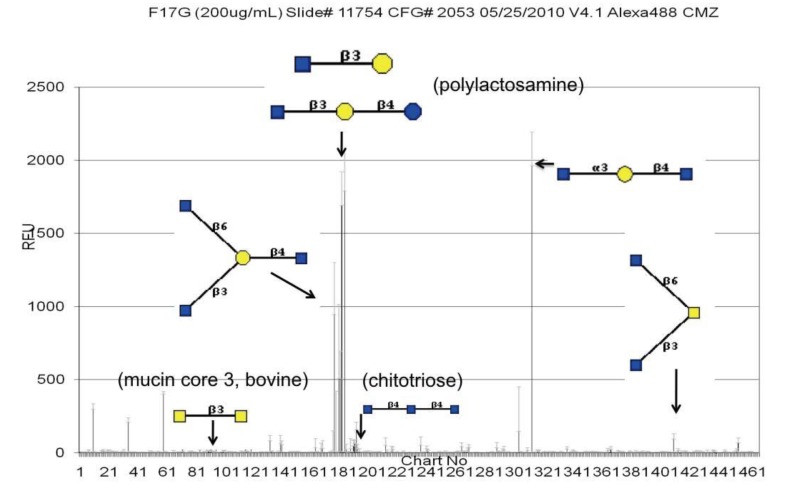
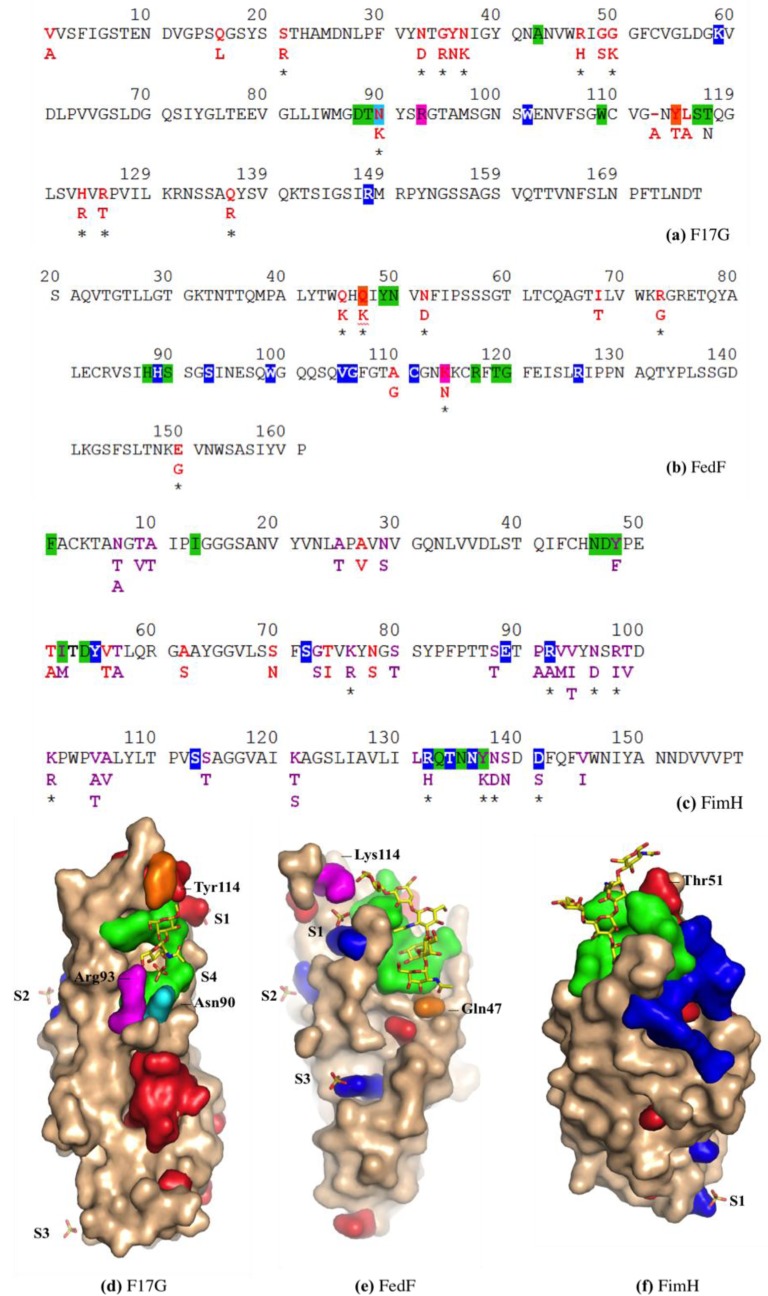
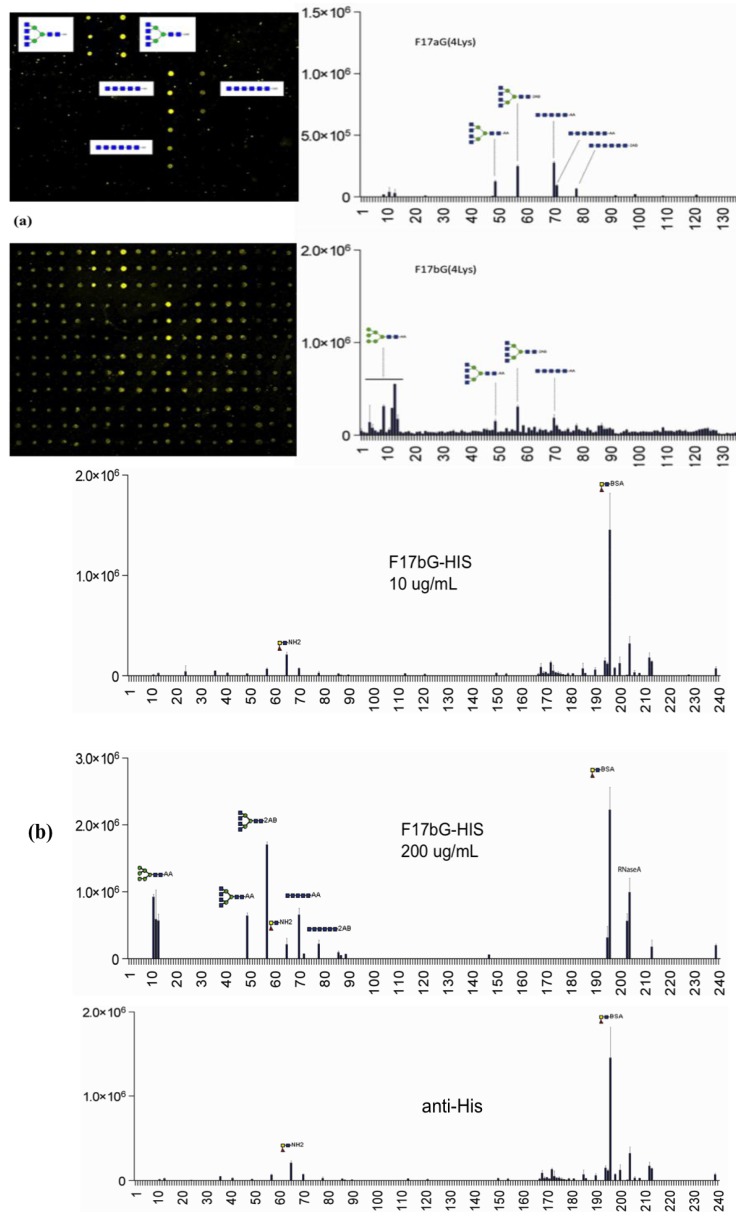
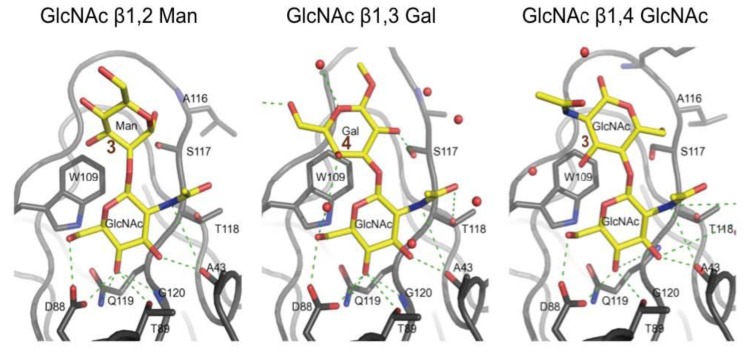
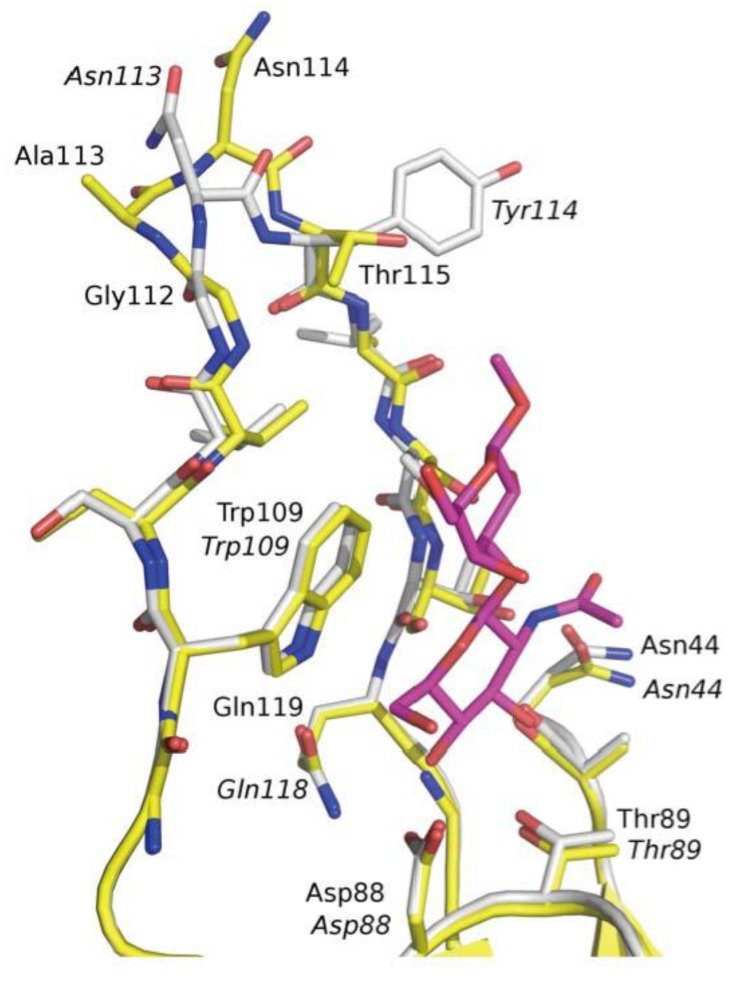
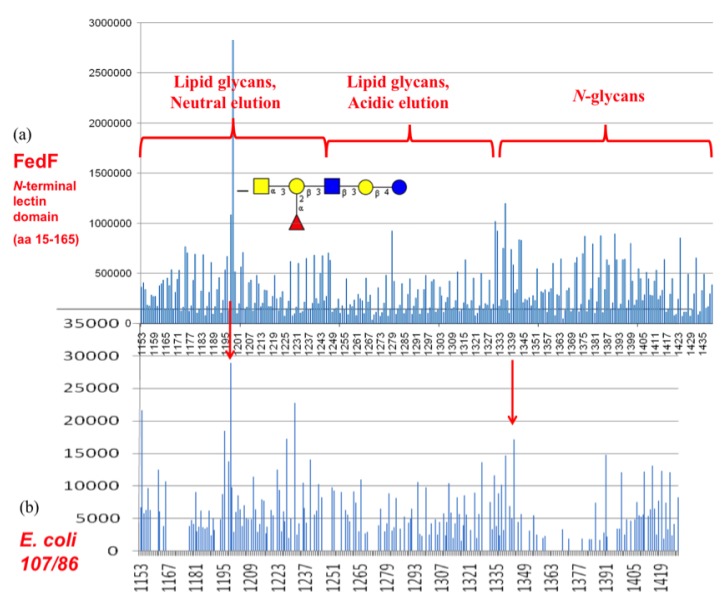
Fimbriae are long, proteinaceous adhesion organelles expressed on the bacterial envelope, evolutionarily adapted by Escherichia coli strains for the colonization of epithelial linings. Using glycan arrays of the Consortium for Functional Glycomics (CFG), the lectin domains were screened of the fimbrial adhesins F17G and FedF from enterotoxigenic E. coli (ETEC) and of the FimH adhesin from uropathogenic E. coli. This has led to the discovery of a more specific receptor for F17G, GlcNAcb1,3Gal. No significant differences emerged from the glycan binding profiles of the F17G lectin domains from five different E. coli strains. However, strain-dependent amino acid variations, predominantly towards the positively charged arginine, were indicated by sulfate binding in FedF and F17G crystal structures. For FedF, no significant binders could be observed on the CFG glycan array. Hence, a shotgun array was generated from microvilli scrapings of the distal jejunum of a 3-week old piglet about to be weaned. On this array, the blood group A type 1 hexasaccharide emerged as a receptor for the FedF lectin domain and remarkably also for F18-fimbriated E. coli. F17G was found to selectively recognize glycan species with a terminal GlcNAc, typifying intestinal mucins. In conclusion, F17G and FedF recognize long glycan sequences that could only be identified using the shotgun approach. Interestingly, ETEC strains display a large capacity to adapt their fimbrial adhesins to ecological niches via charge-driven interactions, congruent with binding to thick mucosal surfaces displaying an acidic gradient along the intestinal tract.
菌毛是长的蛋白质粘附器官,表达在细菌包膜上,大肠杆菌菌株通过进化适应了菌毛的粘附,以便在肠上皮衬里上定植。使用功能糖组学联盟(CFG)的聚糖阵列,筛选了肠致病性大肠杆菌(ETEC)的 F17G 和 FedF 菌毛粘附素和尿路致病性大肠杆菌的 FimH 粘附素的凝集素结构域。这导致发现了 F17G 的更特异性受体,GlcNAcb1,3Gal。来自五个不同大肠杆菌菌株的 F17G 凝集素结构域的聚糖结合谱没有明显差异。然而,FedF 和 F17G 晶体结构中的硫酸盐结合表明,主要是带正电荷的精氨酸,存在菌株依赖性的氨基酸变化。对于 FedF,在 CFG 聚糖阵列上没有观察到显著的结合物。因此,从即将断奶的 3 周龄仔猪的回肠远端微绒毛刮片中生成了一个鸟枪法阵列。在这个阵列上,A 血型 1 六糖作为 FedF 凝集素结构域的受体出现,并且令人惊讶的是,它也是 F18 菌毛大肠杆菌的受体。发现 F17G 选择性识别具有末端 GlcNAc 的聚糖物种,这是肠道粘蛋白的典型特征。总之,F17G 和 FedF 识别长聚糖序列,只能使用鸟枪法来识别。有趣的是,ETEC 菌株通过电荷驱动的相互作用显示出极大的能力来适应其菌毛粘附素的生态位,这与结合厚的粘膜表面相吻合,粘膜表面沿着肠道显示出酸性梯度。