M'Koma Amosy E
Laboratory of Inflammatory Bowel Disease Research, Department of Biochemistry and Cancer Biology, Meharry Medical College, Nashville TN. Departments of General Surgery, Colon and Rectal Surgery, and Vanderbilt-Ingram Cancer Center, Vanderbilt University Medical Center, Nashville TN.
Clin Med Insights Gastroenterol. 2013 Aug 14;6:33-47. doi: 10.4137/CGast.S12731. eCollection 2013.
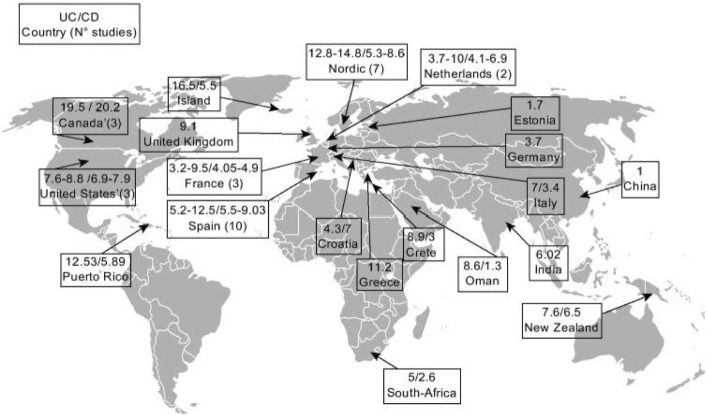
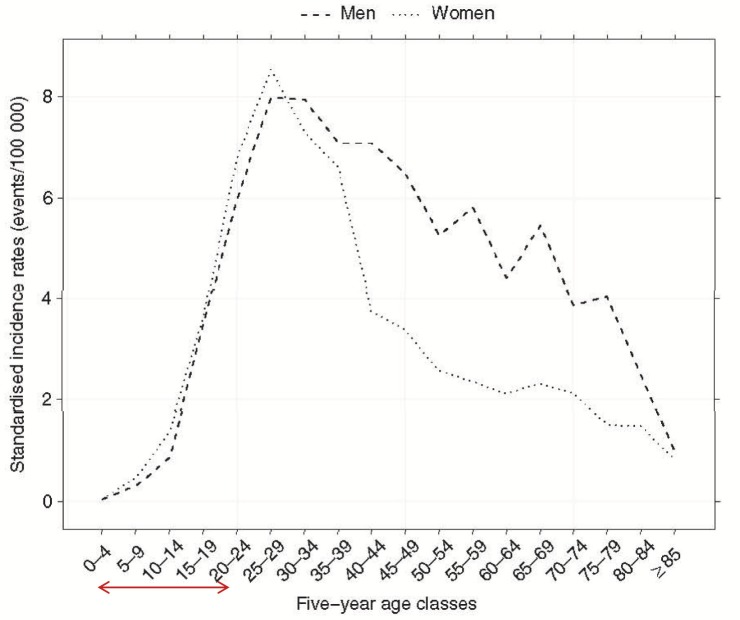
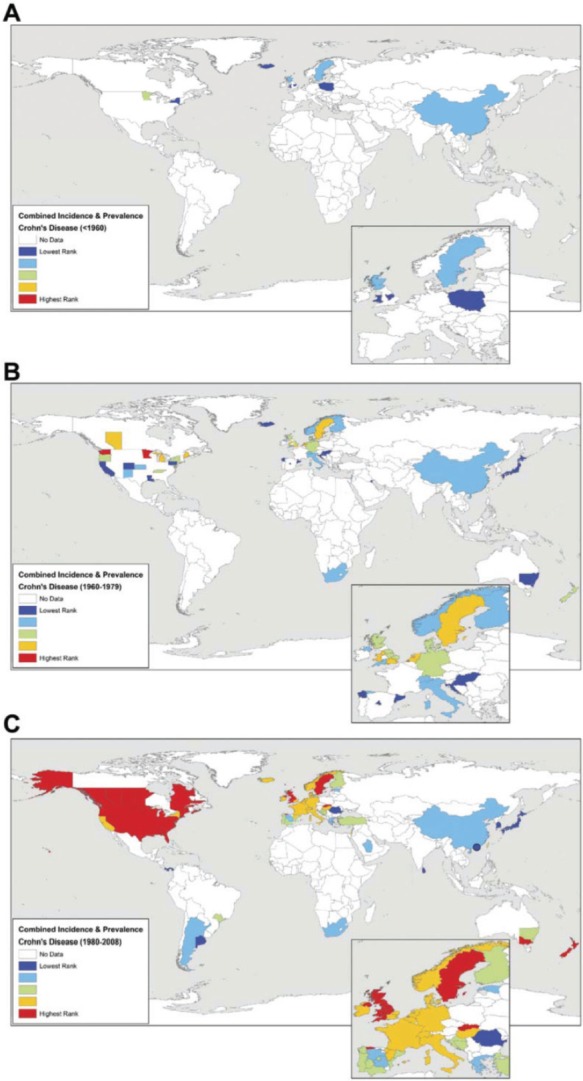
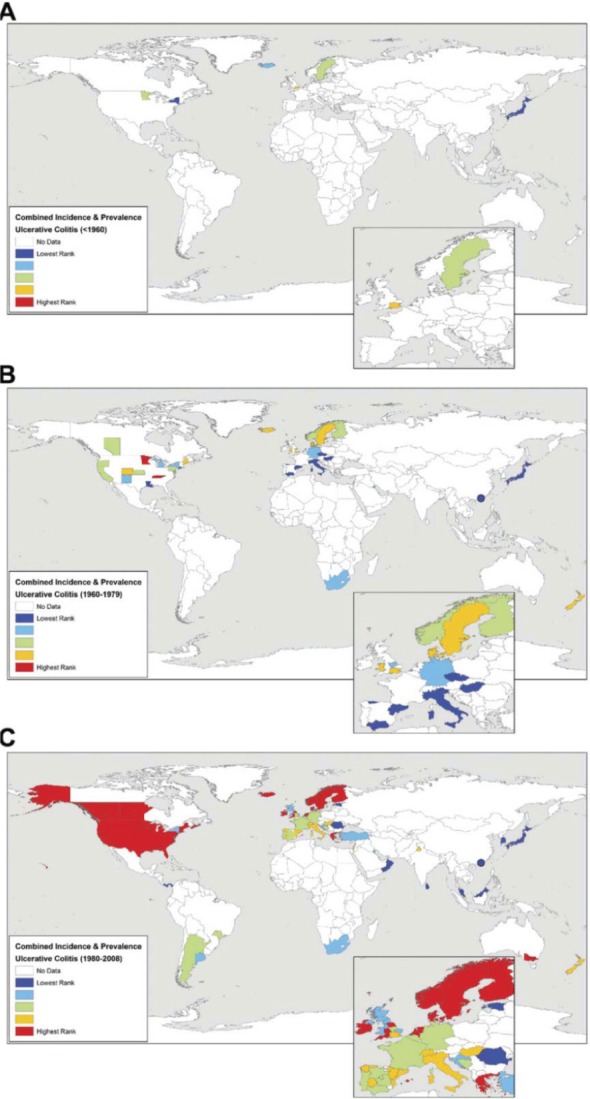
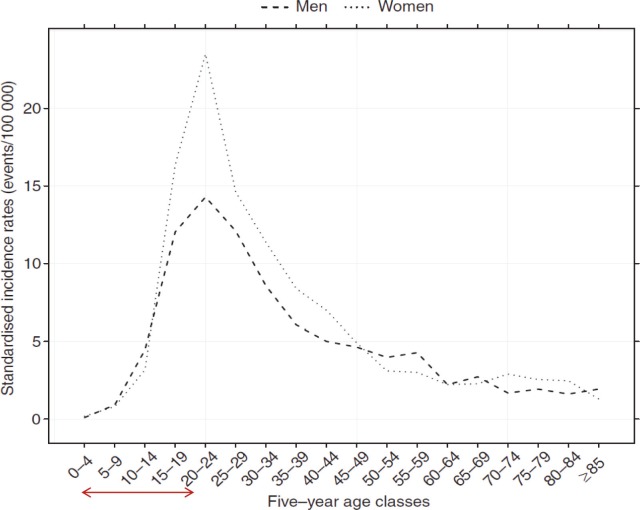
This review provides a summary of the global epidemiology of inflammatory bowel diseases (IBD). It is now clear that IBD is increasing worldwide and has become a global emergence disease. IBD, which includes Crohn's disease (CD) and ulcerative colitis (UC), has been considered a problem in industrial-urbanized societies and attributed largely to a Westernized lifestyle and other associated environmental factors. Its incidence and prevalence in developing countries is steadily rising and has been attributed to the rapid modernization and Westernization of the population. There is a need to reconcile the most appropriate treatment for these patient populations from the perspectives of both disease presentation and cost. In the West, biological agents are the fastest-growing segment of the prescription drug market. These agents cost thousands of dollars per patient per year. The healthcare systems, and certainly the patients, in developing countries will struggle to afford such expensive treatments. The need for biological therapy will inevitably increase dramatically, and the pharmaceutical industry, healthcare providers, patient advocate groups, governments and non-governmental organizations should come to a consensus on how to handle this problem. The evidence that IBD is now affecting a much younger population presents an additional concern. Meta-analyses conducted in patients acquiring IBD at a young age also reveals a trend for their increased risk of developing colorectal cancer (CRC), since the cumulative incidence rates of CRC in IBD-patients diagnosed in childhood are higher than those observed in adults. In addition, IBD-associated CRC has a worse prognosis than sporadic CRC, even when the stage at diagnosis is taken into account. This is consistent with additional evidence that IBD negatively impacts CRC survival. A continuing increase in IBD incidence worldwide associated with childhood-onset of IBD coupled with the diseases' longevity and an increase in oncologic transformation suggest a rising disease burden, morbidity, and healthcare costs. IBD and its associated neoplastic transformation appear inevitable, which may significantly impact pediatric gastroenterology and adult CRC care. Due to an infrastructure gap in terms of access to care between developed vs. developing nations and the uneven representation of IBD across socioeconomic strata, a plan is needed in the developing world regarding how to address this emerging problem.
本综述总结了炎症性肠病(IBD)的全球流行病学情况。现在很清楚,IBD在全球范围内呈上升趋势,已成为一种全球性的新发疾病。IBD包括克罗恩病(CD)和溃疡性结肠炎(UC),一直被认为是工业化城市化社会中的一个问题,主要归因于西方化的生活方式和其他相关环境因素。其在发展中国家的发病率和患病率正在稳步上升,这归因于人口的快速现代化和西方化。有必要从疾病表现和成本两个角度协调针对这些患者群体的最合适治疗方法。在西方,生物制剂是处方药市场增长最快的领域。这些药物每名患者每年花费数千美元。发展中国家的医疗保健系统,当然还有患者,将难以负担如此昂贵的治疗费用。生物治疗的需求必然会急剧增加,制药行业、医疗保健提供者、患者倡导组织、政府和非政府组织应就如何处理这一问题达成共识。IBD现在影响着更年轻人群这一证据带来了另一个担忧。对年轻时患IBD的患者进行的荟萃分析还显示,他们患结直肠癌(CRC)的风险有增加趋势,因为儿童期诊断为IBD的患者中CRC的累积发病率高于成年人。此外,即使考虑到诊断时的分期,IBD相关的CRC预后也比散发性CRC更差。这与IBD对CRC生存有负面影响的其他证据一致。全球IBD发病率的持续上升与儿童期发病的IBD、疾病的长期性以及肿瘤转化的增加相关,这表明疾病负担、发病率和医疗保健成本在上升。IBD及其相关的肿瘤转化似乎不可避免,这可能会对儿科胃肠病学和成人CRC护理产生重大影响。由于发达国家和发展中国家在获得医疗服务方面存在基础设施差距,且IBD在社会经济阶层中的分布不均衡,发展中世界需要一个关于如何应对这一新兴问题的计划。