Ilango Anton, Kesner Andrew J, Broker Carl J, Wang Dong V, Ikemoto Satoshi
Behavioral Neuroscience Branch, National Institute on Drug Abuse, National Institutes of Health Baltimore, MD, USA.
Front Behav Neurosci. 2014 May 6;8:155. doi: 10.3389/fnbeh.2014.00155. eCollection 2014.
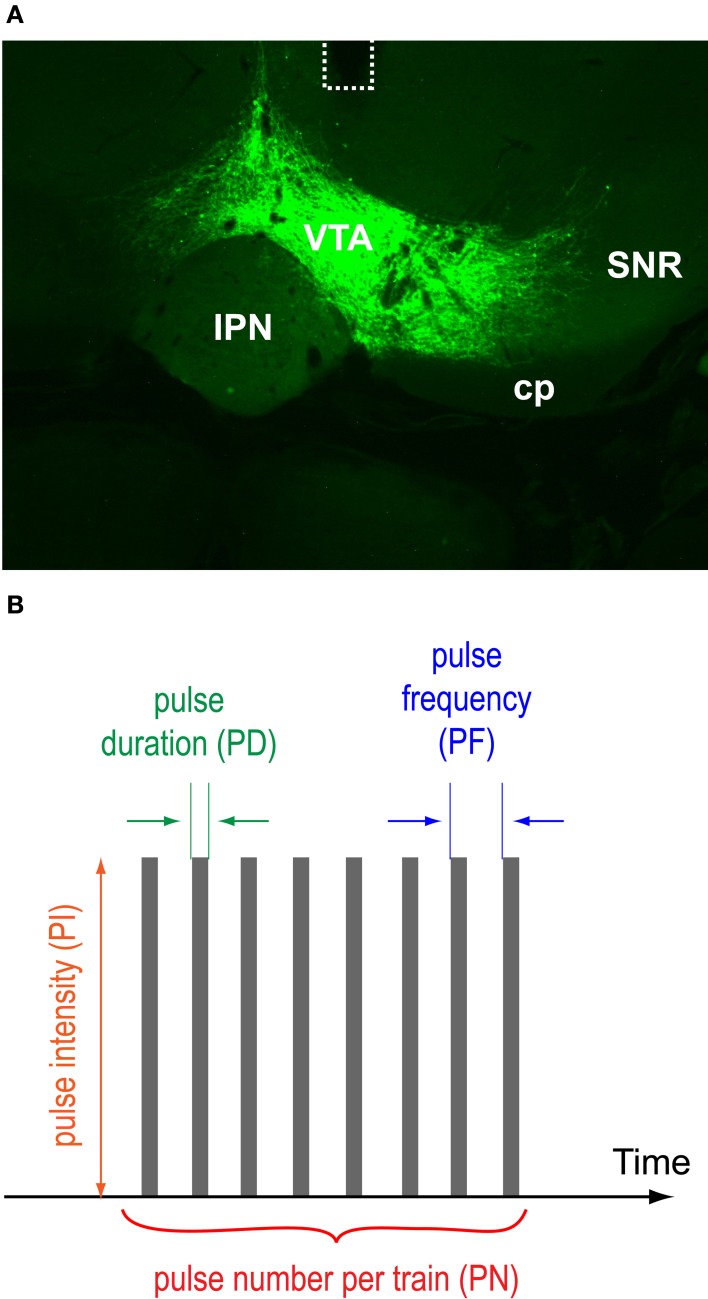
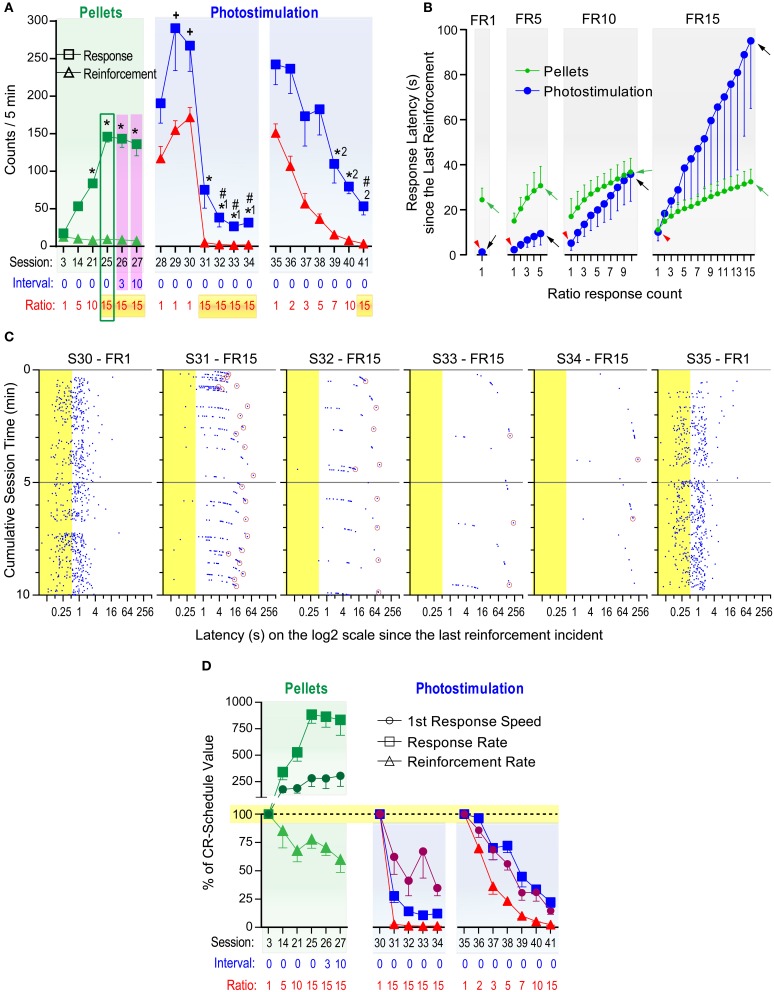
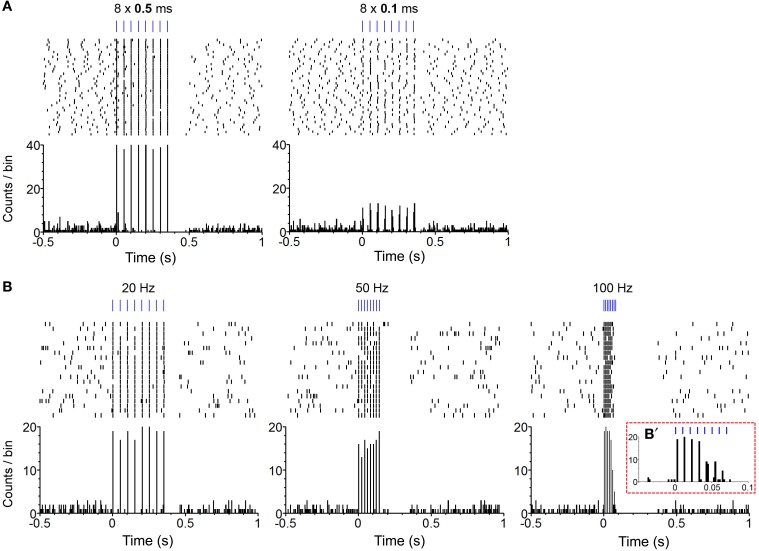
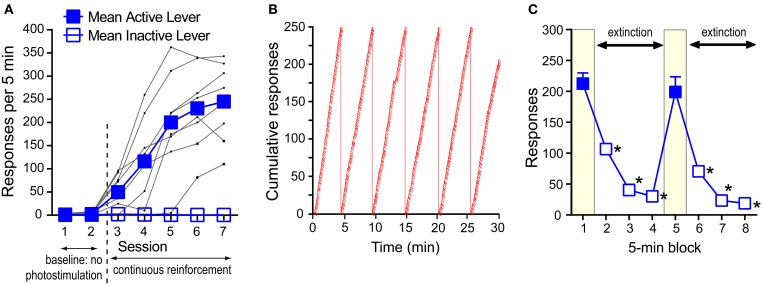
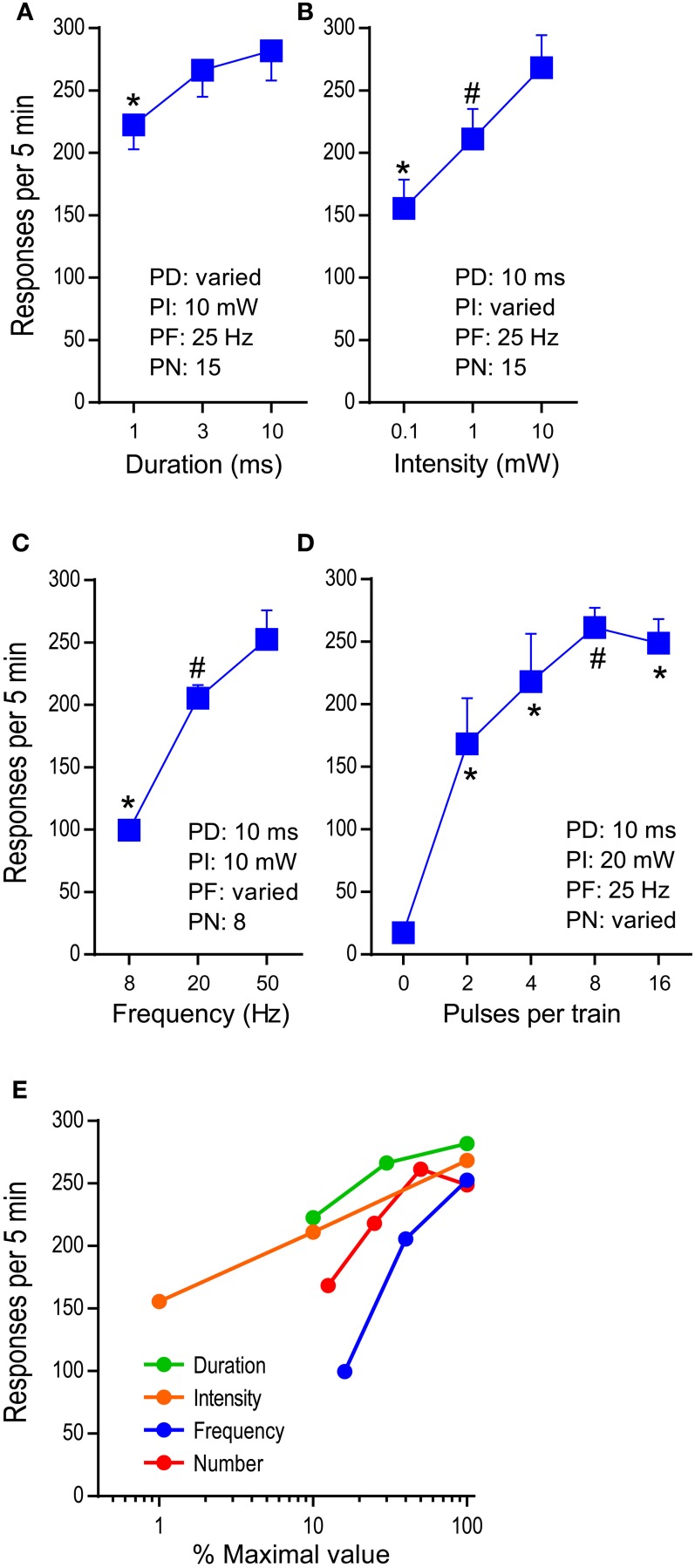
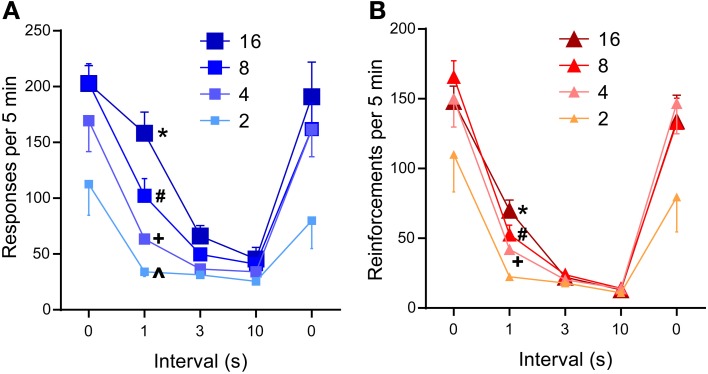
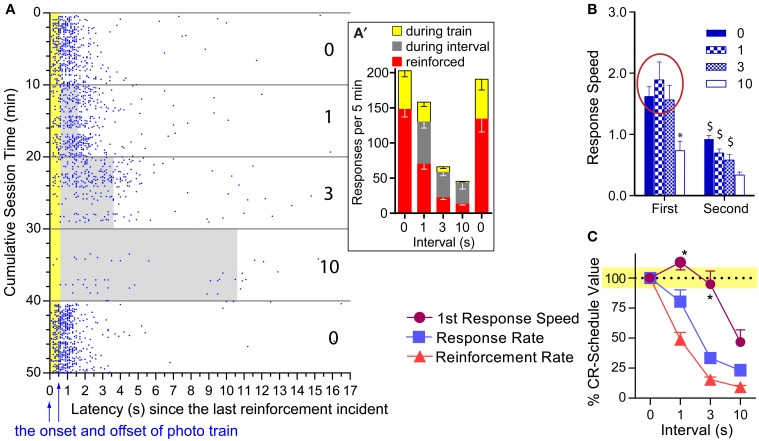
Midbrain dopamine neurons are implicated in motivation and learning. However, it is unclear how phasic excitation of dopamine neurons, which is implicated in learning, is involved in motivation. Here we used a self-stimulation procedure to examine how mice seek for optogenetically-induced phasic excitation of dopamine neurons, with an emphasis on the temporal dimension. TH-Cre transgenic mice received adeno-associated viral vectors encoding channelrhodopsin-2 into the ventral tegmental area, resulting in selective expression of the opsin in dopamine neurons. These mice were trained to press on a lever for photo-pulse trains that phasically excited dopamine neurons. They learned to self-stimulate in a fast, constant manner, and rapidly reduced pressing during extinction. We first determined effective parameters of photo-pulse trains in self-stimulation. Lever-press rates changed as a function of the manipulation of pulse number, duration, intensity, and frequency. We then examined effects of interval and ratio schedules of reinforcement on photo-pulse train reinforcement, which was contrasted with food reinforcement. Reinforcement with food inhibited lever pressing for a few seconds, after which pressing was robustly regulated in a goal-directed manner. In contrast, phasic excitation of dopamine neurons robustly potentiated the initiation of lever pressing; however, this effect did not last more than 1 s and quickly diminished. Indeed, response rates markedly decreased when lever pressing was reinforced with inter-reinforcement interval schedules of 3 or 10 s or ratio schedules requiring multiple responses per reinforcement. Thus, phasic excitation of dopamine neurons briefly potentiates the initiation of approach behavior with apparent lack of long-term motivational regulation.
中脑多巴胺神经元与动机和学习有关。然而,尚不清楚与学习相关的多巴胺神经元的相位性兴奋如何参与动机。在这里,我们使用自我刺激程序来研究小鼠如何寻求光遗传学诱导的多巴胺神经元的相位性兴奋,重点关注时间维度。TH-Cre转基因小鼠在腹侧被盖区接受了编码通道视紫红质-2的腺相关病毒载体,导致视蛋白在多巴胺神经元中选择性表达。这些小鼠被训练按压杠杆以获得能相位性兴奋多巴胺神经元的光脉冲序列。它们学会了以快速、恒定的方式自我刺激,并在消退过程中迅速减少按压次数。我们首先确定了自我刺激中光脉冲序列的有效参数。杠杆按压率随脉冲数、持续时间、强度和频率的变化而变化。然后,我们研究了强化的间隔和比率时间表对光脉冲序列强化的影响,并将其与食物强化进行对比。食物强化会抑制杠杆按压几秒钟,之后按压会以目标导向的方式得到有力调节。相比之下,多巴胺神经元的相位性兴奋有力地增强了杠杆按压的起始;然而,这种效果持续不超过1秒且迅速减弱。事实上,当以3秒或10秒的强化间隔时间表或每次强化需要多次反应的比率时间表对杠杆按压进行强化时,反应率会显著下降。因此,多巴胺神经元的相位性兴奋短暂地增强了接近行为的起始,明显缺乏长期的动机调节。